You’re standing in a surf shop — or more likely a browser tab at midnight — staring at two wetsuits that look almost identical. Same brand. Same thickness. Different price tags, and one has a zipper across the back while the other has a short zipper across the chest. The salesperson’s description wasn’t much help. So you’re here.
A wetsuit is the rubber suit surfers wear to trap a thin layer of water against the skin, which the body then warms to insulate against cold ocean temperatures. The zipper placement isn’t just a design choice — it affects how warm the suit keeps you, how much your shoulders can move while paddling, how fast you can get in and out, and how long the suit lasts. For Atlantic surfers, where water temps can swing from 38°F off Maine in February to 80°F off Florida in August, getting this decision right matters more than almost any other gear call you’ll make.
This article breaks down the real differences between back zip and chest zip wetsuits, maps the trade-offs to actual Atlantic conditions, and gives you a clear decision rule based on how and where you surf.
| EDITOR'S PICKO'Neill Hyperfreak 4/3 mm Chest… | Mid-tierO'NEILL Hyperfreak 3/2+mm Chest… | Budget pickO'Neill Men's Reactor-2 3:2mm B… | |
|---|---|---|---|
| Thickness | 4/3 mm | 3/2+mm | 3:2mm |
| Zip Type | Chest zip | Chest zip | Back zip |
| Intended Use | — | — | All water activities |
| Warmth | — | — | Lightweight |
| Flexibility | — | — | Flexibility |
| Price | $419.95 | $399.95 | $154.95 |
| See on Amazon → | See on Amazon → | See on Amazon → |
The Core Difference: What the Zipper Actually Does
The zipper’s location determines where water can enter the suit — and how easily.
A back zip wetsuit has a long zipper that runs from the lower back up to the neck. Getting in is straightforward: you step in, pull it up your torso, and ask a friend (or attempt a shoulder-dislocating maneuver) to zip you up. The trade-off is that the back zipper creates a longer seam entry point for cold water to flush through. Every time you wipe out and resurface, water pressure at the neck can push cold water down that zipper channel.
A chest zip places a short zipper horizontally across the upper chest, behind a flap of neoprene — the stretchy rubber material wetsuits are made from. This design creates a much tighter seal at the neck and back, dramatically reducing water flush. The entry is a two-step process: you stretch the neck opening over your head, then seal the chest flap. It takes getting used to. But the warmth payoff is real.
Wavelength Surf Magazine’s wetsuit construction and seam technology overview describes the chest zip seal as one of the most impactful design changes in modern wetsuit development — not because of material advances, but because it addresses the flush problem at its source.
Warmth and Water Temperature: The Atlantic Case
Atlantic surfers face a wider temperature range than almost any surf population on earth. Surfline’s Atlantic water temperature database places North Carolina around 52–58°F in January and February, while New Jersey and Long Island dip into the low 40s. Florida’s Atlantic coast holds in the mid-60s through winter. New England surfers can see 38–42°F from December through March.
That range means no single suit covers the full Atlantic calendar. The zipper style question is therefore inseparable from the thickness question — and from which months you plan to surf.
Surfer Magazine’s 2025 wetsuit buyer’s guide maps thickness to water temperature across major brands, and the practical guidance breaks down cleanly into three tiers:
Budget Option: Back Zip 3/2 for Warm-Shoulder Atlantic Sessions
A 3/2 mm suit — meaning three millimeters of neoprene on the torso, two on the arms and legs — covers Atlantic water from roughly 60°F to 72°F. That window maps to late spring and early fall across most of the Mid-Atlantic and Southeast. At those temperatures, the warmth lost through a back zip is negligible when you’re actively paddling, and the price and convenience advantages are real.
Entry-level back zip suits in the 3/2 range, like O’Neill’s Reactor-2 3/2, use glued and blindstitched (GBS) seams — a construction where panels are bonded first, then stitched from one side only so the needle never punches through. This produces a near-watertight seam at a price point that makes sense for surfers in the water one to two times per week during shoulder season.
Durability reports on the Reactor-2 are consistently strong across owner reviews aggregated by retailers including Cleanline Surf. One frequently cited example involves extended use in demanding conditions over multiple seasons with minimal seam degradation — though reviewers typically frame long-run durability as an encouraging observation rather than a confirmed outcome, since neoprene wear depends heavily on UV exposure, rinse habits, and storage.
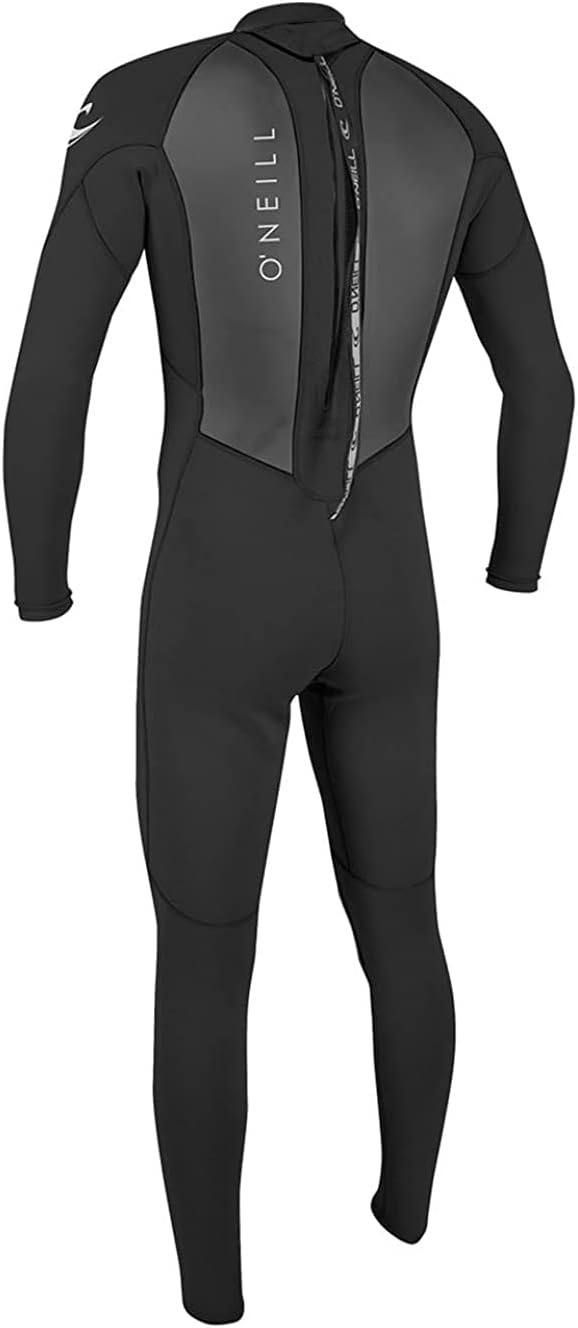
O'Neill
$154.95
In stock on Amazon
Check price on AmazonMid-Tier Option: Back Zip or Chest Zip 4/3 for Full Atlantic Shoulder Season
The 4/3 mm suit — four millimeters on the torso, three on the extremities — covers Atlantic water from roughly 50°F to 62°F. That window captures the full fall shoulder season across the Mid-Atlantic and most of the spring window in New England. This is where the zipper decision starts to matter more.
O’Neill’s Epic 4/3 is available in both back zip and chest zip configurations. Owner accounts aggregated by Cleanline Surf and surf retail reviewers place comfortable use of the Epic 4/3 down to 50–52°F, with some reporting warmth even at lower temps. One recurring description in review summaries: surfers who weren’t expecting much from the extra millimeter report being genuinely surprised — a common framing is that they “couldn’t tell they were in the water” during cold October and March sessions they previously would have cut short.
At this thickness and price tier, the chest zip version earns its modest price premium for surfers who surf three or more times per week through the shoulder season. The water flush reduction becomes tangible when you’re wiping out repeatedly in 54°F water. For surfers surfing less frequently or who prioritize ease of entry when surfing alone, the back zip 4/3 remains a strong, rational choice.
The Inertia’s 2024 buyer’s guide notes that the practical flex difference between a well-constructed chest zip and a quality back zip has narrowed significantly over the past five years, driven by advances in neoprene stretch ratios — meaning the old argument that chest zip suits paddle worse no longer holds up against current construction.
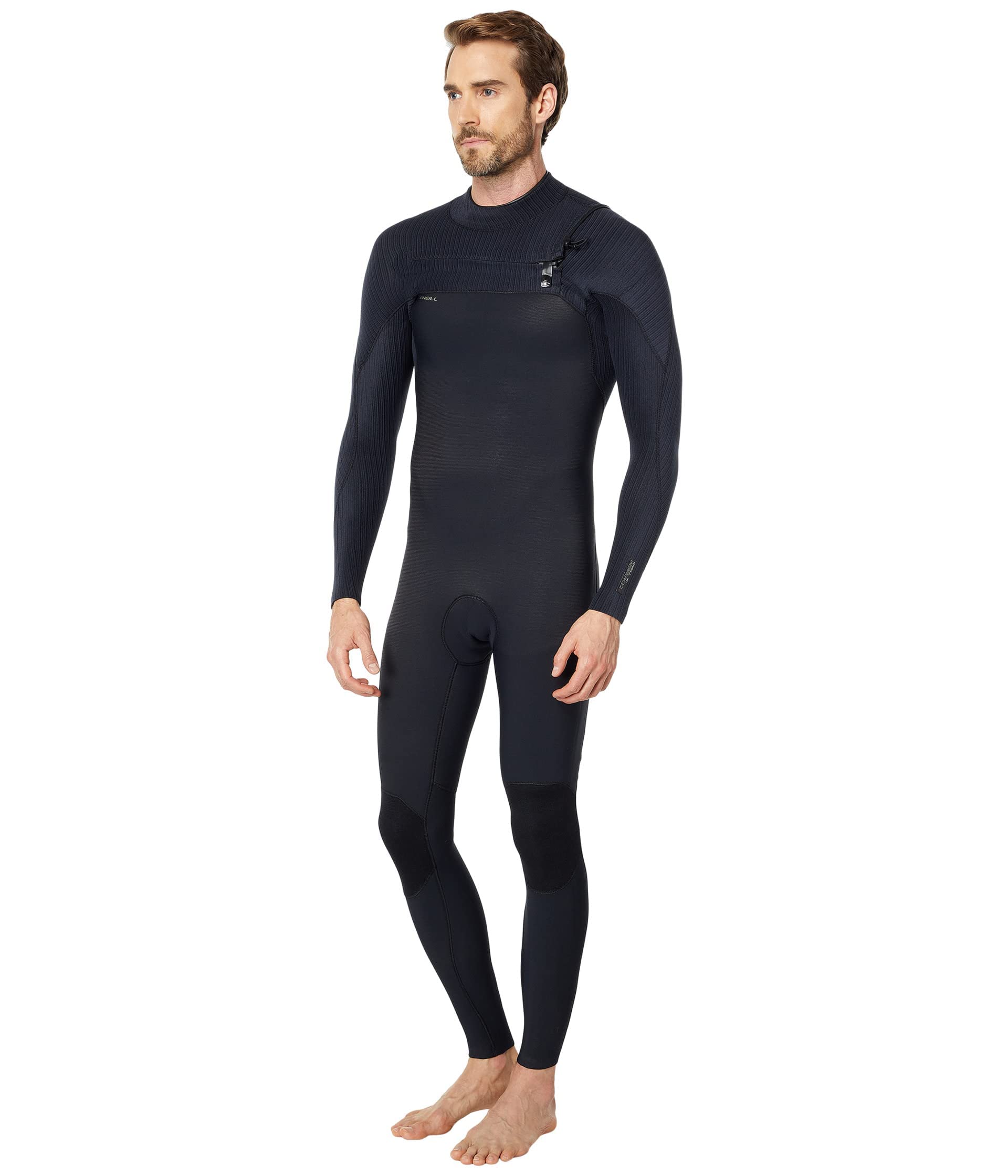
O'NEILL
$399.95
In stock on Amazon
Check price on AmazonPremium Option: Chest Zip 5/4 for Atlantic Winter and Cold-Sensitive Surfers
For water below 50°F — which describes New England from December through March and the Mid-Atlantic during deep cold snaps — a 5/4 mm chest zip suit is the relevant tier. At this thickness, water flush through a back zip becomes genuinely problematic. The chest zip’s sealed neck and minimal entry gap represent the warmest passive insulation upgrade available short of adding a hood.
O’Neill’s Hyperfreak chest zip line occupies this tier, using Technobutter neoprene and internally tape-sealed seams. The tape-sealed construction — which adds a liquid seal over the glued and blindstitched joint — reduces water infiltration at the seam significantly compared to basic GBS construction. Wavelength Surf Magazine’s seam technology overview notes that sealed seams address water infiltration at the joints more effectively than any other non-material upgrade available in current wetsuit construction.
Reviewers of the Hyperfreak consistently call it the most flexible suit they’ve worn at that thickness, with specific callouts for how little it restricts shoulder rotation during paddling. The Technobutter material’s low-friction surface also reduces the wrestling-match quality that older chest zip suits were known for — the entry process that feels awkward the first few times becomes fast and automatic within a handful of sessions.
For surfers who run cold — a real physiological variation, not just a tolerance preference — tape-sealed seams and a chest zip entry at this tier represent the clearest performance upgrade available. If you’ve been cutting Atlantic winter sessions short, this is where the investment pays off in actual time in the water.
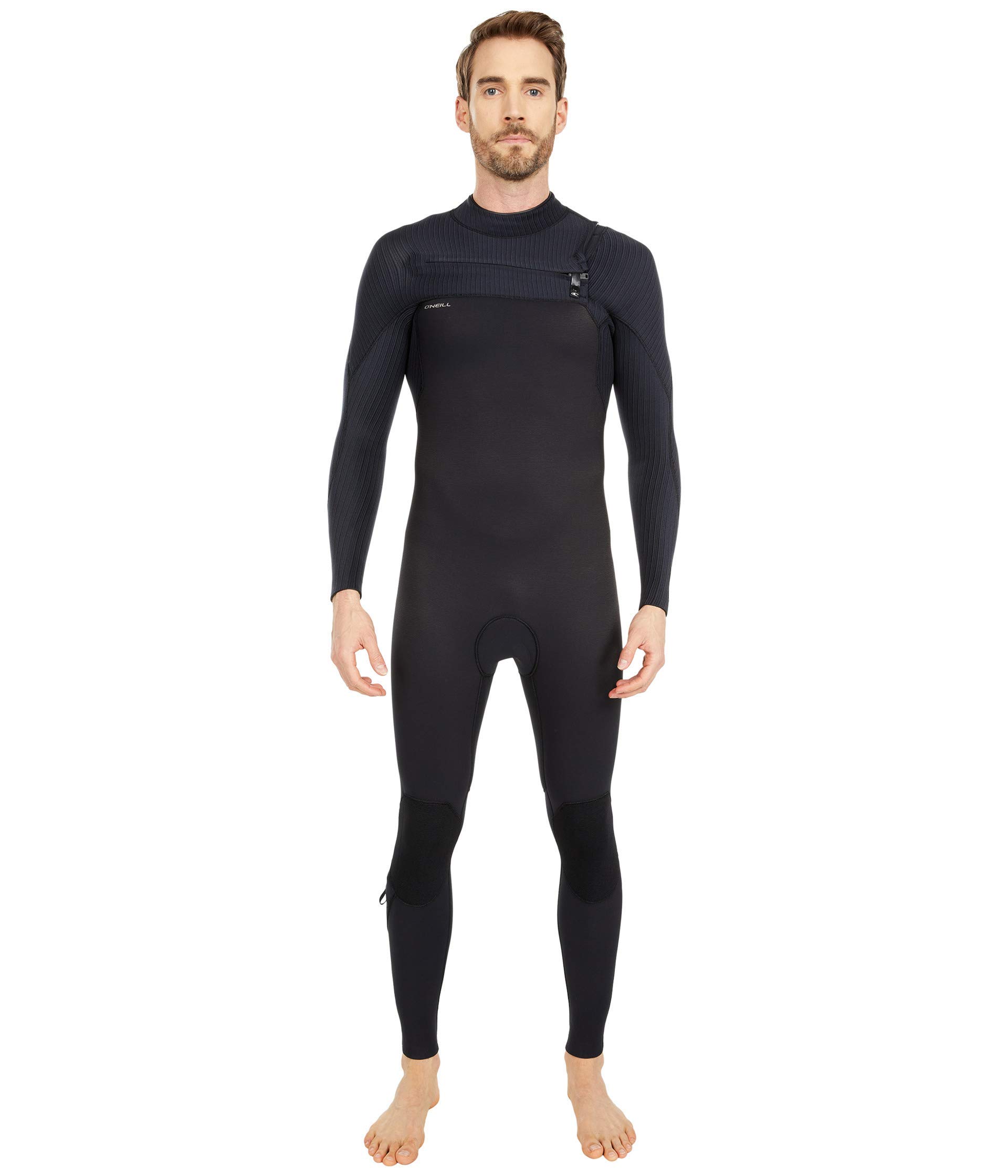
O'Neill
$419.95
In stock on Amazon
Check price on AmazonSeams, Durability, and What the Construction Terms Actually Mean
Wetsuits are built with one of three seam types, and understanding them helps explain why two suits with identical thickness ratings can feel dramatically different in cold water:
- Flatlock seams are stitched flat with thread visible from both sides. They’re durable but not watertight. Appropriate for suits used in water above 65°F.
- Glued and blindstitched (GBS) seams are glued together first, then stitched from only one side so the needle never pierces through. This creates a near-watertight seam and appears on 3/2 and thicker suits across most mid-range lines.
- Glued, blindstitched, and tape-sealed seams add an internal liquid seal over the GBS joint. This construction appears on higher-tier suits and makes the most noticeable difference for surfers who run cold or surf in sustained cold-water conditions.
Surfer Magazine’s 2025 buyer’s guide maps these seam types to price tiers and temperature ranges across major brands, and the practical guidance is consistent: flatlock suits belong in warm water, GBS suits cover the bulk of Atlantic conditions, and tape-sealed construction is worth the premium for anyone surfing Atlantic winter regularly.
For surfers who’ve ever felt a cold trickle down the chest after a wipeout, that’s unsealed seam performance. The trickle is water pushed through the seam joint by pressure. Sealed construction reduces that materially.
The Decision Rule: A Clear Map by Surf Profile
If you surf May through October, water above 60°F, and fewer than three sessions per week: A back zip 3/2 is the correct answer. The warmth penalty through the zipper is negligible at those temperatures when you’re paddling actively, and the price and ease-of-entry advantages are real. Cleanline Surf’s O’Neill fit notes flag that most surfers size up one size from their standard clothing measurement in this line — O’Neill’s published size chart, measured against chest, waist, and height rather than standard S/M/L, is the reliable reference.
If you surf the full Atlantic calendar including November through March, or you run cold, or you’re already shortening sessions: A chest zip 4/3 or 5/4 is the correct answer. The upgrade pays for itself in sessions you actually finish. The Inertia’s 2024 guide and Surfer Magazine’s buyer’s guide both point to the same conclusion: the warmth gap between back zip and chest zip becomes most significant below 55°F, where water flush through a back zipper accelerates heat loss faster than paddling can compensate.
If you’re running a surf school or coaching program and need suits that hold up across a full season of daily use: Look at the Hyperfreak chest zip tier for staff, where construction quality and flex matter most. For student quivers where budget range and sizing breadth take priority, the Epic back zip line offers strong durability at a price that makes fleet purchasing practical.
Frequently Asked Questions
Should I size up in O’Neill wetsuits compared to my normal clothing size?
Consistently, yes. Cleanline Surf’s O’Neill wetsuit fit and sizing notes specifically flag that sizing to standard clothing measurements produces a suit that’s too tight in the crotch and torso for many surfers. Most reviewers recommend going up one size, especially if you’re between sizes or carry weight in the hips or shoulders. Measure chest, waist, and height against O’Neill’s published size chart rather than defaulting to your usual S/M/L.
What is the warmth difference between the 3/2 Epic and the 4/3 Epic in real Atlantic water?
In practical terms: the 3/2 Epic keeps most active paddlers comfortable down to around 58–60°F. Below that, heat loss starts outpacing generation and sessions shorten. The 4/3 Epic’s extra torso neoprene creates a meaningful thermal buffer — owner accounts place comfortable use down to 50–52°F. For context, that covers the entire Mid-Atlantic fall shoulder season and most of the New England spring window.
Is a chest zip wetsuit harder to put on than a back zip?
The first few times, yes. The entry requires pulling the neck panel over your head and seating the chest flap — it’s a specific motion that feels awkward until it doesn’t. Most surfers report it becomes automatic by the fifth or sixth session. The Hyperfreak’s Technobutter neoprene has an unusually slick, low-friction surface that reduces the difficulty compared to older chest zip constructions.
How long do these suits last at three or more sessions per week?
Owner reports suggest the Epic line holds up well through one to two full seasons at that frequency, with seam integrity and zipper function remaining solid. Rinsing in fresh water after every session, drying in shade rather than direct sun, and storing flat rather than folded will extend any suit’s life materially regardless of tier. Neoprene degrades with UV exposure, board contact, and stretch cycles — care habits vary enough that individual experience will differ from aggregate patterns.