You’re standing in the parking lot at your local break in mid-October. The air is crisp. The waves are pumping. But you’re not sure whether to pull on the 3/2 you wore all summer or finally unzip the 4/3 you bought at the end of last season. This decision — which wetsuit thickness to wear on a given day — sounds simple. It isn’t. Get it wrong and you either overheat and paddle like a sedated golden retriever, or you’re shivering through your session by the 45-minute mark and calling it early.
A wetsuit is a neoprene suit — neoprene being a synthetic rubber that traps a thin layer of water against your skin, which your body heats as insulation — that keeps you warm in cold water. The numbers (3/2mm or 4/3mm) refer to the thickness of the neoprene panels: the first number is the torso, where you need the most warmth; the second is the arms and legs, where you need the most flexibility. This article breaks down which thickness makes sense for Atlantic water temperatures, uses the O’Neill Reactor-2 as a concrete case study across three distinct buyer tiers, and gives you a clear decision rule so you stop guessing and start surfing.
Why Atlantic Water Temperature Makes This Decision Harder Than It Looks
The Atlantic is not one temperature. It’s a spectrum, and it shifts fast.
According to Surfline’s Atlantic Coast Water Temperature Reference Data (2025), water temperatures along the Eastern Seaboard range from the low 40s°F during a New England winter to the mid-70s°F along the Carolina coast in August. Even a single break — say, a New Jersey beach break — can swing from 45°F in February to 72°F in July. That’s a range that, technically, demands three or four different wetsuit thicknesses across a calendar year.
For most Atlantic surfers, the decision point is the shoulder seasons: spring and fall. That’s when water temps sit between 55°F and 65°F — the exact window where a 3/2mm and a 4/3mm are genuinely competing with each other.
The general temperature guide:
| Water Temp | Recommended Thickness |
|---|---|
| 68°F and above | 2mm shorty or boardshorts |
| 60°F – 68°F | 3/2mm fullsuit |
| 52°F – 60°F | 4/3mm fullsuit |
| Below 52°F | 5/4mm or 6/5mm + hood |
The Inertia’s 2024 wetsuit thickness guide aligns closely with this framework, noting that individual cold tolerance shifts the edges by roughly ±3°F in either direction. If you run cold — if you’re the first person out of the water in your crew — slide every threshold up by three degrees. If you run warm, slide it down.
The O’Neill Reactor-2: Three Buyer Tiers Compared
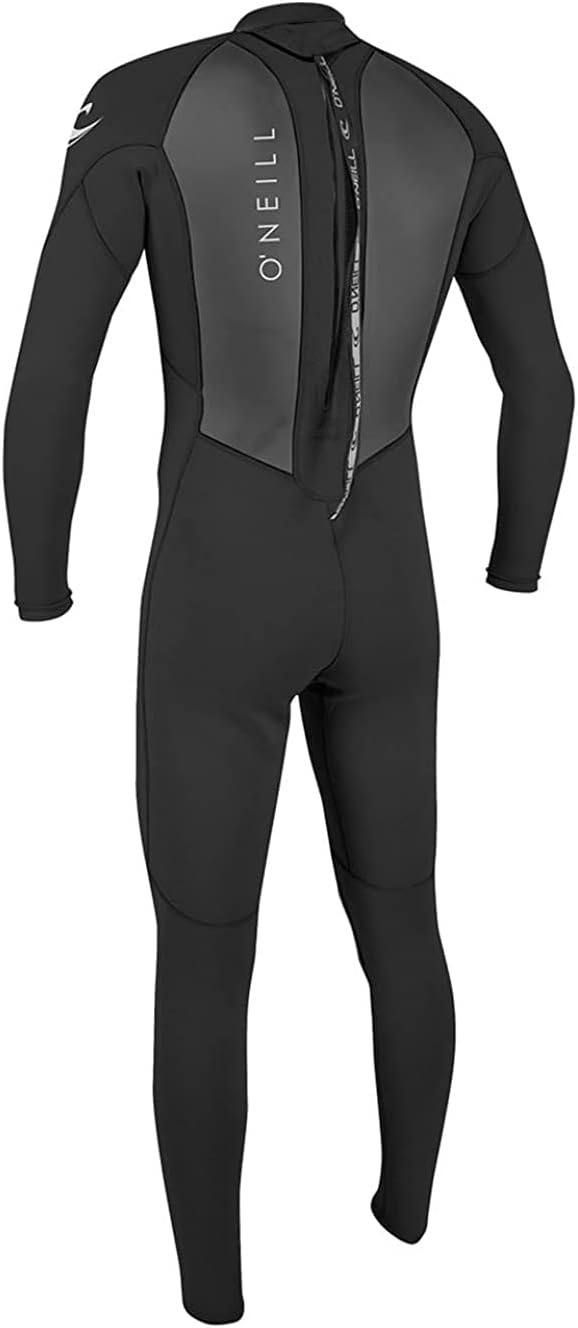
The O’Neill Reactor-2 sits in the entry-to-mid tier, typically $150–$220 depending on thickness and retailer. It’s one of the best-selling wetsuits on the Atlantic coast because it punches above its price point on flex and durability. Owner reviews aggregated at Cleanline Surf consistently describe it as the suit that surprises you — better stretch than the price suggests, holding up through a full season of regular surfing. But to make the right call, you need to understand how the Reactor-2 fits into the broader market landscape, not just as a single product but as part of a tiered decision.
Budget-Tier Option: O’Neill Reactor-2 3/2mm
The 3/2mm Reactor-2 is the entry point for surfers whose local water stays above 60°F for the majority of their surf year.
- Torso panel: 3mm neoprene
- Arms and legs: 2mm neoprene
- Zip style: back-zip (BZ)
- Chest panel: FirelineFlex neoprene (O’Neill’s mid-tier stretch compound)
- Seam construction: flatlock stitching (adequate for water temps down to about 58°F; not fully sealed, so some water flush occurs)
- Manufacturer-rated temperature range: 60°F – 68°F
- Weight: lighter, moves freely through the full paddle stroke
- Price tier: $$
The flatlock seam construction is worth understanding. Flatlock stitching runs through the neoprene panels completely — it’s durable and comfortable against your skin, but it allows a small, measurable amount of water to seep in through the stitch holes. This is a deliberate design trade-off at the Reactor-2’s price point. For surfers in the Carolinas or mid-Atlantic who are surfing above 60°F water through most of their year, this trade-off is entirely livable. The 3/2mm Reactor-2 is a workhorse for that window.
O'Neill
$154.95
In stock on Amazon
Check price on AmazonMid-Tier Option: O’Neill Reactor-2 4/3mm
The 4/3mm Reactor-2 is the same suit built for colder water. It shares the Reactor-2’s construction philosophy but adds meaningful thermal coverage for the shoulder seasons and beyond.
- Torso panel: 4mm neoprene
- Arms and legs: 3mm neoprene
- Zip style: back-zip (BZ)
- Chest panel: FirelineFlex neoprene
- Seam construction: flatlock stitching
- Manufacturer-rated temperature range: 52°F – 62°F
- Weight: noticeably heavier on land, slightly more restrictive during duck-diving
- Price tier: $$
Wavelength Surf Magazine’s 2024 Wetsuit Buyer’s Guide specifically calls out seam construction as the most undervalued specification for Atlantic surfers in the 55°F–62°F range. Their analysis notes that a flatlock 4/3mm will allow slightly more water entry than a glued-and-blind-stitched (GBS) suit at the same thickness — meaning the extra millimeter of neoprene helps, but seam quality matters alongside it. At the Reactor-2’s price, you’re making a conscious trade: affordability and flex over total thermal sealing. For New England surfers who push into the 52°F–58°F range regularly, this trade-off becomes more meaningful the longer the session runs.
Cleanline Surf owner reviews from the 2024–2025 season consistently noted the 4/3mm Reactor-2 holding its shape and loft through 80–100 surf sessions before significant compression was observed — a strong result at this price point.

Barbie™
$235.19
In stock on Amazon
Check price on AmazonPremium-Tier Option: Stepping Up from the Reactor-2
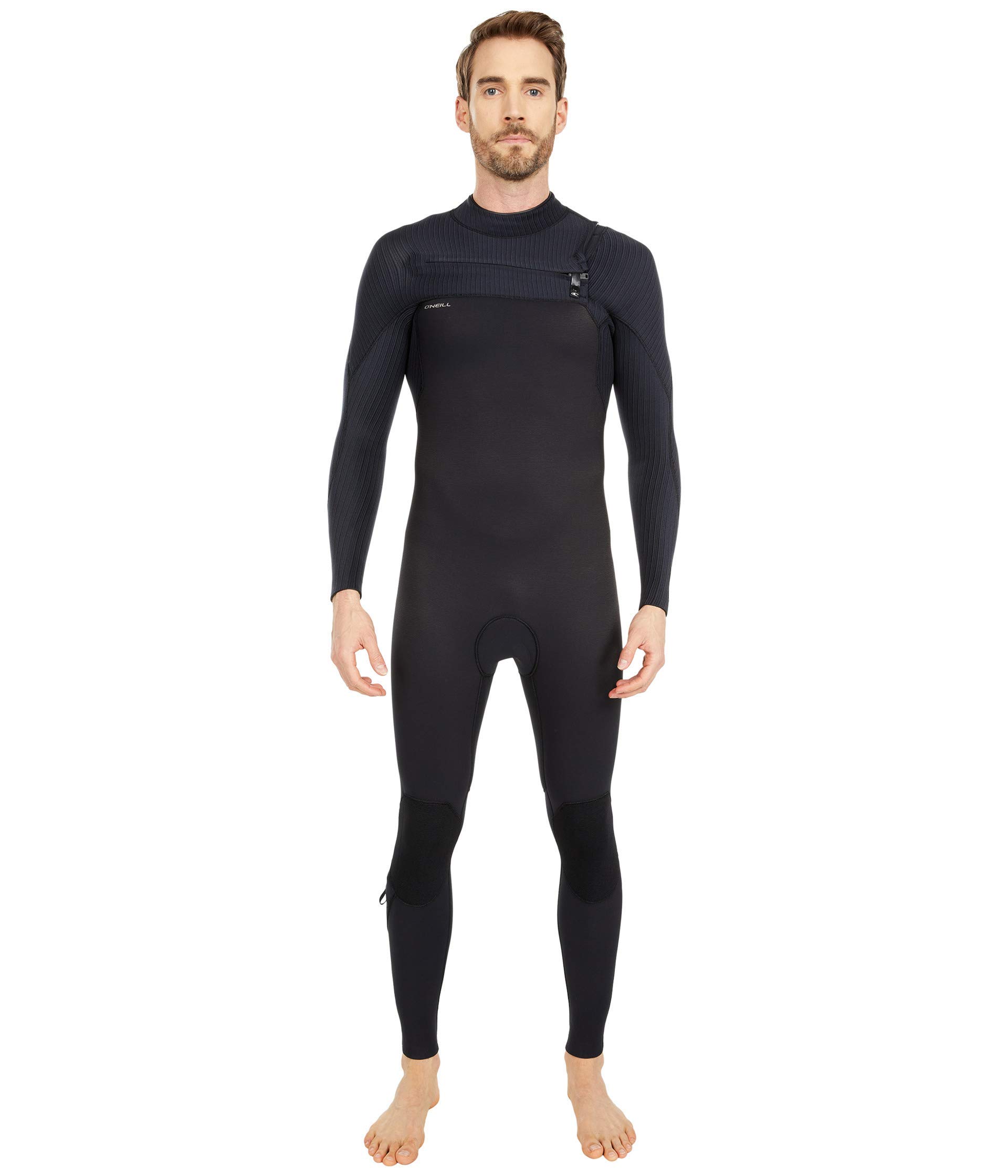
For surfers whose sessions regularly push through the 52°F–62°F range and who are ready to invest more than $220, the seam construction upgrade available at the premium tier matters enough to change your session experience in a measurable way.
Outside Online’s 2025 wetsuit roundup evaluated several premium options and found consistent consensus among reviewers: glued-and-blind-stitched or liquid-taped seams reduced cold-water flush noticeably in sessions over 90 minutes, especially in wind-affected water. The suits identified at this tier — including O’Neill’s own Psycho Tech and Psycho series, the Rip Curl E-Bomb line, and the Patagonia Yulex R3 — run $350–$649 and use more advanced neoprene compounds that compress less over time and retain insulation better across a full season.
For surfers considering the premium tier, the practical question is: how often are you in water below 58°F, and how long are those sessions? If the answer is “regularly” and “longer than 90 minutes,” the seam and neoprene upgrade at the premium tier returns real value. If your sessions are shorter or your water stays above 60°F most of the year, the Reactor-2’s price-to-performance ratio is hard to beat.
O'Neill
$419.95
In stock on Amazon
Check price on AmazonThe Warmth-to-Flex Trade-Off: Where It Actually Shows Up in the Water
This is the crux. An extra millimeter of neoprene across your arms and legs adds warmth, but it costs you something in paddle range of motion and duck-dive efficiency.
Outside Online’s 2025 wetsuit roundup noted consistent reviewer consensus on this point: the difference between a 3/2mm and a 4/3mm is most noticeable during the first 20 minutes of a session — paddle-out, duck-diving, arm recovery on shortboards — and less noticeable once you’re warmed up and in position. For surfers on higher-volume boards (mid-lengths, longboards), the extra restriction of a 4/3mm is less of a penalty. For shortboard riders doing rapid, repeated paddling through punchy beach break, that arm restriction accumulates across a two-hour session.
The Inertia’s coverage of shoulder-season surfing highlights a practical pattern from experienced Atlantic surfers: many keep both a 3/2mm and a 4/3mm in rotation specifically for the October–November and March–April windows, choosing based on air temperature and session length rather than water temperature alone. A 3/2mm at 60°F water with a sunny 65°F air temp and a two-hour session is a legitimate call. A 4/3mm at the same water temp with a 45°F air temp, offshore wind, and a three-hour dawn patrol is the smarter play.
The variables that push you toward the 4/3mm:
- Water temp below 60°F
- Air temp below 50°F
- Dawn or dusk sessions (no solar warming)
- Wind, especially offshore
- Sessions longer than 90 minutes
- You run cold
The variables that keep you in the 3/2mm:
- Water temp above 60°F
- Warm, sunny air
- Midday sessions
- Short, high-intensity sessions
- You run warm
- You’re on a shortboard doing lots of paddling
The Decision Rule
If this is where you are right now — staring at two suits, one 3/2mm and one 4/3mm, trying to figure out which one to order — here’s the framework:
If your local water temperature sits above 60°F for more than half your surf year, the 3/2mm Reactor-2 is your primary suit and the 4/3mm is your fall/winter insurance. Buy the 3/2mm first.
If your local water temperature is below 60°F for more than half your surf year — New England, Nova Scotia, the mid-Atlantic in winter — the 4/3mm is your workhorse. The 3/2mm becomes your spring/summer option. Buy the 4/3mm first.
If you only have the budget for one suit right now, match it to where your shoulder seasons land. For most Mid-Atlantic surfers, that’s the 3/2mm. For most New England surfers, that’s the 4/3mm.
If you’re ready to invest more than $220 and your sessions run through the 52°F–62°F range regularly, the seam construction upgrade matters enough to move to the Rip Curl E-Bomb 4/3mm or O’Neill’s own Psycho series. You’ll feel the difference in sessions over 90 minutes in wind-affected water.
Check Surfline’s water temperature data for your specific break before you buy. The Atlantic is not uniform. A thickness decision made for the Outer Banks in May is a different call than the same decision made for Narragansett in the same month.
One last note on fit: no thickness decision matters if the suit flushes cold water because it doesn’t fit your body correctly. A well-fitted 3/2mm will outperform a loose 4/3mm on any cold-water day. Try suits on when you can, or consult size charts using your chest, waist, and height — not just weight. Cleanline Surf and Boardcave both publish brand-specific fit guidance that’s worth reading before you commit.
Get the right thickness. Get the right fit. Then get in the water.