You’ve been surfing a year. Maybe two. Your borrowed wetsuit is someone else’s hand-me-down, and the local shop’s entry O’Neill is priced at a level that makes you pause. So you do what a lot of developing surfers do: you land on Amazon, and three brand names keep appearing — Hevto, Dark Lightning, and Lemorecn. A wetsuit, for anyone new to the word, is the neoprene suit that keeps you warm in the water by trapping a thin layer of water against your skin, which your body then heats. The thickness is written as two numbers — a 4/3mm, for example, means 4mm of neoprene over the core and 3mm at the limbs. Thicker equals warmer; thinner equals more flexible. At $60–$120, these three brands occupy the lowest price tier, and the question isn’t really whether they work — plenty of buyers report they do — it’s whether they’ll fit your body correctly. That’s what this article is about.
If you’ve spent any time reading buyer reviews on these suits, a pattern emerges fast. Fit, not warmth, is the main failure point. And the fit problems follow a consistent, brand-specific logic that you can use to make a smarter call.
| EDITOR'S PICKHevto Men Wetsuit 5/4/3/2mm Neo… | Mid-tierHevto Women Wetsuit 3/2mm Neopr… | Budget pickDark Lightning Wetsuits for Men… | |
|---|---|---|---|
| Thickness | 5/4/3/2mm | 3/2mm | 3/2mm |
| Zip type | Back zip | Zipper | — |
| Gender fit | Men | Women | Men & women |
| Available sizes | Medium | 8 | Large |
| Price | $111.20 | $55.99 | $55.16 |
| See on Amazon → | See on Amazon → | See on Amazon → |
The Chest-and-Shoulder Problem Is Real — and It Affects All Three Brands
Let’s start here because it’s the most expensive mistake: ordering based purely on the size chart and then discovering the suit won’t zip over your chest.
Across aggregated verified purchaser reviews from Amazon listings accessed in May 2026, chest and shoulder measurements run consistently small on all three brands. This isn’t a one-off. It’s a pattern that repeats across body types and size ranges.
Dark Lightning: Order Up, No Exceptions
Dark
$55.16
In stock on Amazon
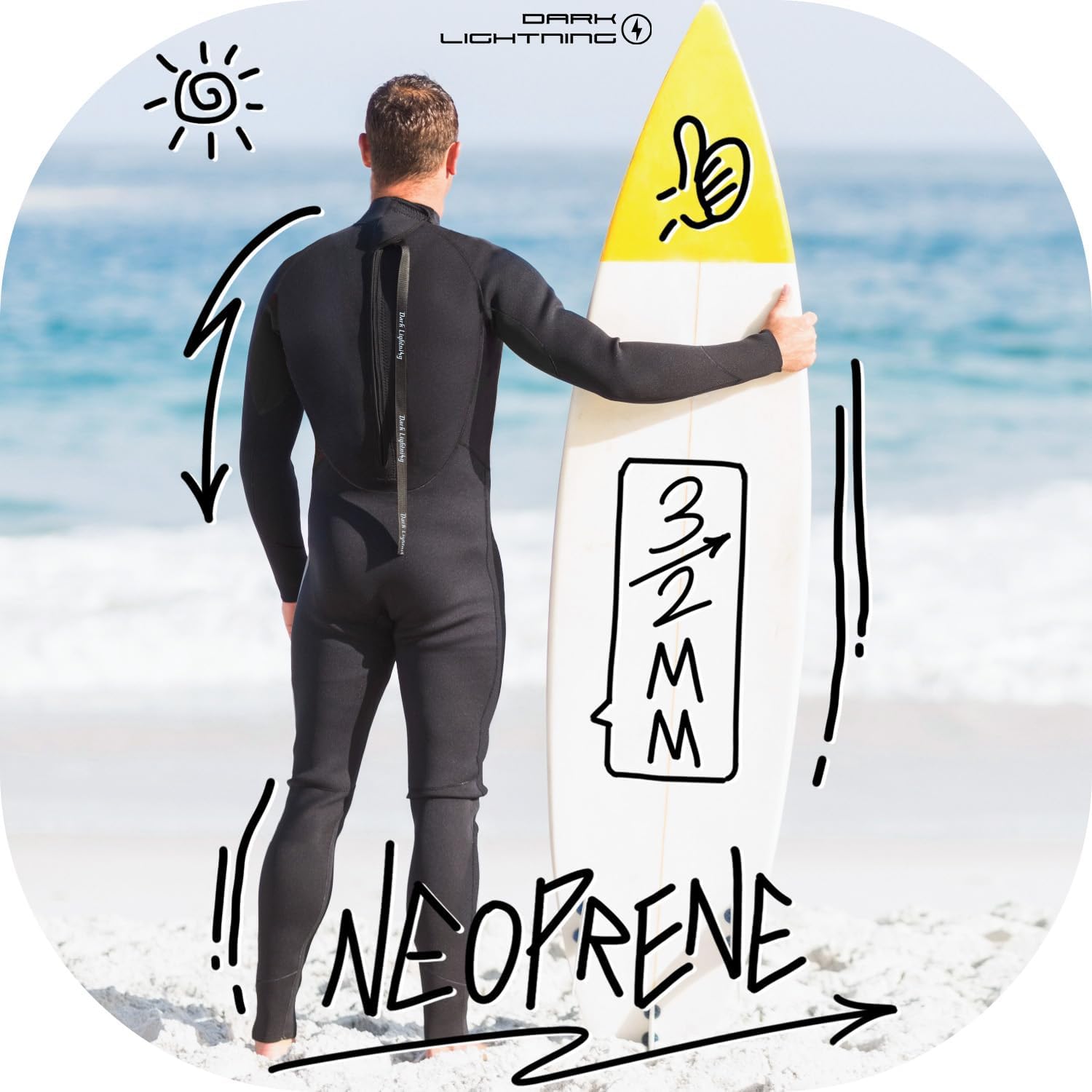
Check price on AmazonDark Lightning is the most documented offender on chest sizing. One buyer with a 42-inch chest ordered a Large — which the brand’s own size chart suggests should cover up to 42–44 inches — and couldn’t get the zipper closed. He returned it. Multiple other reviewers echo that the upper torso fits like a suit tagged one size down.
Dark Lightning does earn consistent praise for one specific hardware detail: neck comfort. Multiple owners report that the neck seal feels softer and less restrictive than name-brand suits they’ve previously worn, and less likely to cause the red chafing line that ruins a long session. For surfers who’ve had neck irritation problems with stiffer suits, that’s a meaningful differentiator.
The practical implication on sizing: if you’re anywhere near the top of a size range on the chest measurement, order up. No exceptions. If neck comfort is your top priority and you run average or slim through the chest, Dark Lightning is worth considering — but measure your chest in inches first, and give yourself a buffer.
Dark
$55.16
In stock on Amazon
Check price on AmazonHevto: Shoulders and a Zipper Vulnerability
Dark
$55.16
In stock on Amazon
Check price on AmazonHevto presents a slightly different flavor of the same chest problem. A 6-foot, 210-pound male reviewer described the shoulders as “a little snug” even when the torso and length felt correct. He kept the suit — but eventually the back zipper gave out. That failure sequence matters. He forced repeated stretching across the shoulders to get in and out of the suit, and the zipper absorbed that cumulative mechanical load. Hevto suits use a back-zip entry — a zipper that runs from mid-back up to the neck — which places hardware stress at the exact point where a snug shoulder fit creates the most tension.
For women’s fits, there’s a Hevto-specific note that doesn’t appear in the marketing: the calves run wide. Several women’s reviewers report that even when the torso length and fit are correct, the calf section has excess material that bunches and creates drag. For surfing — where you’re constantly kicking, duck diving under incoming waves, and popping up to your feet — loose neoprene at the calves affects range of motion in a way that loose neoprene elsewhere doesn’t.
Cleanline Surf’s wetsuit fit and sizing guide (cleanlinesurf.com) notes that calf and ankle seal quality matters as much as chest fit for thermal performance, because a loose calf seal flushes cold water in on every duck dive. If you’re shopping Hevto for a women’s program, add calf circumference to your measurement checklist alongside chest and shoulder width.
Dark
$55.16
In stock on Amazon
Check price on AmazonLemorecn: The Most Generous Cut in This Tier
Dark
$55.16
In stock on Amazon
Check price on AmazonLemorecn is the partial exception to the too-small rule. A 38-year surf veteran reviewed Lemorecn’s flexibility as comparable to suits costing two to three times more. A separate buyer, also 6 feet and 210 pounds, called the Large “the best wetsuit I’ve ever ordered from Amazon.” Two data points, same body type, same conclusion: Lemorecn’s sizing cuts more generously through the chest and shoulder than the other two brands.
The Inertia, in their buyer’s guide to entry-level wetsuits (“What to Know Before Buying a Cheap Wetsuit,” theinertia.com), has noted that the quality gap between budget neoprene and mid-tier neoprene has narrowed as offshore manufacturing standards have improved — and Lemorecn’s flexibility reviews are consistent with that observation.
Lemorecn also offers chest-zip entry on select models. A chest-zip wetsuit — where the entry zipper is a short horizontal zip across the upper chest combined with a pullover entry — typically allows significantly more lower-back flexibility than a full back-zip suit. For surfing, where paddling puts constant load on your lower back, this design difference is meaningful. The veteran reviewer’s flexibility praise likely reflects this construction choice as much as neoprene compound quality.
Dark
$55.16
In stock on Amazon
Check price on AmazonZipper Durability: The Sleeper Issue No One Talks About at Purchase
You won’t notice the zipper problem in week one. You’ll notice it in month four.
Across aggregated reviews, the recurring surprise is that zipper durability holds up initially but degrades faster than O’Neill or Rip Curl equivalents under regular use — particularly in chlorinated pools. Wavelength Surf Magazine’s Budget Wetsuit Buyer’s Guide (wavelengthsurf.com) identifies budget neoprene stitching and zipper hardware as the two most common quality gaps between entry-level and mid-tier suits, and verified purchaser reviews on all three of these brands confirm that pattern in practice.
Hevto’s back-zip failure under shoulder stress is the clearest example. Dark Lightning reviewers also note zipper wear appearing sooner than expected under repeated pool sessions. If you’re surfing exclusively in the ocean every few weeks, these suits hold up longer. If you’re in a pool-based surf fitness program or coaching junior athletes who suit up daily, zipper longevity becomes a real cost-of-ownership calculation.
Chlorine degrades neoprene and stitching faster than salt water, and it’s particularly hard on budget-tier hardware. O’Neill and Rip Curl mid-tier suits use more chemically resistant materials and tighter seam construction because they’re tested for this use pattern. Budget suits aren’t engineered for it. The cost-per-use math often favors spending more upfront if pool use is frequent.
Brand Comparison at a Glance
| Brand | Primary Fit Problem | Zipper Type | Sizing Verdict |
|---|---|---|---|
| Dark Lightning | Chest and upper torso run small | Back-zip | Dark — $55.16 Order one size up if chest ≥ 40 inches |
| Hevto | Shoulders snug; calves wide in women’s cuts | Back-zip | Dark — $55.16 Order up on shoulder width; check calf sizing separately |
| Lemorecn | Most generous cut; fewer returns reported | Chest-zip on select models | Dark — $55.16 Most true-to-size, but confirm chest measurement against brand chart |
Frequently Asked Questions
Should I always order one size up in budget wetsuits?
For Dark Lightning: yes, if your chest measurement is anywhere near the top of the listed range. For Hevto: order up if you have broad shoulders, regardless of chest size. For Lemorecn: sizing is more reliable, but still measure your chest in inches against the brand’s actual chart — don’t estimate by clothing size. Surfline’s water temperature and wetsuit thickness recommendations (surfline.com) note that manufacturer size charts across the budget tier tend to skew optimistic, and real-world buyer data consistently points toward needing more room than the chart suggests.
What body measurements matter most when choosing between these brands?
In order of importance: chest circumference, shoulder width, and height. Weight is a secondary signal — two people at 210 pounds with different shoulder structures will have completely different experiences in the same suit. Measure your chest at its widest point, measure shoulder width across the back from shoulder seam to shoulder seam if possible, and compare both against the brand’s chart. For women’s fits in Hevto, add calf circumference to that checklist.
How cold can I realistically go in a budget 4/3mm before I need to upgrade?
A 4/3mm suit — 4mm of neoprene at the core and 3mm at the limbs — is designed for water temperatures roughly in the 52–60°F (11–16°C) range. Surfline’s water temperature and wetsuit thickness guide places the lower edge of comfortable 4/3mm surfing at around 52°F for most people. Below that, sealed seams and collar design matter more than they do at moderate temperatures, and budget suits with taped rather than blind-stitched-and-taped seams will flush cold water faster on duck dives. If you’re surfing below 50°F regularly, you need a sealed-seam suit — a category these three brands don’t reliably serve.
Does Dark Lightning’s zipper flap actually prevent flushing on duck dives?
Partially. The Velcro zipper flap on Dark Lightning suits is a real feature, and reviewers note it reduces the volume of water entering at the zipper during surface paddling. Duck diving — submerging under a breaking wave — creates directional water pressure that a flap helps redirect. However, at this price point, the zipper seal isn’t comparable to welded or premium-hardware zippers on higher-tier suits. Think of it as meaningfully better than no flap, not as comparable to mid-tier or premium construction. For beach break surfing with frequent duck dives in cold water, this remains a real limitation worth knowing before purchase.
Will these suits hold up in chlorinated pools as well as the ocean?
No. As noted above, chlorine degrades neoprene and zipper hardware faster than salt water. If you’re using these suits in a pool environment — for surf coaching, fitness training, or junior programs — expect a meaningfully shorter lifespan than you’d see in ocean-only use. The cost-per-use case for spending more upfront on mid-tier O’Neill or Rip Curl suits in the $180–$280 range is strongest in this scenario: those suits will outlast two or three budget-tier replacements under frequent chlorinated use.
The Decision Rule
Here’s where it lands, practically:
If you’re 6 feet, 200-plus pounds, and buying your first budget wetsuit for mild-to-cool Atlantic water (55–65°F): Lemorecn is the lowest-risk order. Size chart accuracy is more reliable, flexibility reviews from similar body types are strong, and the chest-zip models reduce lower-back restriction during paddling.
If neck comfort is your top priority and you run average or slim through the chest: Dark Lightning is worth considering — but measure your chest in inches before ordering, and give yourself a full size of buffer.
If you’re outfitting a junior development program or surf school with multiple suits across varied body types: budget more per unit than these brands allow. The zipper degradation rate under frequent use, especially in pools, makes the true cost-per-use less attractive than the sticker price suggests. Mid-tier O’Neill or Rip Curl entry wetsuits will outlast multiple budget-tier replacements in that context.
The recurring truth across all three brands: the suits work. The fit is the variable. Measure twice, order once — and when in doubt, size up on the chest.