You’re standing in the parking lot at dawn, air temperature around 45°F, and you’re staring at a $280 O’Neill Epic 4/3 on one browser tab and a $79 Dark Lightning 4/3 on another. A wetsuit — just so we’re all on the same page — is a fitted neoprene suit (neoprene is a synthetic rubber foam) that traps a thin layer of water against your skin, which your body warms, keeping you insulated. The number “4/3” means 4mm of neoprene through the core, 3mm in the arms and legs — the right thickness for Atlantic water in the 50–60°F range. The question isn’t whether the O’Neill is a better wetsuit in absolute terms. It almost certainly is. The question is whether the gap is worth $200 to you right now. That’s what this article settles.
| EDITOR'S PICKWavestorm 8ft Surfboard // Foam… | Mid-tierO'Neill Men's Reactor-2 3:2mm B… | Budget pickDark Lightning Wetsuits for Men… | |
|---|---|---|---|
| Category | Surfboard | Wetsuit | Wetsuit |
| Thickness | — | 3:2mm | 3/2mm |
| Zip type | — | Back zip | — |
| Water temp use | — | — | Cold water |
| Size | 8ft | Large | Large |
| Wax needed | ✗ | — | — |
| Price | $256.38 | $154.95 | $55.16 |
| See on Amazon → | See on Amazon → | See on Amazon → |
What You’re Actually Comparing (And What You’re Not)
Let’s be clear about the playing field. O’Neill is a 70-year-old surf brand with decades of neoprene R&D behind the Epic line. Hevto, Dark Lightning, and Lemorecn are Amazon-native labels — likely sourced from established Chinese neoprene factories, possibly the same facilities that supply mid-tier licensed brands. That’s not a knock. Wavelength Surf Magazine, in their wetsuit construction guide “How to Choose a Wetsuit,” notes that the global neoprene supply chain is highly consolidated, meaning a $90 suit and a $250 suit can share raw material origins while differing sharply on seam finishing, panel cuts, and lining quality.
You are not comparing brand prestige. You are comparing:
- Seam construction — how panels are joined and whether water flushes through
- Neoprene quality — warmth-to-thickness ratio and flex under load
- Fit and sizing accuracy — critical for thermal performance
- Zipper and hardware durability — the most common single-point failure
- Longevity under Atlantic conditions — UV, salt, repeated stress
The O’Neill Epic sits at the mid-tier bracket ($200–$350). The budget trio — Hevto, Dark Lightning, Lemorecn — land firmly in the entry bracket (under $120). That’s the honest comparison.
Seam Construction: Where Budget Suits Either Win or Bleed Heat
This is the technical fault line. There are three seam types you need to know:
- Flatlock stitched: Thread passes through both panels. Fastest to produce. Water seeps through the stitch holes. Fine for water above 65°F, a cold-water liability below it.
- Glued and blind-stitched (GBS): Panels are neoprene-glued first, then a curved needle stitches into but not through the neoprene. Water cannot pass through the stitch holes because there are none on the exterior. This is the standard for any serious 4/3.
- Taped/welded seams: GBS plus an internal liquid tape seal. Found on suits in the premium tier (Patagonia Yulex, Matuse, and equivalent).
Wavelength Surf Magazine’s guide “How to Choose a Wetsuit” is unequivocal on this point: for cold water, GBS is the minimum standard. GBS eliminates the micro-flush that flatlock allows, and in 50°F Atlantic water, micro-flush is the difference between a two-hour session and a 45-minute one. Outside Online’s “Best Wetsuits for Cold Water Surfing” roundup identifies GBS construction as the baseline dividing line between suits appropriate for serious cold-water use and those suited only to warmer recreational conditions.
The O’Neill Epic 4/3 uses GBS throughout — that’s a known specification, not a marketing claim, and it’s consistent across every review of the suit published by Surfer Magazine in their annual Wetsuit Buyer’s Guide.
Here’s the uncomfortable truth about the budget field: Dark Lightning’s 4/3 also advertises GBS construction. Aggregated owner reports consistently cite solid seam integrity through dozens of sessions. Lemorecn similarly markets GBS on its full suits. Hevto is less consistent — some models are GBS, some are flatlock, and the listings don’t always make it obvious. Check the listing language carefully before you buy any budget suit. If it says “flatlock,” treat it as a warm-water recreational product, not an Atlantic winter tool.
H3 Head-to-Head: Seam Quality by Tier
Budget Tier — Hevto Full Suit
Hevto’s lineup spans flatlock and GBS models depending on the specific product and year. Flatlock versions are disqualifying for Atlantic water below 60°F. GBS versions are functional for light use. Sizing variance is the larger risk (covered below). For the right buyer, the entry price makes a single-season experiment defensible.
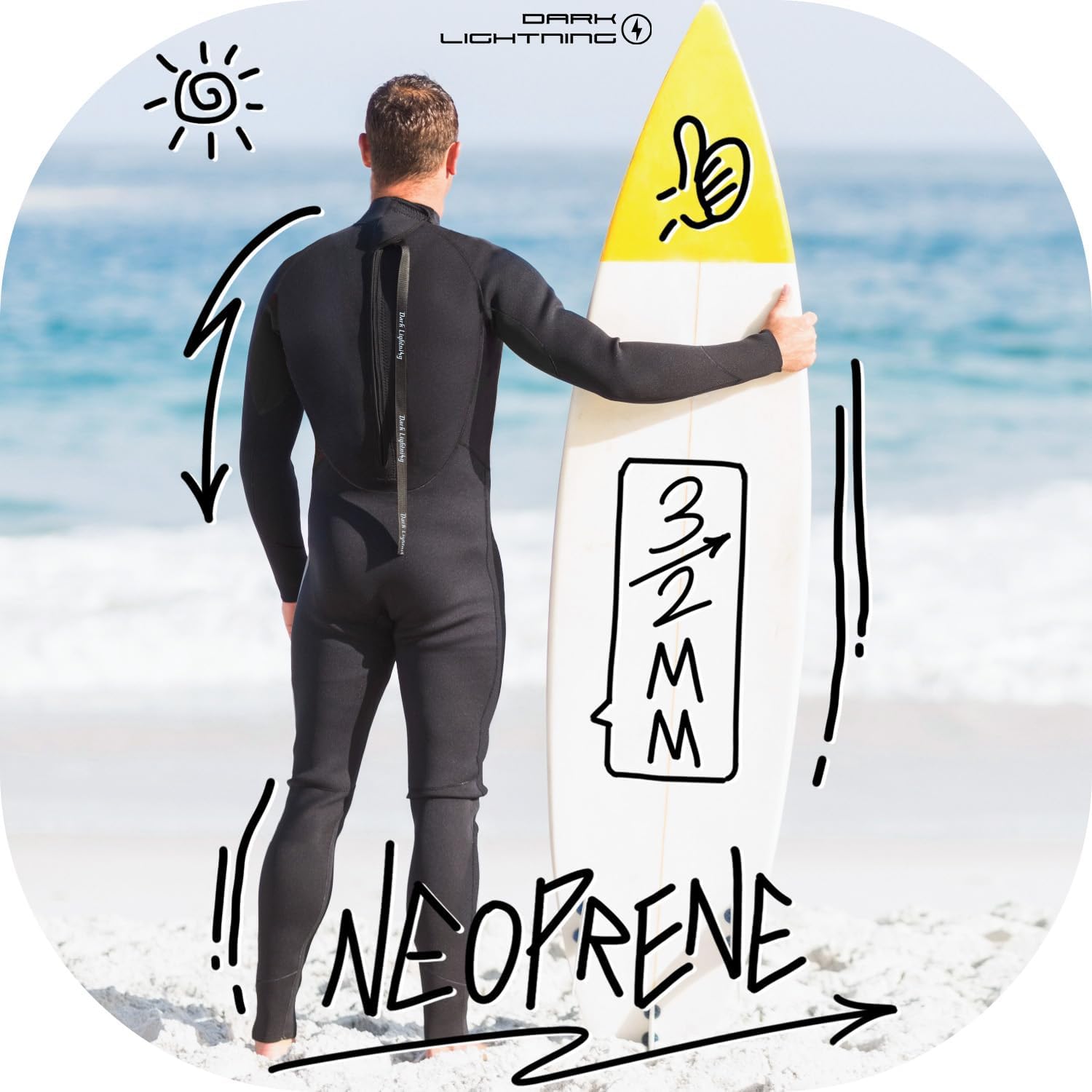
Dark
$55.16
In stock on Amazon
Check price on AmazonMid-Tier — Dark Lightning 4/3
Dark Lightning consistently advertises GBS construction, and owner-reported seam integrity supports that claim through a standard season of 1–2 sessions per week. Reviewers also specifically note construction details — including a zipper locking flap and interior finishing — that compare favorably to suits costing significantly more. If the GBS claim holds (verify in the listing), this is the strongest value proposition in the budget-to-mid transition zone.
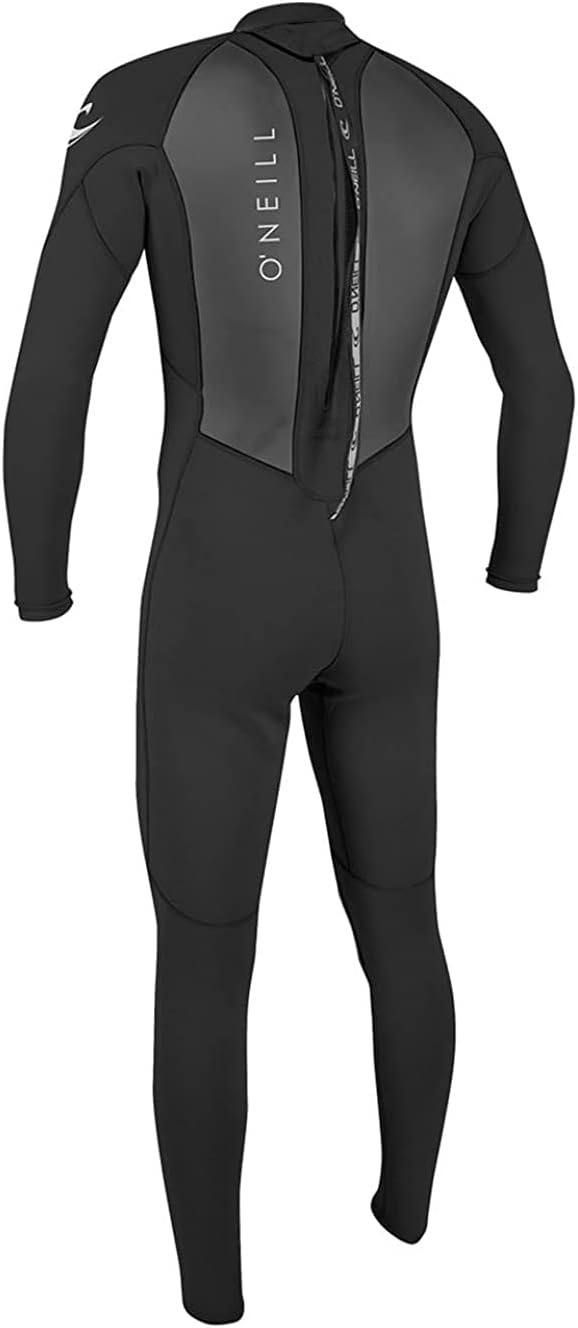
O'Neill
$154.95
In stock on Amazon
Check price on AmazonPremium Tier — O’Neill Epic 4/3
O’Neill’s Epic uses GBS construction throughout, proprietary TechnoButter neoprene foam with documented compression resistance, and zipper hardware calibrated for heavy repeated use. Surfer Magazine’s Wetsuit Buyer’s Guide identifies the Epic as the entry point into performance cold-water surfing — not a budget compromise, but not the top of the O’Neill range either. For 3+ sessions per week across a full Atlantic season, it’s the defensible investment.
Wavestorm
$256.38
In stock on Amazon
Check price on AmazonSizing: The Single Biggest Risk With Budget Wetsuits
Across aggregated owner reviews, sizing inaccuracy is the most consistent complaint against all three budget brands — and it’s not a small problem. A wetsuit that fits poorly is both colder and more restrictive than a well-fitting suit from a quality brand. Poor fit at the neck flushes cold water directly into your core. Poor fit at the wrist and ankle does the same at the extremities.
The Inertia’s guide “Everything You Need to Know About Wetsuit Thickness” emphasizes that a wetsuit should feel snug but never restrict breathing or arm rotation — and that the only reliable way to confirm fit on a budget suit is to measure your chest, waist, height, and weight against the brand’s published size chart specifically, not generic clothing-size logic.
Real owner patterns worth knowing before you order:
- A Hevto owner with a 42-inch chest reported being unable to zip a Large — a significant variance from standard sizing expectations.
- A Dark Lightning reviewer had to exchange an XL for a 3XL — two sizes, not one.
- O’Neill reviewers across multiple suits and multiple platforms consistently advise sizing up one size from your normal clothing size.
The practical rule: If you’re between sizes on a budget suit, go up. If you’re right on the border of a size chart on O’Neill, go up. If you order a budget suit and the return window is short, measure twice before you open the package and try it on immediately.
H3 Sizing Patterns by Tier
Budget Tier — Lemorecn Full Suit
Lemorecn’s size chart variance is comparable to Dark Lightning — owners commonly report needing one to two sizes larger than their clothing size. The compensating factor: a reviewer identifying themselves as a surfer with nearly four decades of experience described Lemorecn’s flex as comparable to suits costing two to three times as much. Surfer Magazine’s Wetsuit Buyer’s Guide consistently identifies flex as the area where premium suits most justify their price, so this claim is notable if it holds across more users. For a single-season experiment at moderate use, Lemorecn’s value proposition is worth investigating.
Dark
$55.16
In stock on Amazon
Check price on AmazonMid-Tier — Dark Lightning 4/3
Size up one to two sizes from clothing size as a starting point, then verify against Dark Lightning’s published chart using chest, waist, height, and weight measurements. Owners who follow this process report good fit. Owners who order based on clothing size alone frequently report returns.
O'Neill
$154.95
In stock on Amazon
Check price on AmazonPremium Tier — O’Neill Epic 4/3
O’Neill’s size chart is more reliable than the budget tier, but still requires sizing up one size from clothing. The Epic’s panel cuts are designed for paddling and pop-up mechanics, meaning a correct-fitting Epic feels less restrictive in the shoulder and hip than a poorly-fitted budget suit at the same nominal thickness.
Wavestorm
$256.38
In stock on Amazon
Check price on AmazonDurability: What Holds Up and What Fails First
Zipper failure is the clearest fault line in the budget category. One Hevto shorty owner documented zipper failure after approximately ten months of three-times-weekly pool use — attributing the failure partly to chlorine exposure. This data point requires context: pool chlorine degrades neoprene and zipper hardware faster than saltwater in many cases. A suit used in the ocean 1–2 times per week may last considerably longer than the same suit used in a pool three times a week. But the failure signal is real and points to Hevto’s zipper hardware not being built to a commercial standard.
Cleanline Surf’s Wetsuit Construction Guide notes that neoprene compression over time — the gradual loss of cell structure that reduces warmth — happens faster in lower-density commodity foams. O’Neill’s TechnoButter neoprene is formulated specifically to resist this compression degradation. Over a full Atlantic winter season — roughly October through April in New England, extending to May in the Mid-Atlantic — that difference compounds. A budget suit that keeps you warm in November may feel noticeably cooler by February, not because the water changed, but because the foam has compressed.
Dark Lightning owners, by contrast, specifically praise construction details — an extra zipper locking flap, a larger key pocket, and interior lining comfort — that their previous name-brand suits lacked. These are the right details to invest in at the budget price point, and they suggest Dark Lightning is making considered engineering choices rather than cutting every corner.
H3 Durability Expectations by Tier
Budget Tier — Hevto and Lemorecn
For light saltwater use (1 session per week, beach break, single season), a GBS-construction Hevto or Lemorecn suit appears capable of surviving. For pool use, heavy reef entries, or multi-season expectations, this tier will likely disappoint before the year is out. Cleanline Surf’s Wetsuit Construction Guide places commodity neoprene compression as the primary long-term failure mode — not seams or zippers in light use.
Dark
$55.16
In stock on Amazon
Check price on AmazonMid-Tier — Dark Lightning 4/3
For 1–2 sessions per week in saltwater across a full Atlantic season, Dark Lightning’s reported construction quality puts it at the upper boundary of what this price tier can deliver. Owners using it at this frequency report acceptable durability through a season. At 3+ sessions per week, longevity becomes uncertain.
O'Neill
$154.95
In stock on Amazon
Check price on AmazonPremium Tier — O’Neill Epic 4/3
Built for heavy use. The TechnoButter foam resists compression degradation, the GBS seams are finished to a commercial standard, and the zipper hardware is rated for sustained salt exposure. Outside Online’s “Best Wetsuits for Cold Water Surfing” consistently places the Epic at the entry point of suits designed to survive multiple full seasons of regular use. For surf schools or anyone surfing more than twice a week, this is where the math changes — replacements in the budget tier will cost more than the upfront price difference within two seasons.
Wavestorm
$256.38
In stock on Amazon
Check price on AmazonFrequently Asked Questions
Is Dark Lightning actually warmer than O’Neill at the same thickness? No published thermal test data supports this claim. Based on spec sheets and owner reports, they are likely comparable in the first season if both use GBS construction at the same nominal thickness. Over time, O’Neill’s TechnoButter neoprene is expected to retain warmth longer as it resists compression better than commodity foam — a distinction highlighted in Cleanline Surf’s Wetsuit Construction Guide.
Why do so many wetsuit reviewers say to size up, and by how much? Wetsuits are designed to fit tighter than clothing — snug contact is what traps water efficiently. For O’Neill, one size up from your clothing size is consistently recommended. For Hevto and Dark Lightning, reviewers report needing one to two sizes larger. Measure your chest, waist, height, and weight against each brand’s specific chart, as The Inertia’s thickness guide recommends.
Can a budget wetsuit hold up to Atlantic winter surf over a full season? Based on aggregated owner data: yes, with caveats. A GBS-construction suit from Dark Lightning or Lemorecn, used 1–2 sessions per week in saltwater, appears capable of surviving an Atlantic winter season. Heavy use, rock entries, or multi-season expectations favor the O’Neill Epic.
What thickness do I need for 50–60°F Atlantic water? A 4/3mm full suit is the standard recommendation for this range, per both Surfer Magazine’s Wetsuit Buyer’s Guide and The Inertia’s guide “Everything You Need to Know About Wetsuit Thickness.” At the lower end of that range (50–53°F), adding a 3mm hood, 3mm gloves, and 3mm booties becomes important — no wetsuit thickness alone compensates for heat loss through your head, hands, and feet in sustained cold water.
The Decision Rule
If X, then Y:
- If you surf 1–2x per week, primarily beach break, one season, and budget is tight → Dark Lightning 4/3 GBS is worth the risk. Verify GBS construction in the listing. Order one to two sizes up from your clothing size as a starting point.
- If you surf 3x+ per week, any Atlantic break, or you run cold → O’Neill Epic 4/3. The GBS construction, thermal longevity, and zipper hardware justify the price gap over a full season.
- If you’re curious about Lemorecn’s flex claims and surf mostly moderate conditions → it’s a reasonable experiment for one season, particularly if you’re between wetsuits and not ready to commit to mid-tier pricing.
- If you’re sourcing for a surf school quiver → avoid the budget tier entirely. Durability at 3x-weekly use, especially across varied user hands, will cost more in replacements than the upfront savings on Hevto or Dark Lightning.
The $200 gap is real. So is the performance gap — but it’s not infinite. Know your use case, verify seam construction before you buy, and size up across the board regardless of which tier you choose.