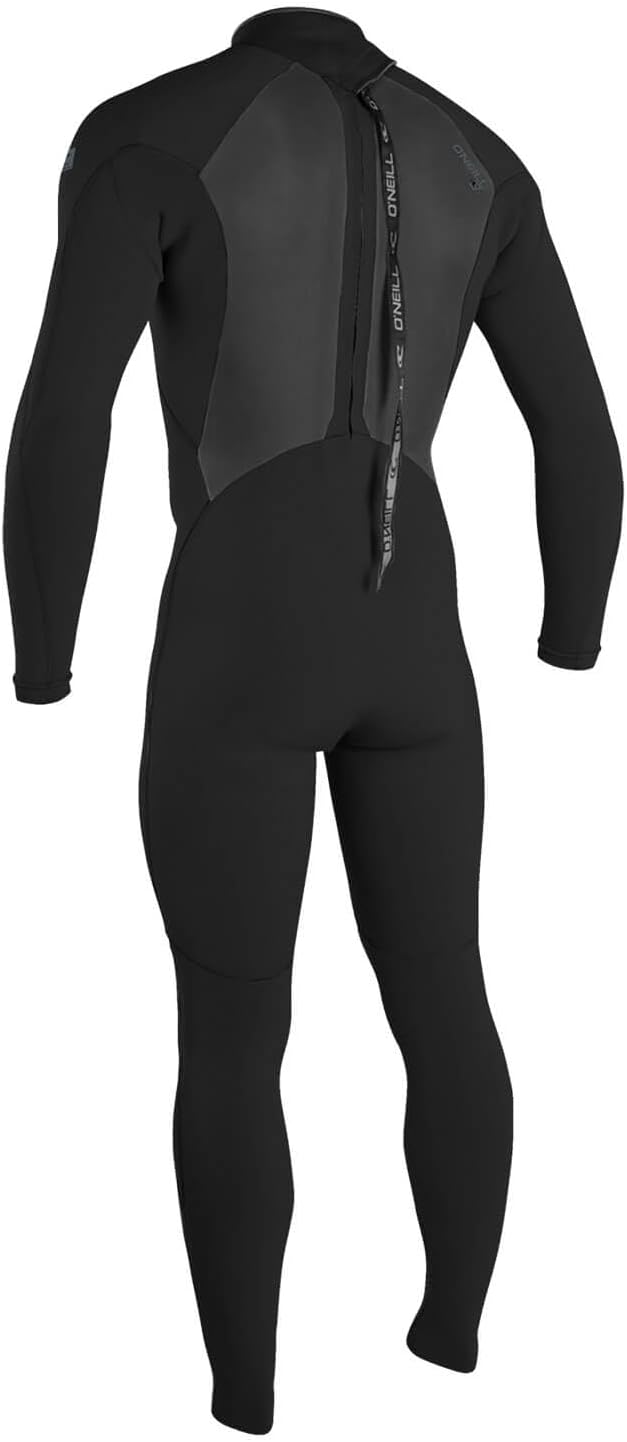
It’s late November. The water temperature off New Jersey or Rhode Island has dropped to somewhere between 45°F and 52°F. You paddle out and feel fine for the first twenty minutes. Then the cold starts winning — not through your chest, but through your wrists, your neck seam, the flushing water that found a gap in the zipper. You own a 5/4mm full suit (a wetsuit that covers your entire body, built from neoprene rubber that’s 5mm thick across the torso and 4mm through the limbs for better arm movement). The suit is good. The problem is that thickness alone is not the whole story. How a suit is sewn together — and whether those seams are sealed — determines whether that neoprene does its job or becomes a slow-drip irrigation system against your skin. This article breaks down seam construction, thermal linings, eco-material trade-offs, and the specific suits worth buying for Atlantic winter from October through March.
| EDITOR'S PICKO'Neill Men's Epic 4/3mm Back Z… | Mid-tierOwntop Wetsuit 5mm Neoprene Div… | Budget pickLemorecn Men’s Surfing Wetsuit… | |
|---|---|---|---|
| Thickness | 4/3mm | 5mm | 4/3mm |
| Zip type | Back zip | Back zip | Chest zip |
| Sleeve length | Full | Long sleeve | — |
| UPF rating | — | UPF50+ | — |
| Neoprene | — | ✓ | ✓ |
| Gender | Men's | Men's & women's | Men's |
| Price | $244.95 | $112.19 | $95.20 |
| See on Amazon → | See on Amazon → | See on Amazon → |
Why Seam Construction Matters More Than You Think
Every wetsuit is a puzzle of panels cut from neoprene sheets and joined at seams. Those seams are the weakest thermal link in the system.
There are four main seam types you’ll encounter on any suit in this category:
Flatlock stitching is the most basic — thread passes all the way through both panels. You’ll see it on summer suits and budget entry wetsuits. It works fine in warm water. In Atlantic winter, flatlock lets water push through the stitch holes with every duck-dive. That’s a disqualifier above 3mm.
Blindstitch (GBS — Glued and Blind Stitched) is the standard for quality cold-water suits. The neoprene panels are first glued together, then a curved needle stitches into — but not completely through — each panel. The result is a seam that doesn’t perforate the outer surface. Water transfer drops dramatically. Wavelength Surf Magazine’s breakdown of wetsuit seam performance notes that GBS construction alone reduces flushing by a significant margin compared to flatlock, particularly under dynamic paddling load.
Taped seams go a step further. A strip of flexible tape — either an internal liquid-applied seal or a woven internal tape — is bonded over the inside of the blindstitched seam. This is the upgrade that separates a genuinely cold-water suit from one that merely looks the part. Cleanline Surf’s wetsuit thickness guide specifically recommends fully taped suits for water temperatures under 52°F.
Critically taped means only the main seams (chest, back, key torso seams) are taped. Fully taped means every seam — including arms and legs — is sealed. For Atlantic winter, fully taped is the correct call. The cost difference between critically taped and fully taped within the same model line is usually $50–$100. That delta is worth it.
By the Numbers
| Water Temp | Recommended Thickness | Minimum Seam Standard |
|---|---|---|
| 55–62°F | 4/3mm | GBS, critically taped |
| 48–55°F | 5/4mm | GBS, fully taped |
| 42–48°F | 5/4mm + hood | GBS, fully taped, sealed zip |
| Below 42°F | 6/5/4mm | Fully taped, liquid seams |
Surfline’s Atlantic winter condition data puts the Mid-Atlantic corridor (New Jersey through Virginia) in the 42–52°F range from December through February. New England adds another 3–5°F of cold on average. Plan your seam spec accordingly.
Zip Types and Entry Systems: The Entry Point Is Also a Leak Point
The zipper — or the absence of one — is the second major variable.
Back-zip suits have a long zipper running from the lower back up to the neck. They’re easy to get in and out of. The trade-off is that back zippers create a structural gap and flex point across the broadest part of your back. In cold water, that gap is a flushing risk every time you arch forward on a bottom turn or paddle hard through a close-out set.
Chest-zip suits route the entry panel across the chest, with a short zipper or a zipperless flap that seals under tension. Getting in takes practice — you’ll feel awkward the first five times. But once sealed, a chest-zip system dramatically reduces flushing through the back. Surfer Magazine’s cold-water wetsuit coverage consistently points to chest-zip design as a meaningful thermal upgrade for serious winter surfing. Owners of chest-zip suits in mid-Atlantic winter conditions regularly report a noticeable difference in core warmth during longer sessions.
Zipperless (or “zip-free”) designs use a combination of stretch panels and overlapping flap entry without any traditional zipper hardware. Patagonia’s Yulex suits have moved heavily in this direction. The result is no metal zipper to corrode, no zip pull to fail, and no central leak vector across the back. The downside is that some surfers — particularly those with broader shoulders or less flexibility — find the entry difficult. Worth trying before buying if possible.
For Atlantic winter specifically: if you’re surfing regularly between October and March, a chest-zip or zipperless suit is the correct architecture. Back-zip is fine for autumn shoulder season. Below 50°F, it becomes a liability.
Thermal Linings, Eco Materials, and the Warmth-to-Flex Trade-off
The neoprene panels themselves have evolved significantly. Two variables matter here: the interior lining and the base material.
Interior Lining
Standard neoprene has a smooth or jersey-lined interior. Better suits add a thermal plush lining — a textured fleece-style interior that traps a thin layer of water against your skin and heats it quickly. Rip Curl’s E-Bomb and Flashbomb lines use their own thermal lining construction; owners consistently note faster warmth on entry compared to unlined neoprene. O’Neill’s Psycho series has a similar approach with their TechnoButter thermal interior panels in the chest and lower back.
The trade-off is that thermal lining adds a small amount of stiffness and weight when waterlogged. In a 5/4mm suit already running thick, this can affect shoulder rotation if the liner extends into the upper arm panels. Suits that reserve thermal lining for the core and use cleaner, thinner neoprene at the shoulders often paddle better over a full session.
Eco Materials: Yulex and Limestone Neoprene
Traditional petroleum-based neoprene has a real environmental cost. Two alternatives now appear in premium suits:
Limestone neoprene (used by O’Neill, Rip Curl, and others) replaces some petroleum inputs with calcium carbonate from quarried limestone. Outside Online’s feature on wetsuit technology evolution notes that limestone neoprene offers equivalent warmth and stretch to traditional neoprene while reducing the petroleum footprint. Suits from both brands using limestone neoprene typically run $$$, from $450–$650 for a 5/4mm full suit.
Yulex is a natural-rubber alternative developed by Patagonia in partnership with a certified Fairtrade rubber supplier. Patagonia’s Yulex full suits run $500–$700 ($$$ bracket), are FSC-certified, and use a zipperless design. Owners report warmth comparable to equivalent petroleum neoprene at the same thickness, though the material does have a slightly different stretch character that some surfers describe as firmer on first use, breaking in after several sessions.
Matuse also uses a natural-rubber Geoprene material in their suits ($$$, $450–$700). Their construction emphasizes minimal seaming — fewer panels means fewer seam leak vectors.
If budget is $$$, the Patagonia Yulex or Matuse Geoprene options are genuinely differentiated products, not just marketing. If budget is $$ ($300–$450), the O’Neill Psycho Tech or Rip Curl E-Bomb in a 5/4mm fully-taped chest-zip configuration cover Atlantic winter well and are the most consistent performers based on aggregated long-run owner reviews.
Specific Suit Recommendations by Budget
$$ ($300–$450): Rip Curl E-Bomb 5/4mm Chest Zip Rip Curl’s E-Bomb line uses their E5 neoprene with a chest-zip entry and GBS fully-taped construction. Owners consistently report flexible shoulders for a 5/4mm, which is the primary complaint at this thickness. The thermal E-Flash lining in the core speeds warmup without adding bulk to the arm panels. This is the suit most frequently recommended by surf shop staff at independent East Coast retailers for the mid-Atlantic winter window.
$$ ($350–$500): O’Neill Psycho Tech 5/4mm Chest Zip The Psycho Tech brings O’Neill’s TechnoButter 3x neoprene into a fully taped, chest-zip build. Reviewers note it runs slightly warmer than the E-Bomb but with a marginally stiffer shoulder in colder conditions. The TechnoButter interior lining earns consistent praise from owners surfing New England in January and February. Spec sheets put the TechnoButter neoprene at a higher stretch-to-warmth ratio than standard limestone neoprene.
$$$ ($500–$700): Patagonia Yulex Pro 5mm Zipperless The go-to recommendation for surfers who want performance and environmental alignment in a single purchase. The zipperless entry requires practice. Once mastered, the sealed system and natural-rubber warmth make it one of the most thermally consistent suits available in the Atlantic winter range. Patagonia rates it for water temperatures as low as 45°F without an added hood.
$$$ ($450–$650): Matuse Hprometheus 5/4/3mm Matuse’s minimal-panel Geoprene build is the pick for surfers whose primary complaint about 5/4mm suits is paddling restriction. Fewer seams, natural rubber, and strategic thickness zoning (5mm core, 4mm legs, 3mm arms) make this the most paddle-friendly option in the cold-water category based on published specifications and consistent owner feedback.
Accessories That Complete the System
A 5/4mm suit handles the torso. Below 50°F, you need to close the gaps.
Hood: A 3mm attached or separate hood eliminates the neck-flush problem entirely. If your suit has a hood attachment point (most $$$-tier suits do), use it. If not, a separate 3mm hood that seals under the suit collar is the next best option.
Gloves: 5mm lobster-claw or mitten gloves for water below 48°F. 3mm five-finger gloves work down to about 50°F. Below 45°F, five-finger gloves alone aren’t enough — hand dexterity loss affects paddling and pop-up significantly faster than you expect.
Booties: 5mm round-toe or split-toe booties for reef and rock entries. 3mm for sand-bottom beach break down to about 50°F.
The Decision Rule
If you surf the Atlantic corridor between October and March, here’s the clear framework:
- Water 50–55°F, budget $$: Rip Curl E-Bomb 5/4mm chest-zip, fully taped. Add 3mm gloves. Done.
- Water 45–50°F, budget $$: O’Neill Psycho Tech 5/4mm chest-zip, fully taped. Add 3mm hood, 5mm gloves, 5mm booties.
- Water 45–50°F, budget $$$: Patagonia Yulex Pro or Matuse Hromagnetheus. Same accessory stack.
- Water below 45°F, any budget: Move to 6/5/4mm or add a separate thermal underlayer under your 5/4mm. A 5/4mm alone is undersized for sustained sessions below 42°F regardless of seam quality.
Thickness gets you in the water. Seam construction and zip architecture keep you there. Shop with both in mind, and Atlantic winter becomes a window — not a wall.