Imagine you’ve just ordered a beautiful new shortboard — a JS Industries Monsta, let’s say — and you’re ready to finally upgrade from the fin set that came stock in your last board. You pull up a listing for a sleek carbon set from FCS II, click “add to cart,” and only then realize: you’re not sure if your new board even uses FCS II. Maybe it’s Futures. Maybe it’s the older FCS original. The fins arrive. They don’t fit. Welcome to the most common, most fixable mistake in surfboard shopping.
Fin systems are the mounting hardware built into your board’s tail — the boxes (slots or plug inserts) that hold your fins in place. There are two main systems dominating the market right now: FCS II (made by Fin Control Systems, an Australian company) and Futures (a California-based competitor). They are not interchangeable. A Futures fin will not fit an FCS II box, and vice versa. Getting this wrong costs you money and time. This guide tells you exactly how to identify which system you have, what each one offers, how to compare fins across both ecosystems, and — critically — when it’s worth switching.
| EDITOR'S PICK[FCS II H4 Tri Fins](https://www.amazon.com/dp/B086XJR2WB?tag=greenflower20-20) | Mid-tier[BPS New Zealand Surfboard Fins…](https://www.amazon.com/dp/B07B45VHVV?tag=greenflower20-20) | Budget pick[Ho Stevie! FRP Thruster (3) Sur…](https://www.amazon.com/dp/B01BPJ0TB4?tag=greenflower20-20) | |
|---|---|---|---|
| Material | — | Fiberglass | FRP |
| Fin system | FCS II | FCS | Single Tab |
| Includes case | — | — | ✓ |
| Size | H4 | Medium (G5/M5) | — |
| Price | $180.00 | $44.99 | $24.97 |
| See on Amazon → | See on Amazon → | See on Amazon → |
How to Tell FCS II and Futures Apart (In 60 Seconds)
If you have a board in front of you, this is the fastest fix.
FCS II boxes look like two small rectangular slots side by side — sometimes called a “two-tab” system. The fin base snaps in without a tool. There’s a plastic locking mechanism that clicks when seated. Older FCS (the original, pre-2013 system) used a screw and two separate plug inserts; if your fin needs a flat-head screwdriver to install, you’re on original FCS, not FCS II. Original FCS fins are not compatible with FCS II boxes.
Futures boxes are a single, longer rectangular slot — a one-piece channel that runs the full length of the fin base. Installation requires a single screw (a fin key, usually included with the fins). The base of a Futures fin is visibly longer and more tapered than an FCS II fin base.
Side by side:
| Feature | FCS II | Futures |
|---|---|---|
| Box style | Two-tab, dual slots | Single-channel slot |
| Tool required? | No (tool-free snap-in) | Yes (fin key / single screw) |
| Fin base shape | Short, rectangular, tabbed | Long, tapered, single piece |
| Backward compatible? | Not with original FCS | Yes — Futures fins fit all Futures boxes |
| Approx. fin price range | $40–$200+ | $40–$180+ |
If you can’t check in person, look at the board’s product page on the shaper’s site. Channel Islands, JS Industries, and most mainstream shapers list the fin system clearly in the spec sheet alongside dimensions and volume.
Who Uses Which System — And Why It Matters When You’re Board Shopping
Market share roughly splits 60/40 in favor of FCS II, based on retail stocking patterns consistently noted across major surf retail publications including Boardcave’s buying content and Cleanline Surf’s fin guide. But “more common” doesn’t mean “better.” Here’s how the ecosystem breaks down by brand:
Brands that default to FCS II: Channel Islands, JS Industries, Pyzel, Firewire, Lost Surfboards, Album Surf, DHD.
Brands that default to Futures: Chemistry Surfboards, Hayden Shapes, Rusty, and many custom shapers on the East Coast and in Australia.
This matters because if you’re building a quiver — say, a shortboard from Pyzel and a step-up from Hayden Shapes — you may end up needing two separate fin sets to optimize each board. That’s a real cost. Wavelength Surf Magazine’s article “How to Choose Surf Fins” recommends standardizing your fin system across a quiver if you’re buying more than two boards, specifically to avoid this scenario.
For intermediate surfers comparing a Channel Islands Spine-Tek (FCS II) against a Hayden Shapes Hypno Krypt (Futures), the right call is often to pick your primary board first and then plan the quiver around that system — not the other way around.
Performance Fins Compared: Budget, Mid-Tier, and Premium
This is where the buying decision gets real. Below are three tiers across both systems, structured so you can match your budget and surfing level to the right entry point.
H3: Budget Entry Points — Fiberglass Construction
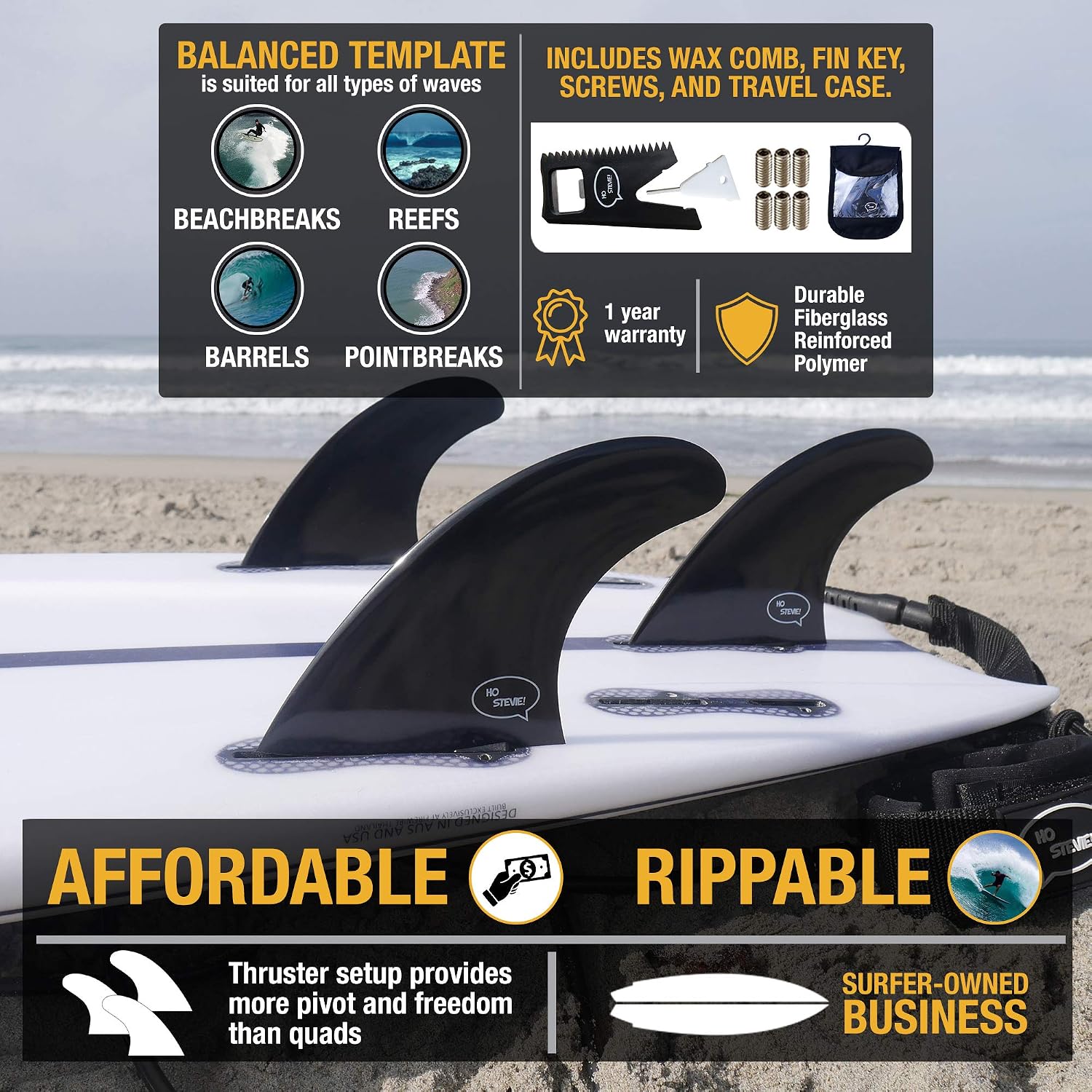
For surfers who want to experiment with templates without paying the carbon premium, both systems offer honest fiberglass options in the $40–$80 range. FCS II’s Performance Core (PC) series uses a fiberglass-reinforced construction that delivers more flex than carbon — more forgiving in small, weak surf but less responsive in powerful conditions. On the Futures side, the EA Performance Glass series sits at a comparable price point with similar flex characteristics.
According to Boardcave’s buying guide “FCS II vs Futures: Which Fin System Is Right for You?”, fiberglass fins in either system are a smart starting point for intermediate surfers who haven’t yet identified their preferred template shape, since replacing a $50 set involves far less pain than retiring a $180 carbon set you bought in the wrong template.
Ho
$24.97
In stock on Amazon
Check price on AmazonH3: Mid-Tier — Performance Core Carbon Hybrids
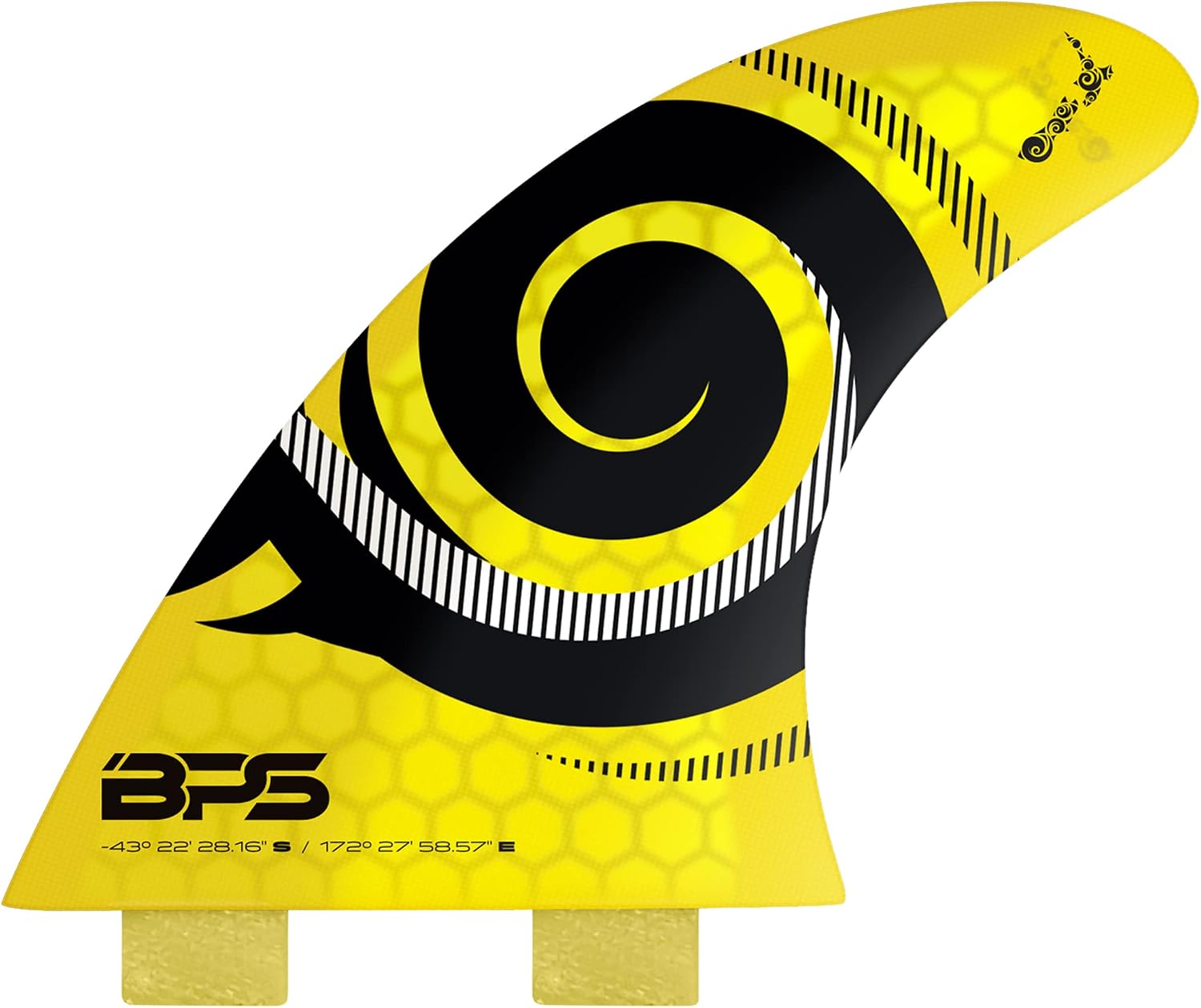
The mid-tier in both systems ($90–$130) is where most intermediate surfers land after their first or second fin upgrade. These fins blend a fiberglass base with partial carbon layering — you get some of the stiffness and snap of full carbon at a meaningfully lower price.
FCS II’s Performer PC Carbon series sits squarely in this range. Owner feedback aggregated across surf retail review sections describes this template as predictable through turns and well-suited to average beach-break conditions — a description that maps directly to the punchy, mid-size Atlantic swells that define most East Coast sessions from New Jersey to the Outer Banks.
Futures’ equivalent mid-tier is the EA Carbon series, which reviewers consistently describe as slightly stiffer than the FCS II PC Carbon at the same price point — more drive, but requiring a bit more wave quality to feel the benefit. Stab Magazine’s explainer “Fins Explained: Everything You Need to Know About Fin Systems” notes that mid-tier carbon hybrids represent the fastest-growing segment of the fin market, driven by surfers stepping up from beginner equipment who don’t yet want to commit to full-carbon prices.
BPS G5/M5
$44.99
In stock on Amazon
Check price on AmazonH3: Premium — Full Carbon Performance Fins
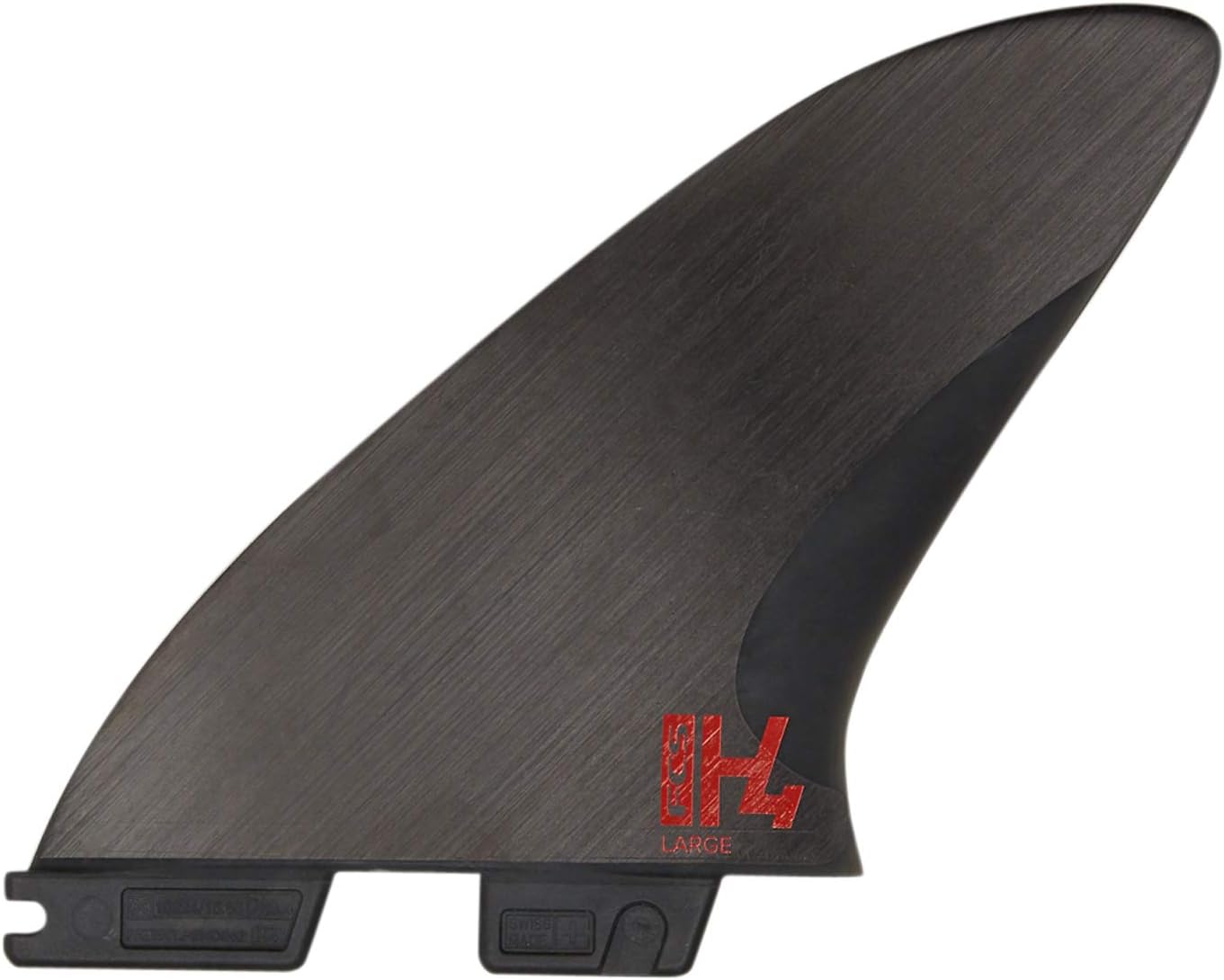
At the top of the market ($140–$200+), both systems offer full carbon construction aimed at experienced surfers who can feel the difference between flex patterns and want to tune their board precisely.
FCS II Reactor Neo Carbon (~$150–$200 depending on size and template) — FCS describes the Neo Carbon construction as a layered carbon fiber build designed to reduce weight in the tip while maintaining drive through the base. The pattern across retail reviews is consistent: surfers report a livelier, snappier feel compared to the fiberglass PC series. This fin is widely stocked at shops from Virginia Beach to Maine, making it one of the most accessible premium options on the East Coast.
Futures F4 Alpha Carbon (~$140–$180) — Futures’ primary performance carbon offering uses a unidirectional carbon layup. Reviewers across multiple surf retail platforms describe it as stiffer than comparable FCS II Neo Carbon sets — more drive, less give. That’s a meaningful tradeoff: strong projection on open faces, but less forgiveness in close-out sections. Boardcave’s fin guide specifically flags the F4 Alpha Carbon as the benchmark premium option for Futures users, noting its stiffness makes it better suited to surfers who regularly access overhead-plus surf.
Futures Tokoro T1 Carbon (~$150–$190) — A collaboration template with shaper Roy Tokoro, this fin features a wider base and more upright rake than the F4. As noted in Boardcave’s fin comparison content, the wider base adds hold in larger surf — a feature that Atlantic surfers who travel to Puerto Rico or the Caribbean during the swell season mention frequently in the context of step-up boards.
FCS
$180.00
In stock on Amazon
Check price on AmazonThe Tool-Free Question: Is FCS II’s Snap-In System Worth the Hype?
It depends on where you surf and how often you travel.
FCS II’s tool-free install is genuinely fast — you snap fins in at the beach in seconds, no key required. That’s a real advantage when you’re swapping between setups for different conditions (twin, thruster, quad) on the same day. Cleanline Surf’s Fin Buying Guide notes this as one of the most frequently cited advantages by coaches and school operators who manage high-rotation quivers, where losing a fin key on a crowded beach is a genuine operational problem.
The trade-off: multiple owner reports note that FCS II fins can feel slightly less locked-in than Futures under heavy loading — big drops, powerful hacks in solid surf. FCS addressed this with improved locking tab designs in later production runs, but the perception persists in aggregated reviews. Futures fins, by contrast, are consistently described as more mechanically secure by reviewers who regularly surf powerful or hollow waves.
For Atlantic surfers: if your home break is a beach-break wedge or a moderate point, FCS II’s flexibility is probably a net win. If you’re chasing serious swell at a reef break or traveling for heavier surf, Futures’ added mechanical security is worth the 30-second install time.
Can You Retrofit? Switching Systems Without Buying a New Board
Yes — but it’s not a first-resort solution.
Both FCS and Futures sell replacement fin boxes that can be glassed into a board by a skilled shaper or repair technician. Cost typically runs $20–$60 per box in labor plus materials, depending on your region. The Atlantic surf repair market has several shops offering this service, particularly in areas with high board volume like the Outer Banks and the New Jersey Shore.
When does this make sense? If you have a quiver standardized on Futures and you acquire a used board boxed for FCS II — and you love the shape — a retrofit is cheaper than replacing the board. But retrofitting a brand-new board purely to chase a single fin set you already own doesn’t make financial sense. Buy the fin set that matches your box.
The Decision Rule
Here’s the clean framework:
If you’re buying your first performance fin set and your board is already boxed — buy to match the box. Full stop. Don’t let fin selection drive your board purchase at this stage.
If you’re choosing between two boards with different fin systems — standardize on FCS II if you prioritize quiver flexibility and template variety; standardize on Futures if you surf powerful, heavy waves and want maximum mechanical hold.
If you’re a coach or school operator buying fins in volume — FCS II’s tool-free system reduces changeover time and eliminates the risk of losing a fin key on a crowded beach. As Cleanline Surf’s Fin Buying Guide documents, the operational advantage is real and consistently noted by school operators.
If you’re splurging on carbon fins for performance — both systems offer carbon construction at comparable price points. The FCS II Reactor Neo Carbon and the Futures F4 Alpha Carbon are the benchmarks in their respective ecosystems. Read the template descriptions carefully for your specific surfing style — rake angle, base width, and tip area matter more than brand loyalty at this price point.
One last thing: always check your board’s fin box spec before checkout. Channel Islands lists it clearly on every model page. So does JS Industries and Pyzel. If you’re buying used, a photo of the tail with fins removed tells you everything you need to know.
Get the system right first. Then obsess over the template.