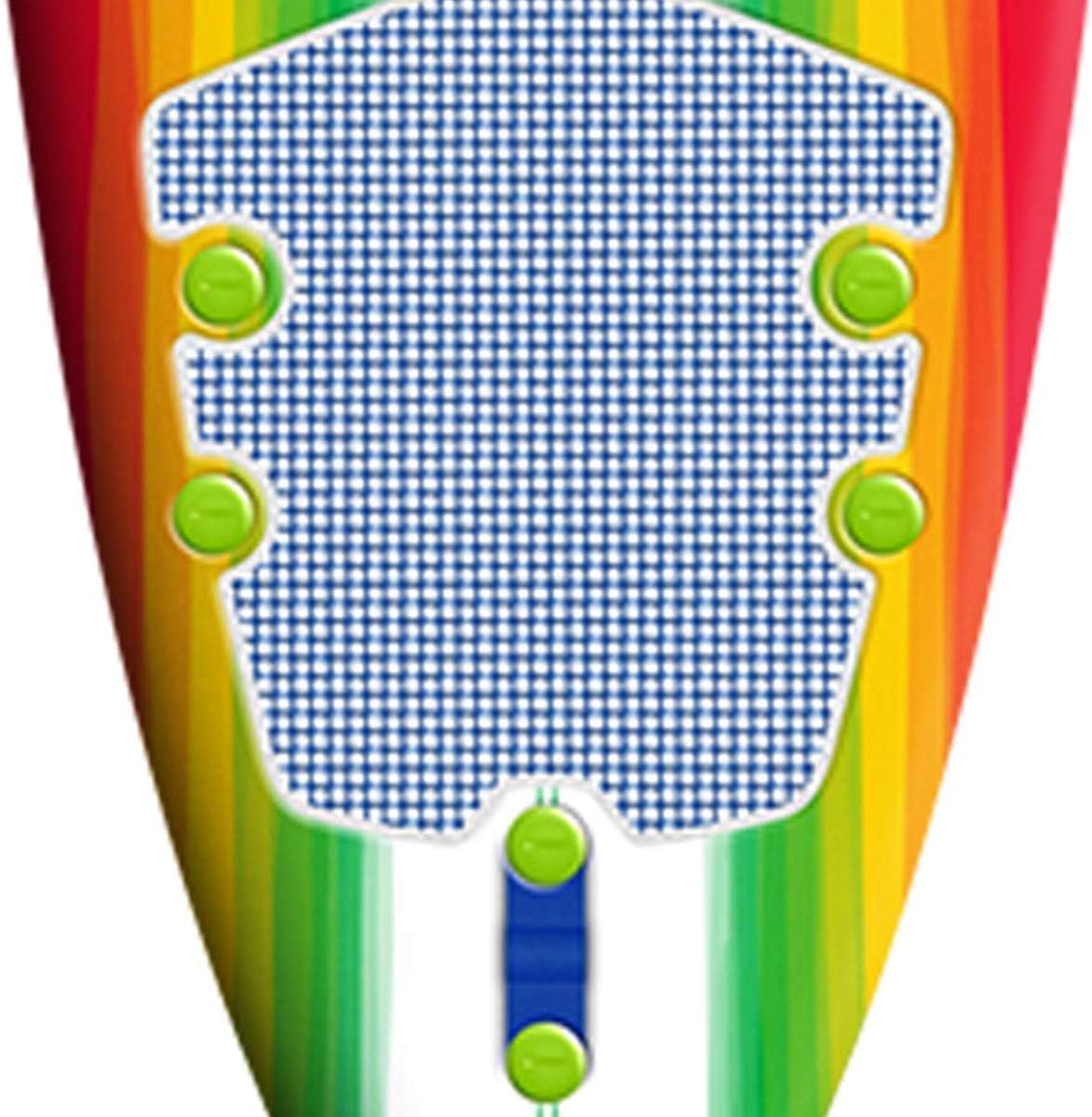
You bought the Wavestorm 8ft. Smart move. Now you’re paddling out regularly, catching waves more often than you’re missing them, and somewhere in the back of your mind a question is forming: is it time to go smaller?
That question is worth slowing down for — because most beginners answer it too fast and pay for it. A foam surfboard (also called a “foamie” or “soft-top” — a board with a soft, forgiving foam deck rather than a hard fiberglass surface) is not a training wheel you outgrow on a schedule. The right time to size down depends on your wave count, your body weight, your local break, and honestly how honest you’re being with yourself about your skill level. This guide maps the full progression path from the Wavestorm 8ft through the 7ft and on to the 5’6” swallow-tail fish — with real weight data, condition-specific advice, and the exact decision rule you need to make the call confidently.
Why the 8ft Wavestorm Has a Longer Useful Life Than You Think
Here is the thing nobody tells you at the shop: the 8ft Wavestorm is not just a beginner board. It is also a legitimately useful small-wave tool for experienced surfers who know what they are doing.
Reviewers with years of shortboard and mid-length experience have described it as a “wave-catching machine” in 1–2 foot Florida surf — the kind of ankle-to-knee-high summer slop that makes a 6’2” shortboard feel completely useless. That framing matters. It means that if you bought the 8ft as a learning tool and you are still on it six months later, you are not failing. You might just be surfing it correctly.
For adult beginners, the 8ft delivers three things that no smaller board can match at the same price point: float (volume), stability (width), and forgiveness on a bad pop-up (soft deck). A 38-year-old adult learner working on balance, paddling efficiency, and the pop-up motion — the explosive move from lying flat to standing on the board — consistently reports the 8ft as enabling meaningful session-to-session progress in a way that smaller boards simply do not.
By the numbers — Wavestorm 8ft published specs:
- Length: 8’0” | Width: ~22.5” | Thickness: ~3.25”
- Estimated volume: ~80–85 liters
- Weight capacity: manufacturer-rated up to approximately 220–230 lbs
At 80+ liters, the 8ft sits in longboard territory. Per Boardcave’s volume calculator and beginner board guide, most adult beginners benefit from boards in the 60–90 liter range depending on body weight, with heavier or less athletic riders staying at the higher end longer. The 8ft handles that range well.
The honest tradeoff: The 8ft is slow to turn. It paddles beautifully in a straight line. But generating speed down the line, making cutbacks, and surfing the pocket of a wave all feel like they are working against the board’s momentum rather than with it. That is the signal — not a calendar date — that it is time to size down.
The 7ft: The Right Size for More People Than You Expect
The Wavestorm 7ft occupies a genuinely useful middle position, and it gets undersold because most surf content skips straight from “beginner 8ft” to “performance shortboard.”
Parent-gifter review data is especially informative here. A 10-year-old at approximately 5 feet tall is consistently cited as an ideal match for the 7ft — which tells you something important about the volume math. A 195-lb adult learning in Lake Erie also reports the 7ft working well, which puts the functional weight ceiling somewhere around 200 lbs for flatwater or mellow wave conditions. For Atlantic beach break in the 1–3 foot range, that ceiling likely drops slightly — call it 180 lbs as a working number before the board starts feeling like it is sinking under you on the paddle-out.
The 7ft also gets strong marks from the Thurso lineup in this size range. Owners reviewing the Thurso 7ft and 8ft boards consistently highlight exceptional out-of-box packaging — boards arriving in protective foam and tight-wrapped — and describe it as a favorite for paddling and popping up specifically. That matters because the pop-up is the move you will drill hundreds of times before it becomes automatic, and board stability during that split second is what lets muscle memory form correctly.
One important flag from aggregated Thurso reviews: at least one reviewer notes visible wear on the rail (the edge of the board) and deck after only a few sessions. This is not unusual for soft-top boards at this price tier, but it is worth knowing. If you are buying a 7ft foamie for a junior development program or surf school context where boards take daily punishment, build rack-and-rinse maintenance into your plan from day one.
Fin and leash note: The Wavestorm 7ft ships with fins included. Fins are the small blade-like fins on the underside of the board that provide directional control and drive. The board uses a standard FCS-compatible box system — not FCS II, which uses a different two-tab snap-in mechanism. If you are already familiar with FCS II fins from a performance board, they will not snap directly into the Wavestorm’s boxes without an adapter. Check what you already have before buying additional fins.
Price tier anchor: The 7ft Wavestorm sits firmly in the $ bracket — under $200 at most points of sale. The Thurso equivalent runs slightly higher but remains in $ territory.
The 5’6” Swallow-Tail Fish: Read the Fine Print Before You Buy
The Wavestorm 5’6” is a swallow-tail fish shape — a board with a notched, V-cut tail designed to release quickly through turns and generate speed in small, mushy waves. It is a genuinely fun shape when it works. It is also the board in this lineup where the gap between expectation and reality is widest.
Across aggregated purchase reviews, two patterns emerge. First: buyers coming from the 8ft report immediate frustration with wave-catching. This is volume physics, not board failure. The 5’6” carries significantly less float than the 8ft — likely in the 35–42 liter range based on comparable published dims — which means you need to generate your own paddle speed where the 8ft was doing it for you. Per Surfline’s wave size and board volume guide, dropping more than 30–40 liters of volume without a corresponding leap in paddle fitness and wave-reading skill produces a frustrating experience, not a progression one.
Second: at least one reviewed unit arrived with a damaged nose. Inspect your board carefully on delivery. Nose dings on a foam board are not structural emergencies, but they can delaminate (allow water to seep into the foam core) over time if not addressed. A tube of surf repair wax or a simple ding repair kit handles it in minutes — but you need to catch it before it gets wet.
Wavelength Surf Magazine’s foam board progression piece notes that the swallow-tail fish shape rewards surfers who have already learned to generate speed through body positioning, not just board volume. If you cannot yet consistently make sections on the 8ft, the 5’6” is going to feel like a punishment, not a reward.
Condition match for Atlantic beach break: The 5’6” fish shape shines in 1–3 foot beach break with a little push — the kind of peaky, fun surf that shows up at most Atlantic coast breaks from Virginia Beach north through New Jersey on a small south swell. It is not a reef board or a point break board. In punchy overhead-plus beach break, it will feel unstable underfoot and difficult to control in the whitewash.
How to Know Which Board You Actually Need Right Now
If you are reading this under LOI on a board decision — standing in the surf shop, or with three tabs open — here is the decision rule:
If you are still learning your pop-up, or if you weigh over 180 lbs and surf 1–3 foot Atlantic beach break: stay on the 8ft or step to the 7ft. Do not buy the 5’6” yet. More volume means more waves caught, and more waves caught means faster progression. This is not opinion — per Boardcave’s beginner board guide, wave count is the single strongest predictor of how quickly adult learners develop.
If you can consistently pop up, ride the face of a wave (not just the whitewash), and feel the 8ft starting to resist your turns: the 7ft is your next board. Give it a full season.
If you have the 7ft dialed — meaning you are actively reading waves, making sections, and feeling confident in the lineup: then the 5’6” makes sense, with the understanding that the first few sessions will feel like starting over. That feeling is normal. Push through it.
Frequently Asked Questions
What is the maximum weight the Wavestorm 7ft can support? Manufacturer specs put the functional weight limit around 180–200 lbs. In flatwater or very gentle surf, reviewers at 195 lbs report it working. In active Atlantic beach break conditions, the practical ceiling is closer to 170–180 lbs before the board starts sitting low in the water and making paddling difficult.
Is the Wavestorm 8ft too big for an adult beginner who is 5’8”? No. The 8ft is appropriate for adult beginners regardless of height. Height is less relevant than weight and skill level. At 5’8” with any adult body weight, the 8ft gives you the volume and stability you need to build the foundational skills that make every smaller board easier later.
How does the Wavestorm 5’6” compare to the 8ft for catching waves? Significantly harder. The 5’6” carries roughly half the volume of the 8ft, which means you need to generate your own paddle speed through technique. Beginners who jump to the 5’6” too early consistently report catching fewer waves per session and losing confidence. It is a real board for a real skill level — not a shortcut.
At what skill level should a beginner transition from the 8ft foamie to the 5’6”? When you can consistently ride the open face of a wave — not just the whitewater — make at least one direction change per ride, and feel the 8ft resisting your turns rather than helping them. Per Wavelength Surf Magazine’s progression guide, most adult beginners reach this point after 12–24 months of regular surfing, often with a 7ft intermediate step between the two.
Does the Wavestorm 7ft include a leash and fins? Fins are included. Leash inclusion varies by retailer and package configuration — verify at point of sale. A leash (the cord that connects your ankle to the board and keeps it from washing away after a wipeout) is non-negotiable safety gear; buy one separately if it is not included.
Is a foam surfboard good for Atlantic beach break, or only for gentle waves? Foam boards handle Atlantic beach break well at the 8ft and 7ft sizes. The soft deck is actually an advantage in the Atlantic shore pound — it is more forgiving on impact when a wave closes out on you. The 5’6” is better suited to smaller, cleaner days. The Inertia’s coverage of the foamie renaissance notes that soft-tops are now regularly seen in legitimate surf conditions far beyond beginner-only lineups.