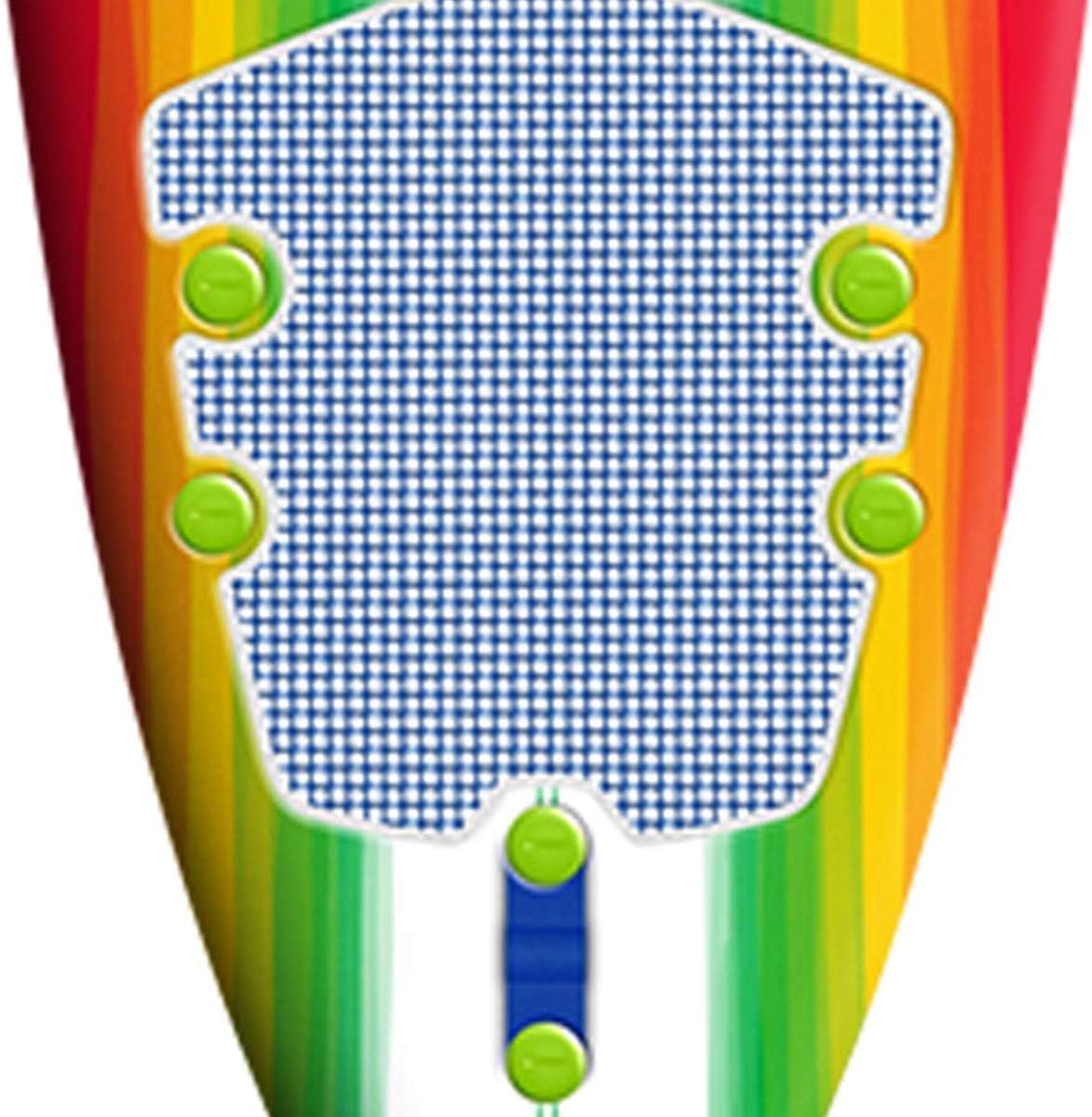
You finally drag your foam board out of storage at the start of summer and notice one of the fins is missing. Or you’re standing on the beach after a session watching a small grey triangle drift toward the horizon. Either way, you need a replacement fin — and you’re about to discover whether the brand that made your board thought about you when that moment arrived.
Fins are the underwater blades attached to the bottom-rear of a surfboard. They steer, stabilize, and control how the board responds in a wave. On a foam board — also called a foamie or soft-top, names that refer to the soft foam deck material used to cushion falls — those fins are often a weak link. Some brands use proprietary systems (fins only that brand sells) that become nearly impossible to source. Others use a standardized box called a US box (a universal fin slot standard that accepts a wide range of aftermarket fins), which means replacements are a quick online search away. Knowing which system you have — and what to do when a fin goes missing — is the difference between surfing next weekend and waiting six weeks for a part that may never arrive. This guide sorts it out.
| EDITOR'S PICKRock-It 6' Albert Performance F… | Mid-tierBPS New Zealand Side Bite Fins… | Budget pickSBS - 8 inch Longboard & SUP Si… | |
|---|---|---|---|
| Type | Soft-top board | Side bite fins | Single center fin |
| Board length | 6' | — | — |
| Fin size | — | — | 8" |
| Fin setup | — | Side bite pair | Single |
| Box type | — | FCS GL | — |
| Fin material | — | Fiberglass/nylon | — |
| Price | $299.98 | $16.97 | $15.15 |
| See on Amazon → | See on Amazon → | See on Amazon → |
The Proprietary-Fin Trap: What Rock-It and Others Don’t Tell You
Here’s a real scenario that surfaces repeatedly in owner reviews: someone buys a Rock-It 6ft soft-top, loses a fin, and spends days searching for a replacement before concluding the original part simply isn’t available anywhere online. That’s not an edge case — it’s a documented pattern across budget foamie brands. Reviewers analyzing budget soft-tops on Boardcave’s soft-top buying guide consistently flag this as one of the most frustrating long-term ownership problems.
Proprietary fins are common in the $150–$250 foamie segment because they keep upfront manufacturing costs low. The fin and the fin box are designed as a closed system — the brand never intended you to source parts independently. When the brand runs out of stock or discontinues the model, you’re stuck.
What to do if this happens to you:
- Measure the fin box (the slot in the bottom of the board). Note the length, width, and depth.
- Check whether the box has a single horizontal screw channel — that’s almost certainly a US box, and you have options.
- If the box is molded plastic with a twist-lock or snap-in mechanism rather than a screw, it’s likely proprietary. Your best move is to contact the brand directly and ask about a universal adapter plate, or consult a local surf shop about routing the box to accept a standard US fin.
The Inertia’s fin explainer notes that the US box system has been an industry standard for longboards and single-fin setups for decades, which is exactly why so many aftermarket manufacturers build to that spec. If your foamie uses it, the replacement market is wide open.
2+1 Setups Explained — and How Side-Bite Fins Fill the Gaps
A 2+1 setup means one larger center fin (the “1”) plus two smaller fins near the rails (the “2,” called side bites or side fins). This is the dominant configuration on foamies longer than 7 feet. The center fin does most of the steering work; the side bites add drive and hold, especially on steeper beach break waves.
The problem documented in owner reviews is that some boards ship with the center fin installed but no side fins included — a documented complaint from at least one SUP (stand-up paddleboard) soft-top owner who received their board with only the center fin in the box. If you’re wondering why your board feels loose and slidey, missing side bites are a likely culprit.
BPS side-bite fins are one of the go-to solutions owners point to for this gap. They’re designed to drop into standard side-bite boxes, which are smaller than a US center-fin box and typically secured by a single flat-head screw. Before ordering any side fin, check your board’s side boxes with a ruler — most foamie side boxes accept fins in the 3.5- to 4.5-inch range.
By the Numbers
| Fin position | Typical box type | Standard size range | Tool required? |
|---|---|---|---|
| Center (2+1 or single) | US box | 7–10 inches | Fin key or flathead screwdriver |
| Side bite (2+1) | Proprietary side box | 3.5–4.5 inches | Small flathead screwdriver |
| Thruster rear | FCS II or Futures | ~4 inches | FCS key or Futures key |
Wavelength Surf’s fin systems explainer points out that FCS II and Futures systems — the dominant fin systems on performance shortboards — are rarely found on entry-level foamies. If your board has them, it’s a premium soft-top or a mid-range model stepping up to performance hardware.
Converting a 2+1 Foamie to a Thruster — What Actually Happens
One owner documented using a Culture Supply 4.5-inch center fin to effectively convert their 2+1 board into a thruster configuration by pairing it with two side fins. The theory is sound: a smaller center fin with two active side fins shifts the feel from a single-dominant pivot to a more even, three-fin drive pattern — closer to how a standard performance shortboard responds.
But there’s an important mechanical caveat in the same review thread: the owner needed Vaseline and a rubber mallet to seat the Culture Supply fin into their US box. That’s a red flag worth taking seriously.
Fit tolerances vary significantly across foamie brands. A fin rated for a US box should fit any US box — but manufacturing tolerances on budget boards are inconsistent. A fin that drops in easily on a Catch Surf Odysea may require significant force on a no-name import board with a slightly undersized box channel.
The rule here is simple: if a fin requires force to seat, do not tighten the screw to pull it in. You risk cracking the fin box or stripping the screw channel. Instead, lightly sand the fin tab with 220-grit sandpaper, test the fit, and repeat until it slides in with firm hand pressure only.
Cleanline Surf’s foamie FAQ reinforces this point: US box fin tabs should slide in and out with minimal resistance before the screw is tightened. The screw secures position — it doesn’t create fit.
Installation Tips That Keep You from Losing a Fin Mid-Session
A Billabong x Contour soft-top reviewer documented losing a fin during a session because they hadn’t fully tightened the screw after installation. This is more common than it sounds — the fin felt seated, the screw was finger-tight, and the first duck-dive pulled it out.
One reviewer’s explicit advice deserves to be a highlighted tip:
After installing any foamie fin and tightening the screw, grip the base of the fin and pull upward firmly. If the fin moves at all, the screw needs another quarter-turn. If it still moves after tightening, check that the fin tab is fully seated before the screw was engaged.
A few more installation notes worth building into your pre-session checklist:
- Screw the fin in before you wax and before you hit the beach. Cold hands and rushing make stripped screws more likely.
- Use the right tool. Most US box fins use a flat-head screw. Some premium aftermarket fins use an FCS key or hex. Know which before you’re on the sand.
- Carry a spare screw. They strip, they corrode, and they fall into the sand. A small zip-lock bag with two spare screws costs nothing and has saved sessions.
SBS Fins and the No-Tool Advantage
The SBS 8-inch center fin gets consistent positive attention for one specific reason: its no-tool installation. It uses a thumb-screw design, meaning a beginner foamie owner who doesn’t own a fin key (the small tool used to tighten most fin screws) can install and remove the fin by hand. For surf school operators and coaches running a quiver of learner boards, this matters — you’re doing fin installs on a beach, not in a shop.
Boardcave’s soft-top guide notes that tool-free or thumb-screw fin systems are increasingly common on entry-level boards specifically because they lower the barrier for instructors and beginners. The trade-off is that hand-tightened screws can work loose more easily than keyed screws — so the pull-test above is even more critical with thumb-screw designs.
Will Universal Fins Fit Your Wavestorm or Thurso?
Both Wavestorm and Thurso foamies use US box center fin slots — confirmed across multiple owner reviews and retailer documentation. SBS and Abahub US-box fins fit both boards. The fit is standard; what varies is the fin height and rake (the angle of the fin’s leading edge), which affects how the board responds.
For a Wavestorm in small, crumbly beach break, a 7- to 8-inch center fin with moderate rake is the sweet spot. Going taller (9–10 inches) stiffens the board’s turning radius — useful if you’re riding faster point break waves but frustrating in punchy shore break.
Frequently Asked Questions
What do I do if I lose a fin on my Rock-It or Wavestorm and can’t find the original replacement? Measure your fin box first. If it’s a US box (a slot with a single horizontal screw channel), you have a wide range of aftermarket options. SBS and Abahub make direct replacements at the right dimensions. If it’s a proprietary snap-in system, contact the brand — and if they can’t help, a surf shop may be able to recut the box to accept a US fin insert.
How tight should foamie fins be screwed in before a session? Firm, not gorilla-tight. Snug the screw until resistance increases, then add a quarter-turn. After tightening, grip the fin and pull upward hard. If it moves, tighten more. The goal is zero play — but overtightening strips the screw channel in soft foam boxes, so stop at the first sign of resistance.
Can I convert my 2+1 foamie setup to a thruster with an aftermarket center fin? Yes, in principle. Using a smaller center fin (around 4–4.5 inches) alongside active side bites shifts the board toward thruster behavior. The Culture Supply 4.5-inch center fin is one documented path. Check the fit before forcing anything — tolerances vary, and a stuck fin is worse than no conversion.
Will an SBS or Abahub US-box fin fit my Wavestorm or Thurso foamie? Yes. Both Wavestorm and Thurso use standard US boxes. SBS and Abahub fins designed for US boxes are confirmed compatible across owner reviews. Match the fin length to your board size and wave type.
What’s the difference between a side-bite fin and a standard thruster rear fin? A side-bite fin sits in a box designed specifically for a 2+1 configuration — it’s typically a smaller, flatter fin (3.5–4.5 inches) designed to add drive alongside a dominant center fin. A thruster rear fin is part of a three-equal-fin setup and is designed for an FCS II or Futures fin box, not a side-bite box. They are not interchangeable. Check your box type before ordering.
Do I need a tool to install SBS replacement fins on a foamie? No — the SBS 8-inch fin uses a thumb-screw design, so no fin key is required. Still do the pull-test after hand-tightening to confirm zero movement before paddling out. If the thumb-screw won’t hold firm tension, switch to a keyed screw for that session.
The Decision Rule
If your foamie uses a US box (the most common standard), you have full access to the aftermarket replacement ecosystem — SBS, Abahub, Culture Supply, and dozens of others. Buy a replacement fin, check the fit before forcing it, tighten the screw properly, and do the pull-test. You’re back in the water in under ten minutes.
If your foamie uses a proprietary system, your next board should use a US box. The savings on the front end do not cover the frustration of a board that’s unrideable because a $12 fin is unavailable. For surf schools and coaches buying in volume, this is the non-negotiable filter: US box only, every board in the quiver, full stop.