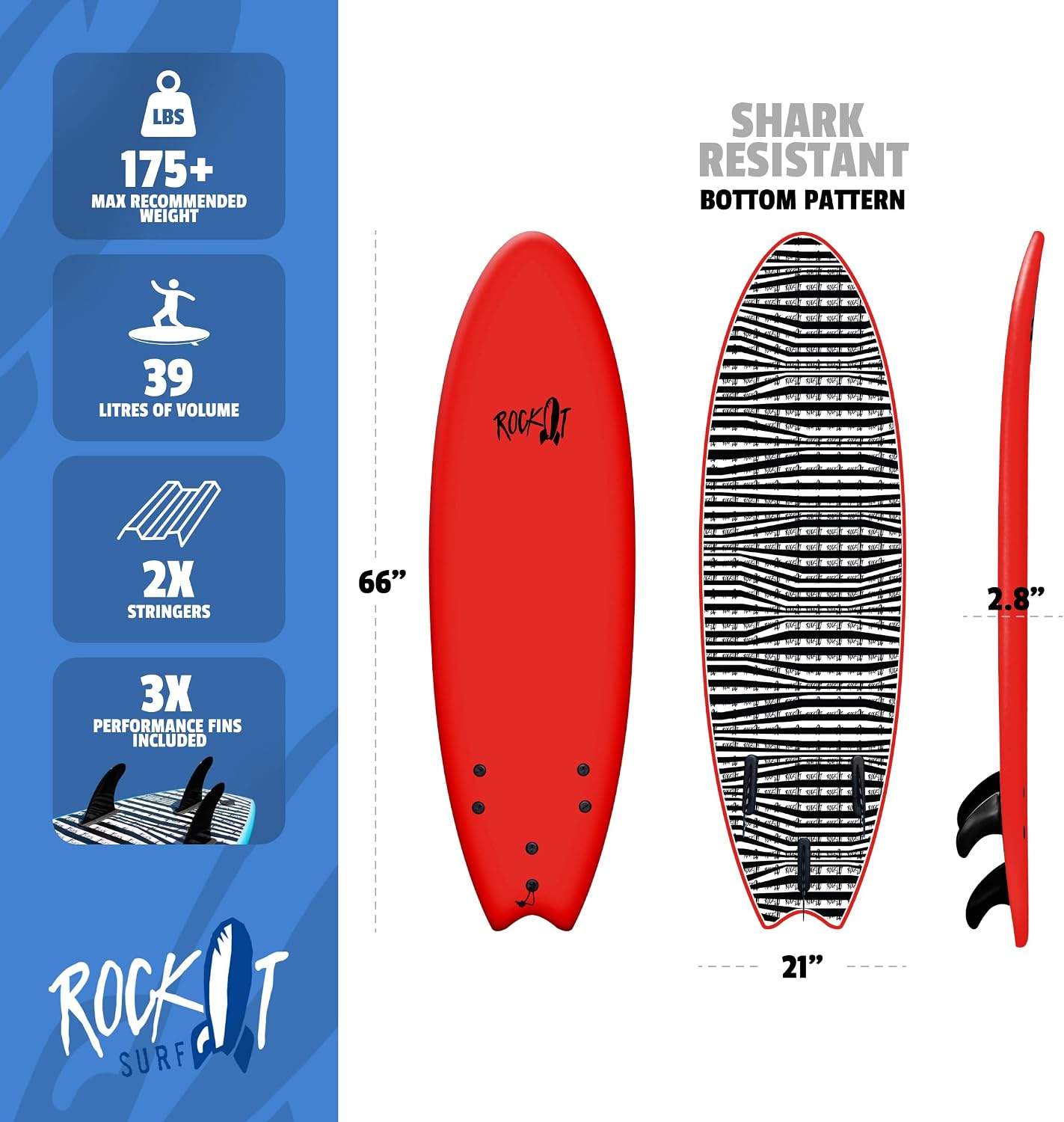
You bought a foam surfboard — the soft, spongy kind beginners and surf schools use — and now you have a fin problem. Maybe a fin popped out mid-session. Maybe one snapped. Maybe you bought a used Rock-It or a discontinued Jimmy Styks paddleboard and the replacement fins simply don’t exist at the manufacturer level anymore. Fins are the small blade-shaped pieces that attach to the underside of your board near the tail; they’re what let you steer and hold a line through a wave. Lose them, and the board is nearly unrideable. The trouble is that foam boards — often called “foamies” or “soft-tops” — use a wildly inconsistent range of fin boxes (the plastic slots that fins click or screw into), and almost nobody maps out which aftermarket fin fits which board. This article does that mapping. By the end, you’ll know exactly which replacement fins fit your board, whether “no-tool” installation claims are real, and how to stop losing fins mid-session.
Why Foamie Fin Systems Are a Mess
Hardboard fin systems are reasonably standardized. FCS II (a two-tab click-in system made by Future Fins’ competitor FCS) and Futures (a single-box bolt-in system) cover the vast majority of performance shortboards and longboards. Boardcave’s fin system compatibility overview explains the distinction clearly: FCS II is tool-free with two small tabs per fin, while Futures requires a single bolt and fin key.
Foamies don’t follow those rules.
Most soft-top manufacturers design proprietary fin boxes — especially for their center fin — to keep costs down and assembly simple at the factory. That works fine until:
- The manufacturer discontinues the model (Rock-It Albert 6ft, Jimmy Styks, Body Glove paddleboards)
- The OEM fins are lost or damaged and aren’t sold separately
- A buyer picks up a used board with no fins included
The Inertia’s overview of foam board buying notes that hardware quality is the most common point of failure on budget soft-tops — and fins are at the top of that list. This isn’t a boutique problem. Aggregated reviews across Rock-It, Billabong, and Wavestorm boards show fin loss and fin incompatibility as the number-one post-purchase complaint category.
Brand-by-Brand: What Fits What
Wavestorm (the 8ft classic and variants)
Wavestorm uses a standard US center box — the long, single slot that runs parallel to the stringer — for its center fin, and two fixed side fins molded into the foam. The center box accepts any standard US longboard fin. Ho Stevie and BPS (Better Props and Stuff) both produce 9-inch and 10-inch center fins in the standard US box format.
Owners replacing Wavestorm center fins consistently report that Ho Stevie fins drop straight in with no modification. BPS fins receive similar feedback. Neither brand requires sanding or filing for a Wavestorm center box under normal circumstances, though older boards with warped or foam-swollen boxes occasionally need a light fit check before locking the screw.
The side fins are a different story. Wavestorm’s molded side fins are not removable or replaceable — they’re part of the foam blank. If a side fin breaks flush, the board’s usable life as a thruster is functionally over. Some owners trim the stubs and ride it as a single-fin, which the center box supports just fine with a larger fin.
Rock-It Albert 6ft
This is the most actively reported replacement problem in current buyer reviews. The Rock-It Albert 6ft is a shorter soft-top — designed for smaller surfers or punchy beach break — and its OEM fins are a proprietary size that Rock-It does not sell separately. At least one verified buyer review states outright: the original fins are unavailable and no compatible replacements could be found through the manufacturer.
The practical path here is to measure the fin box dimensions precisely:
- Length of the box slot (nose to tail)
- Depth of the slot
- Whether a fin key screw or a tool-free pin lock is used
If the Rock-It Albert uses a US box (the most common), any standard US fin in the correct length range will fit. If it uses a proprietary clip system, SBS fins are the most frequently cited solution for discontinued brands. SBS (a fin manufacturer that specializes in replacement foamie fins) explicitly markets their product line as compatible with orphaned boards from discontinued manufacturers, and multiple Jimmy Styks owners confirm fitment in their reviews.
Decision rule: Measure first. If the slot is a single long channel (US box), buy a standard US fin. If it’s a clip or pin-lock proprietary system, cross-reference SBS’s compatibility chart before ordering.
Billabong Contour
The Billabong Contour is a step-up soft-top with slightly more refined shaping than a pure beginner board. Published reviews of the Contour flag two recurring hardware issues: traction pad delamination in warmer water, and fins that work loose during sessions.
Wavelength Surf Magazine’s beginner board hardware guide makes the broader point that foamie fin screws — especially on boards under $400 — are often under-torqued at the factory and benefit from a firm tighten before the first surf. With the Billabong Contour specifically, owners report that fins need to be tightened hard and then test-pulled before every session. A test pull means grabbing each fin at its base and pulling upward firmly while the board is on land. If it moves, tighten it. If it’s stripped, replace the screw.
Billabong’s Contour fins use a standard FCS-compatible two-tab thruster setup on most models — not FCS II click-in, but the older FCS screw-in tab format, which requires a fin key (a small hex wrench). Replacement fins in this format are widely available. The compatibility note: FCS II fins will NOT work in original FCS tab boxes without an adapter. Always check which generation of FCS your board uses. A board with two small oval slots per fin position is old-style FCS screw-in. A board with two rectangular tabs is FCS II click-in.
Jimmy Styks and Discontinued Brands
Jimmy Styks went through ownership changes and model discontinuation that left many paddleboard and soft-top owners without manufacturer support. SBS fins appear in multiple owner reviews as the go-to aftermarket fix specifically for this brand. The SBS product line is designed around compatibility with stranded boards, and reviewers describe the fitment as accurate to the original OEM fin size.
The “No-Tool” Installation Question
This deserves its own section because the claims are genuinely inconsistent.
By the numbers — no-tool fin install reality:
| Brand/Product | Install claim | Owner-reported reality |
|---|---|---|
| Abahub 9” SUP center fin | Pin-lock, no tools | ”Flawless” fit on Body Glove paddleboard |
| Culture Supply TFX single fin | Tool-free | One buyer needed sandpaper + file to seat |
| SBS replacement fins | Varies by model | Generally accurate; some foam boards need box cleaning first |
| Ho Stevie US box fins | Screw-in (fin key) | Standard screw; key sold separately |
The Abahub 9-inch SUP center fin consistently draws positive reviews for tool-free pin-lock installation. Body Glove paddleboard owners specifically call out the fit as precise, with no play in the box after locking. That’s a genuinely no-tool install done right.
The Culture Supply TFX single fin is a cautionary case. At least one buyer required sandpaper and a file to seat it correctly. Cleanline Surf’s buyer guidance notes that “no-tool” on soft-tops often means “no tool if your box is perfectly clean and unswollen” — which is not guaranteed on boards that have seen sun exposure or saltwater saturation.
Practical rule: Bring a fin key anyway. It’s a $5 piece of equipment. If the fin seats without it, great. If it doesn’t, you’re not stuck on the beach.
How to Stop Losing Fins Mid-Session
Fin loss mid-wave is more common than it should be, and it’s almost always preventable. Based on aggregated owner reports and hardware guides from sources including Wavelength Surf Magazine, here’s the pattern:
-
Fins aren’t tightened to resistance. Snug is not enough. Tighten to the point where you feel definite resistance, then do one more quarter-turn. Screw-in systems need this every time.
-
The screw is stripped or the fin key slot is rounded. Stripped screws back out under wave pressure. Replace the screw — fin screws are standardized M4 stainless steel on most FCS-compatible systems and are cheap to replace in bulk.
-
The fin box itself is cracked. Soft-top fin boxes are plastic inserts in foam. A hard bottom hit on sand can crack the box walls without being obvious. If a fin feels loose even when tightened, inspect the box with a flashlight for hairline cracks.
-
Wax or sand in the box threads. Clean the box before every session with a fin key and a toothbrush. Debris in the thread prevents the screw from seating fully.
-
Wrong fin tab size. A fin tab that’s slightly undersized for its box will rattle loose under load. If you’ve replaced OEM fins with aftermarket fins and they’ve started coming out, this is the likely cause.
Frequently Asked Questions
What replacement fins fit a Rock-It Albert 6ft surfboard? Rock-It’s OEM fins for the Albert 6ft are no longer available through the manufacturer. Measure your fin box slot length and depth. If it’s a standard US longboard box, Ho Stevie or BPS fins in the appropriate length will fit. If it’s a proprietary pin-lock or clip system, SBS replacement fins are the most-cited solution for discontinued brand compatibility.
Why did my Billabong Contour fins come loose in the water? Almost certainly under-torqued from the factory. The Contour uses screw-in fins that need to be tightened firmly with a fin key before every session and test-pulled at the base before entering the water. Replace any screw that feels stripped rather than tight.
Are SBS fins truly no-tool installation or do I need to sand them? It depends on your specific board’s box condition. SBS fins fit accurately in most cases, but foam boxes that have swollen from sun or saltwater exposure may need a light sanding to accept any fin cleanly. Keep sandpaper in your board bag and treat “no-tool” as “probably no tools.”
Will Abahub SUP fins fit standard foamie center boxes? Abahub’s 9-inch SUP center fin uses a US-standard box format and owner reviews confirm strong fitment on Body Glove paddleboards and similarly boxed foamies. If your board has a standard single-slot US center box, the Abahub fin is a reliable no-tool option with a documented track record.
How do I stop losing fins mid-session? Tighten to resistance plus a quarter-turn, test-pull each fin on land before paddling out, replace stripped screws immediately, and clean box threads before each session. Fin loss is almost always a maintenance failure, not a design flaw.
Can I replace Wavestorm fins with Ho Stevie or BPS fins? Yes — for the center fin. Wavestorm’s center box is a standard US longboard box, and both Ho Stevie and BPS produce fins that owners consistently report as direct, no-modification replacements. The molded side fins cannot be replaced; they’re part of the blank.
The Decision Rule
If your foamie is from an active manufacturer, contact them first — some brands will send replacement fins under warranty.
If your board is discontinued or the manufacturer doesn’t sell fins separately:
- US center box → Ho Stevie or BPS in the correct length. Done.
- FCS screw-in tab box → Any FCS-compatible screw-in thruster set. Bring a fin key.
- Proprietary clip or pin-lock → SBS replacement fins, cross-referenced to your box dimensions.
- No-tool claim you don’t trust → Buy the fin, bring sandpaper, keep the receipt.
The fins are a $15–$40 problem with a clear solution. The only mistake is riding without them.