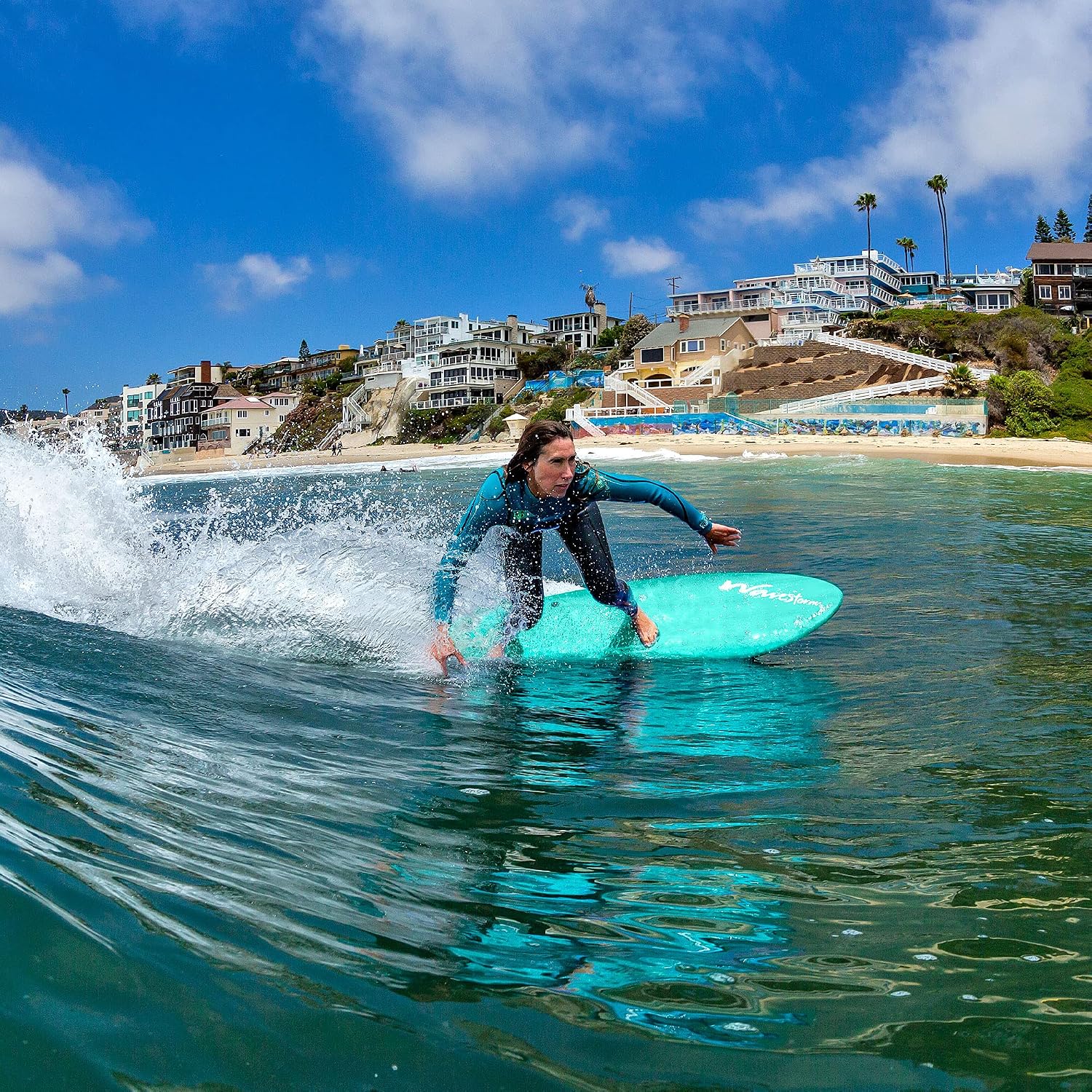
The Foamie Short Board Dilemma: Wavestorm 5’6”, Rock-It 6ft, and When to Size Down
You’re at the point where the 8-foot foam log feels like overkill. Your kid is ready to actually turn the thing, or you’re a lighter adult who keeps pearling (nose-diving) on something too long. So you start eyeing the shorter foamies — the Wavestorm 5’6”, the Rock-It Albert Fish 6ft, the Rock-It DA Wizard 4’10”. And then the second-guessing starts.
A foamie — short for foam surfboard, also called a soft-top — is exactly what it sounds like: a board with a soft, foam-covered deck instead of a hard fiberglass surface. They’re forgiving, durable, and significantly safer for beginners and kids in close-quarter lineups. The question isn’t whether foam is right at this stage. The question is which length and shape, because making the wrong call here means a frustrated rider who can’t catch waves and blames themselves instead of the equipment.
This guide lays out the tradeoffs clearly, anchored in real owner feedback and published specs, so you can make the call with confidence.
| EDITOR'S PICKRock-It 6' Albert Performance F… | Mid-tierWavestorm - Classic Soft Top Fo… | Budget pickWavestorm -Soft Top Foam 5'6" S… | |
|---|---|---|---|
| Board length | 6' | 7' | 5'6" |
| Board type | Fish | Classic | Fish swallow tail |
| Leash included | — | ✓ | ✓ |
| Fins included | — | ✓ | ✓ |
| Construction | Foam | Heat laminated foam | Foam |
| Set | — | Complete set | Complete set |
| Price | $299.98 | $279.99 | $183.99 |
| See on Amazon → | See on Amazon → | See on Amazon → |
Why Board Length Matters More Than You Think at This Stage
Before we talk specific models, let’s get the core variable right. Board volume — measured in liters, a number that combines length, width, and thickness into one float-ability score — determines whether a surfer can paddle into waves and stay stable while they figure out their feet.
A rough benchmark from Boardcave’s beginner volume guide: a rider under 100 lbs learning to surf needs somewhere between 35–55 liters of volume depending on skill level. The longer the board, the higher that volume number, and the easier it is to catch unbroken waves (called whitewater or reform) close to shore.
Here’s where the short foamie conversation gets real:
By the numbers — approximate volume ranges by length (soft-top category):
| Board | Approx. Length | Estimated Volume |
|---|---|---|
| Wavestorm 7ft | 7’0” | ~55–62 L |
| Wavestorm 5’6” | 5’6” | ~38–44 L |
| Rock-It Albert Fish | 6’0” | ~42–48 L |
| Rock-It DA Wizard | 4’10” | ~28–34 L |
| Thurso Surf | 7’0” | ~52–58 L |
Estimates based on published dimensions and standard soft-top construction ratios. Verify with manufacturer spec sheets before purchasing.
The takeaway: every time you drop 12–18 inches in length, you’re shedding roughly 10–18 liters of float. That’s not nothing.
Wavestorm 5’6” vs. 7ft: The Parent’s Decision
Let’s start with the brand most people know. Wavestorm, sold widely through big-box retail, has built its reputation on consistent value and availability. The 7ft and 5’6” models are the two most-compared options for youth surfers, and the owner data paints a clear picture.
One parent reviewing the Wavestorm 7ft gave precise fit data: a 10-year-old, 5 feet tall, found it a “perfect size.” That tracks with the volume math above — 55+ liters under a small rider means genuine stability and easy paddle power. If your kid is in that range, the 7ft is almost certainly the right call for their first season.
The Wavestorm 5’6”, by contrast, draws praise from parents of riders who are already on their feet and pushing into actual maneuvers. One verified reviewer specifically highlighted that their child surfer felt “safe and confident” — not just able to stand, but willing to commit to the wave. That’s a meaningful distinction. Safety and confidence on a shorter board means the rider already has enough base skill to manage the reduced stability.
The QC flag you need to know: The Wavestorm swallow-tail fish variant (a 5’6” with a double-notch tail — more on tail shapes below) received a 2-star review citing nose damage on delivery and a “low quality” first impression from one buyer. This isn’t an isolated frustration — it’s a documented QC flag worth taking seriously. If you order this model, inspect the nose and rails immediately on arrival and photograph any damage before you touch the water. Shipping damage on foamies is underreported and often non-returnable once the board hits sand.
If X, then Y:
- Kid is 10–12, 5’0”–5’4”, learning to stand up → Wavestorm 7ft
- Kid is 10–12, already popping up consistently, wants to start turning → Wavestorm 5’6”
- Either way, inspect for nose damage before first session
Rock-It Albert Fish 6ft: The Weekend Warrior’s Pick
The Rock-It Albert Fish 6ft sits in an interesting gap. It’s longer than a traditional shortboard, shorter than a mid-length, and shaped in a fish outline — meaning it’s wider through the midsection and nose than you’d expect from a 6-footer.
One reviewer self-described as a 16-year-old Arizona weekend warrior called the Albert Fish “right for his skill level.” That’s valuable signal. He’s not surfing every week. He’s catching beach break on trips, probably riding smaller, softer waves. The extra width in the fish shape compensates for some of the volume you lose going shorter, keeping paddle power reasonable for an infrequent surfer.
The other standout from Rock-It owner feedback is less about the board and more about the brand: a family specifically praised Rock-It’s customer service responsiveness as exceptional — unusual for a foamie brand, where post-purchase support is typically minimal. If you’re buying for a kid and damage or warranty questions are likely, that matters. It’s worth noting this as a purchasing consideration alongside the hardware specs.
The tail shape question: The Albert Fish uses a swallow tail — that forked, double-point tail you see on fish-style boards. More on what that actually changes in the FAQ below, but the short version is that a swallow tail releases water faster off the tail, which helps a rider initiate turns on smaller, mushier waves. For a weekend warrior on inconsistent beach break, that’s a genuine performance benefit.
If X, then Y:
- Adult beginner, lighter build (under 150 lbs), learning on beach break → Rock-It Albert Fish 6ft
- Teenager who surfs occasionally and wants something maneuverable but not terrifying → Rock-It Albert Fish 6ft
- Heavier adult beginner (over 175 lbs) → step up to a longer option and revisit this one in 6–12 months
Rock-It DA Wizard 4’10”: The Compact Specialist
The DA Wizard is the most niche option here, and its review pool is thin — but one detailed owner report covers something other guides don’t touch: dual use in ocean and wave pool settings.
The owner noted that the compact size aids maneuverability without sacrificing stability on small waves — which is a specific claim that aligns with what wave pool sessions actually demand. Pool waves tend to be predictable and mellower, but they break in a tight window that rewards a board you can redirect quickly. A 4’10” foamie in a controlled pool environment makes sense in a way it might not in unruly beach break.
At roughly 28–34 liters, this board is not for beginners. It’s for smaller riders (under 130 lbs) who already have solid popup mechanics and want to start generating speed and cutbacks. For a surf program or junior development coach sourcing a competitive training quiver, the DA Wizard has a legitimate place — but only once the fundamentals are locked in.
Fin system note: Short foamies in this category typically ship with a fixed tri-fin (three-fin) setup molded into the board. Confirm before purchase whether the DA Wizard uses removable fins (FCS II or Futures boxes) or a fixed plug system. Removable fins mean you can tune the setup; fixed fins mean fewer parts to lose, but no adjustment. Most foamies in the sub-$300 tier use fixed fins — check the spec sheet before assuming otherwise.
The Thurso Surf 7ft: The Teaching Board That Doesn’t Get Enough Credit
The Thurso Surf 7ft earns a specific mention here because one reviewer made a genuinely practical point that most foamie guides skip entirely.
A surfer who learned on a 10-foot longboard described the 7ft Thurso as hitting a “good balance” specifically for teaching kids in shore break — the area where waves have already broken and are rolling toward the beach as whitewater. Their reasoning: a massive board creates “endless nosedives” in shore break because there’s nowhere for the nose to go when the whitewater pushes the tail. The 7ft sits short enough to handle the angle of shore break waves without pearling constantly, while still carrying enough volume for a small or intermediate learner to stay afloat.
If you’re a surf coach or a parent running sessions in shore break rather than out the back, this is relevant intel. It’s a practical insight that experienced instructors know intuitively, but first-time buyers rarely hear.
Frequently Asked Questions
What weight limit is realistic for the Wavestorm 5’6”? No manufacturer publishes an explicit weight limit for the 5’6”, but based on published dimensions and standard soft-top volume estimates, most owners under 130–140 lbs report comfortable performance. Above that threshold, expect sluggish paddling and difficulty catching unbroken waves. Heavier riders should look at the 7ft or an 8ft option before stepping back down.
Is the 7ft foamie or the 5’6” better for a 10–12 year old learning to surf? For most kids in that age range who are genuinely beginning — still working on popups, still uncomfortable paddling out — the 7ft is the better starting point. Owner reports put a 10-year-old at 5 feet tall solidly in the 7ft category. The 5’6” makes sense once they’re popping up consistently and want to start turning. Don’t rush the size-down.
Can an adult beginner learn on a 6ft foamie, or do they need the 8ft? Weight and fitness are the real variables. A lightweight adult (under 140 lbs) with good body awareness can learn on a 6ft fish-shape foamie like the Rock-It Albert Fish because the wider template keeps volume reasonable. Most adults, especially anyone over 160 lbs, will struggle to paddle and catch waves on 6 feet of foam. The 8ft is not a crutch — it’s the tool that actually teaches you to surf. Size down after you’re standing, not before.
What does ‘swallow tail’ actually change about how a foamie rides? A swallow tail — the double-pronged forked tail — releases water off the back of the board more quickly than a rounded or squash tail. In practical terms, this makes it easier to pivot and turn on small, low-energy waves. It also makes the board slightly less stable in a straight line, which is a fair tradeoff once a rider is already standing. For pure beginners still learning to stand, a squash or round tail is more forgiving. Swallow tails are better suited to riders who are already up and looking to generate speed.
Why do foamie short boards sometimes arrive with fin or nose damage, and what should I do? Foamies ship in large, light boxes that freight handlers treat poorly. The nose and fin box areas are the most vulnerable points — the nose because it protrudes, the fin area because box compression can stress the tail. The Wavestorm swallow-tail fish drew specific criticism for nose damage on delivery. Standard protocol: photograph the exterior box before opening, unbox immediately on arrival, and document any damage with photos before the board touches water or sand. Contact the retailer within 24–48 hours of delivery with photos. Most platforms have damage-on-arrival policies, but they require documentation. Once the board has been used, claims become significantly harder to process.