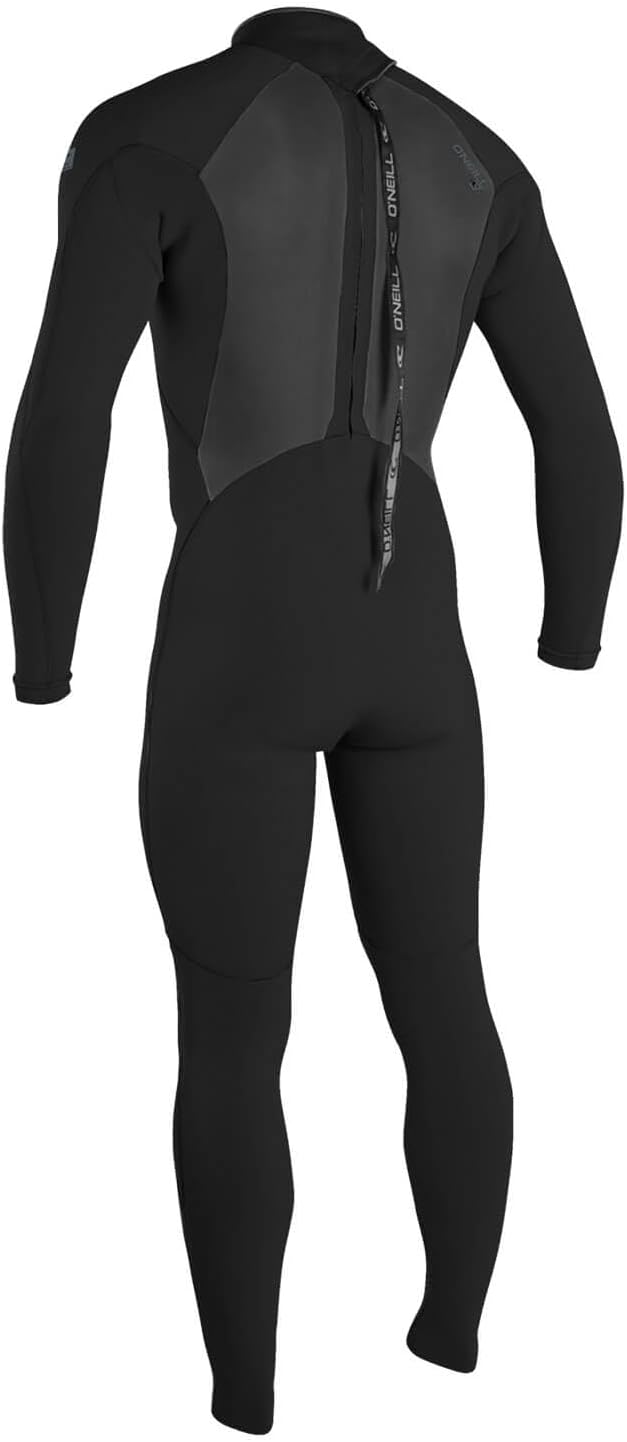
Picture this: it’s a grey November morning on the Jersey Shore or Cape Cod, water temperature sitting at 54°F, and you’re on the beach doing the wetsuit shimmy. The guy next to you is shivering before he even hits the water. You’re not — but only if your suit is doing its job at the seams.
A wetsuit’s seams are where panels of neoprene join together. How those seams are constructed determines whether 54°F water flushes through in trickles or stays out entirely. A 4/3 wetsuit — 4mm of neoprene in the torso, 3mm in the arms and legs — is the standard choice for Atlantic water from roughly late October through April, depending on your location. This article compares the O’Neill Epic 4/3 against lower-cost 4/3 competitors, most notably the Hevto 4/3, to help you decide whether the price gap is justified. For anyone logging sessions from October through March, it almost certainly is.
What “Glued and Blind-Stitched” Actually Means — and Why It Matters
There are three seam constructions you’ll encounter when shopping for wetsuits. Understanding them takes about two minutes and immediately clarifies why two suits with identical thickness ratings can feel wildly different in 50°F water.
Flatlock stitching is the most basic construction. Thread passes all the way through both panels, leaving tiny needle holes along every seam line. In warm water — above 65°F or so — this is acceptable. In cold Atlantic water, those holes let water in. Flatlock suits are typically warm-weather 2mm designs. If you see flatlock on a 4/3, walk away.
Glued and blind-stitched (GBS) is the construction the O’Neill Epic 4/3 uses. The panels are first bonded with neoprene-compatible glue, then stitched with a curved needle that only penetrates partway through the neoprene — never poking a hole to the outside. The result is a waterproof bond at every seam. Wavelength Surf Magazine’s Wetsuit Buyer’s Guide 2025 identifies GBS as the minimum viable construction for water temperatures below 60°F. Boardcave’s Wetsuit Seam Technology Explained overview confirms that GBS seams reduce cold-water flush by eliminating the through-needle holes that flatlock creates.
Liquid-taped seams go one step further, applying a thin bead of liquid rubber over the GBS seam from the inside. Premium suits use this on the chest and back panels where flush risk is highest. The O’Neill Epic uses GBS throughout; liquid tape appears on higher-tier O’Neill lines. For the $300–$400 price bracket, GBS is the right expectation.
The practical takeaway: owners of the O’Neill Epic 4/3 consistently identify the glued seams as the feature that separates this suit from budget competitors. Multiple verified buyer reviews note that the seams make all the difference for surfers who tend to run cold in partially-stitched suits. That’s not marketing copy — it’s the physics of keeping cold water away from your skin.
O’Neill Epic 4/3 vs. Hevto 4/3: Head-to-Head
The Hevto 4/3 is the most commonly cited budget alternative in Atlantic winter discussions, retailing roughly 40–50% below the Epic. The comparison below covers the three areas where the construction gap shows up most clearly in real sessions.
Seam Construction
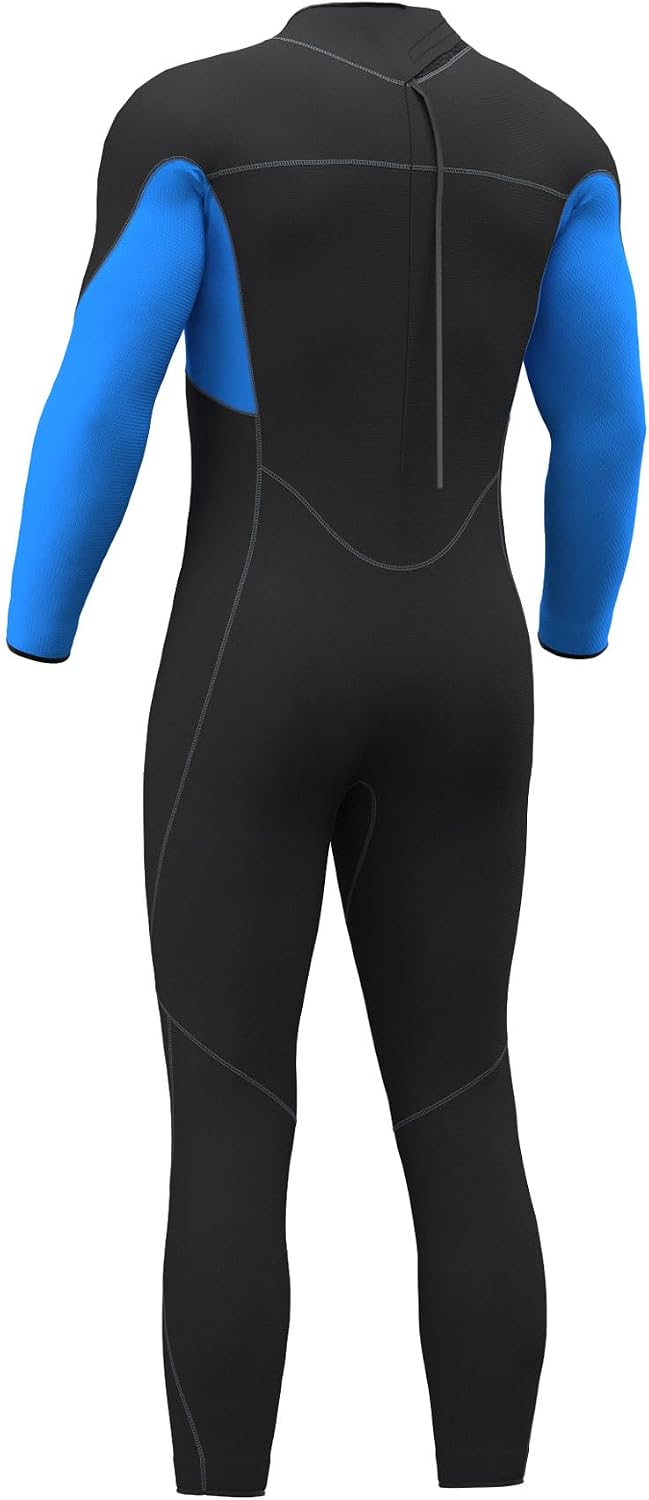
The Inertia, in their piece “Is a Budget Wetsuit Worth It?”, notes that sub-$200 suits frequently use partial GBS or flatlock on secondary panels to hit a price point. The Hevto 4/3’s spec sheet lists stitched seams without confirmed full-panel GBS bonding across all panels. In practice, reviewers consistently flag cold spots around the Hevto’s shoulder seams and lower back — exactly where a back-zip wetsuit experiences the most flex and the greatest flush potential. For users surfing occasionally in water above 60°F, this is manageable. For committed surfers in 50–58°F Atlantic water, it is a genuine limitation.
Coiled
$7.09
In stock on Amazon
Check price on AmazonThe O’Neill Epic 4/3 uses glued and blind-stitched construction throughout all panels. As Boardcave’s Wetsuit Seam Technology Explained explains, GBS construction maintains seam integrity significantly longer than flatlock or partial-GBS designs when subjected to regular cold-water flex cycles. The seam bond doesn’t degrade from repeated salt-water exposure the way unglued thread-only stitching does. Owner reports are consistent: the suit stays dry at the seams across multiple seasons of weekly use.
Hevto
$111.20
In stock on Amazon
Check price on AmazonSuits in the premium tier — Patagonia Yulex, Matuse, and upper-range Rip Curl and Hurley lines — add liquid-taped seams over the GBS bond, particularly on high-flex panels across the chest and back. This is the most waterproof seam available and the correct choice for surfers in water consistently below 50°F or for those who simply run cold regardless of temperature. The O’Neill Epic sits one step below this tier on seam technology, which is reflected in its price and is an honest trade-off for the $300–$400 bracket.
Wavestorm
$256.38
In stock on Amazon
Check price on AmazonZipper System and Entry Reliability
In an Atlantic winter context — solo dawn patrol, cold hands, limited patience — zipper reliability is not a minor detail. Multiple owner reviews of the Hevto 4/3 report the zipper catching during solo zip-up attempts, and at least one confirmed report describes zipper failure after repeated snags. Weekly cold-water use accelerates hardware wear on any suit; salt, sand, and low-temperature neoprene flex compound the stress on a zipper that already catches under normal conditions. A failing zip in a budget suit is, in practice, a suit-ender.
Coiled
$7.09
In stock on Amazon
Check price on AmazonThe O’Neill Epic 4/3 uses a back zip with a long pull cord and a reliable locking mechanism. O’Neill’s zip hardware carries a multi-decade track record in Atlantic and Pacific cold-water markets. Owner reports across the Epic line — including the 3/2 sibling — describe the zip as a non-issue across multiple seasons of regular use. That reliability data matters when you’re suiting up alone at 6 a.m. in November with hands that haven’t fully warmed up.
Hevto
$111.20
In stock on Amazon
Check price on AmazonChest-zip designs — common in premium suits from Matuse, Patagonia, and O’Neill’s own Hyperfreak line — eliminate the back-zip entry point entirely. A chest-zip suit has no large opening at the upper back, which is one of the primary cold-water flush zones in a back-zip design. The trade-off is a more involved entry and exit process. For surfers who prioritize maximum warmth and are willing to spend ten extra seconds suiting up, chest zip is the correct choice. For the majority of Atlantic winter surfers, the Epic’s back zip is sufficient and trouble-free.
Wavestorm
$256.38
In stock on Amazon
Check price on AmazonFit, Sizing, and Long-Term Value
Surfer Magazine’s Best Wetsuits for Cold Water roundup flags inconsistent sizing as a common budget-brand issue: size charts are frequently derived from garment sizing conventions that don’t map cleanly to American or European wetsuit standards. Hevto’s size chart is a recurring frustration in owner reviews, with chest measurements running small across multiple reports — meaning buyers using standard wetsuit sizing often end up needing to go one size up. A suit that’s tight across the chest restricts the paddle stroke; a suit that’s too large flushes water. Neither is acceptable in 54°F water.
Coiled
$7.09
In stock on Amazon
Check price on AmazonThe O’Neill Epic 4/3 runs true to O’Neill’s standard size chart. Owner reports confirm that a 230 lb, 6-foot surfer fits well in XXL, consistent with published sizing. Cleanline Surf’s How to Choose a Wetsuit education page advises that when buyers are between sizes in a cold-water suit, sizing up is the correct call — cold water and neoprene bulk mean you want flex without restriction at the knees and shoulders. The Epic’s fit also holds up across seasons; neoprene that is properly glued rather than solely stitched resists panel stretching and delamination over time, meaning the suit fits in year two much as it did in year one.
Hevto
$111.20
In stock on Amazon
Check price on AmazonPremium suit brands increasingly offer made-to-measure or extended-size programs that eliminate sizing guesswork entirely. O’Neill’s higher-tier lines and brands like Vissla and Matuse publish detailed fit guides and offer customer service support for unusual proportions. For surfers with non-standard body types — long torsos, wide shoulders, narrow hips — the investment in a suit with more granular sizing options pays dividends in warmth retention. A gap at the neck or wrist on a premium suit is a fit error; on a budget suit, it may simply be a design limitation.
Wavestorm
$256.38
In stock on Amazon
Check price on AmazonThe Cost-Per-Session Argument
Here is where the math tilts toward the Epic for any surfer logging real Atlantic winter sessions.
Assume 40 sessions per year, October through April. A budget 4/3 that develops a failing zip or seam delamination after one season requires full replacement at around month 12. The O’Neill Epic, based on the multi-season loyalty pattern visible in long-run owner reviews and consistent with O’Neill’s published materials, is routinely described as a two-to-three season suit with proper rinse care.
Run those numbers: if the Epic costs roughly twice the Hevto but lasts three times as long, you pay less per session and spend fewer winter mornings dealing with a suit that leaks at the seams. Boardcave’s Wetsuit Seam Technology Explained specifically notes that GBS suits maintain seam integrity significantly longer than flatlock or partial-GBS construction when subjected to regular cold-water flex cycles.
The Hevto earns its place for one specific user: someone surfing four to six times per season in water above 58°F who wants a serviceable suit without a large upfront investment. For anyone padding their session count through an Atlantic winter, the budget suit is a false economy.
Frequently Asked Questions
What size should I order if I’m between sizes in the O’Neill Epic 4/3? Size up. Owner reports confirm the Epic runs true to O’Neill’s size chart, and cold-water neoprene benefits from a snug-but-not-restrictive fit. A suit that’s slightly large in the torso will flush more water; a suit that’s slightly small will restrict your paddle stroke. Between sizes, the larger option gives you better range of motion and is easier to manage with cold hands.
Does the Epic 4/3 run warm enough to paddle in without overheating on the beach? Active paddling in 50–62°F water: no overheating issue. Standing on the beach before entry in mild, sunny conditions: you’ll notice warmth building. Suit up close to the water and move. In genuine cold-water conditions — below 55°F — this is not a problem at all.
What seam type does the Epic use and why does it matter in 50°F water? The Epic uses glued and blind-stitched seams throughout. Panels are bonded with adhesive, then stitched with a curved needle that doesn’t penetrate to the outer surface. No through-holes means no water entry at the seam. In 50°F water, even a small seam leak translates to a cold back or shoulder within 20 minutes. GBS eliminates that failure point.
How does the Hevto 4/3 size chart compare to standard wetsuit sizing? It runs small at the chest. Multiple owner reviews flag that buyers using standard wetsuit sizing end up needing to go one size up from Hevto’s chart recommendation. Measure your chest in centimeters and compare it directly to Hevto’s listed chest measurements rather than relying on generic S/M/L/XL labels.
Is the O’Neill Epic 3/2 warm enough for Atlantic water in the low 60s? A 3/2 — 3mm torso, 2mm limbs — covers Atlantic water from roughly 60–68°F. The low 60s sit at the edge of that range. If your water temperature is consistently 60–62°F and you run warm, the Epic 3/2 will work. If you tend to run cold, or if temperatures dip into the high 50s during your sessions, step up to the 4/3. The Epic family’s durability record applies across both thicknesses.
The Decision Rule
If you surf the Atlantic more than 15 times between October and April, the O’Neill Epic 4/3 is the right call. The glued seams, reliable zip, and multi-season durability make the price premium straightforward to justify on a cost-per-session basis.
If you surf fewer than eight sessions in that window, water temps stay above 58°F, and budget is the primary constraint, the Hevto 4/3 clears the bar — size up one from the chart and inspect the zipper before every session.
There is no strong intermediate option in this specific matchup. The gap between full-panel GBS and partial-GBS or stitched-seam construction in true Atlantic winter conditions is real and owner-verified. Pick the suit that matches your actual session frequency, and don’t let a $120 price difference cost you your winter lineup.