You’re standing in a surf shop — or scrolling one — trying to decide between two O’Neill wetsuits that look almost identical on the hanger. Both say “O’Neill” on the chest. Both come in a 4/3 thickness, meaning 4mm of neoprene over your core and 3mm on your limbs — the standard configuration for cold-water Atlantic sessions. The price tags differ. The names differ. And the person at the counter is busy. That’s the exact gap this article is written to fill.
The O’Neill Epic and the O’Neill Reactor-2 are the two most common mid-tier wetsuits you’ll find on the Atlantic coast. They serve different parts of your surfing calendar, and buying the wrong one for your conditions costs you sessions — and money. By the end of this piece, you’ll have a clear decision rule that maps each suit to your water temperature, your budget, and the part of the year you’re actually in the water.
| EDITOR'S PICKO'Neill Hyperfreak 4/3 mm Chest… | Mid-tierO'Neill Men's Epic 4/3mm Back Z… | Budget pickO'Neill Men's Reactor-2 2mm Bac… | |
|---|---|---|---|
| Thickness | 4/3 mm | 4/3 mm | 2 mm |
| Sleeve length | Long sleeve | Long sleeve | Short sleeve |
| Zipper | Chest zip | Back zip | Back zip |
| Style | Full suit | Full suit | Spring suit |
| Size | Large | 2XL | 2XL |
| Color | Black/Black | Black | Black/Black |
| Price | $419.95 | $244.95 | $99.99 |
| See on Amazon → | See on Amazon → | See on Amazon → |
The Core Difference: Construction, Not Just Price
The gap between these two suits isn’t mainly about marketing tier — it’s about seam construction and neoprene grade, both of which have direct thermal consequences.
H3: The Epic’s Glued and Blind-Stitched Seams
The O’Neill Epic uses glued and blind-stitched seams (GBS). In this process, neoprene panels are bonded with waterproof adhesive and then stitched in a way that the needle does not punch all the way through the material. No through-holes means significantly less water intrusion at the panel joints.
According to the Surf Simply Technical Blog’s wetsuit construction guide, glued and blind-stitched seams reduce flushing — the cycle where cold water rushes through seam channels as you paddle and duck-dive — by a wide margin compared to flatlock-stitched alternatives. That matters because flushing compounds over the length of a session. Each flush requires your body to reheat a fresh pocket of cold water before it can form a warming layer. Over 90 minutes in 52°F Atlantic water, those flushes add up to real heat loss.
The Epic also uses O’Neill’s Ultraflex DS neoprene, which is a grade above the standard flex material in the Reactor-2. Greater stretch means less resistance during paddling — a factor that matters more than most beginners expect, since a stiff suit tires out your shoulders before the waves do.
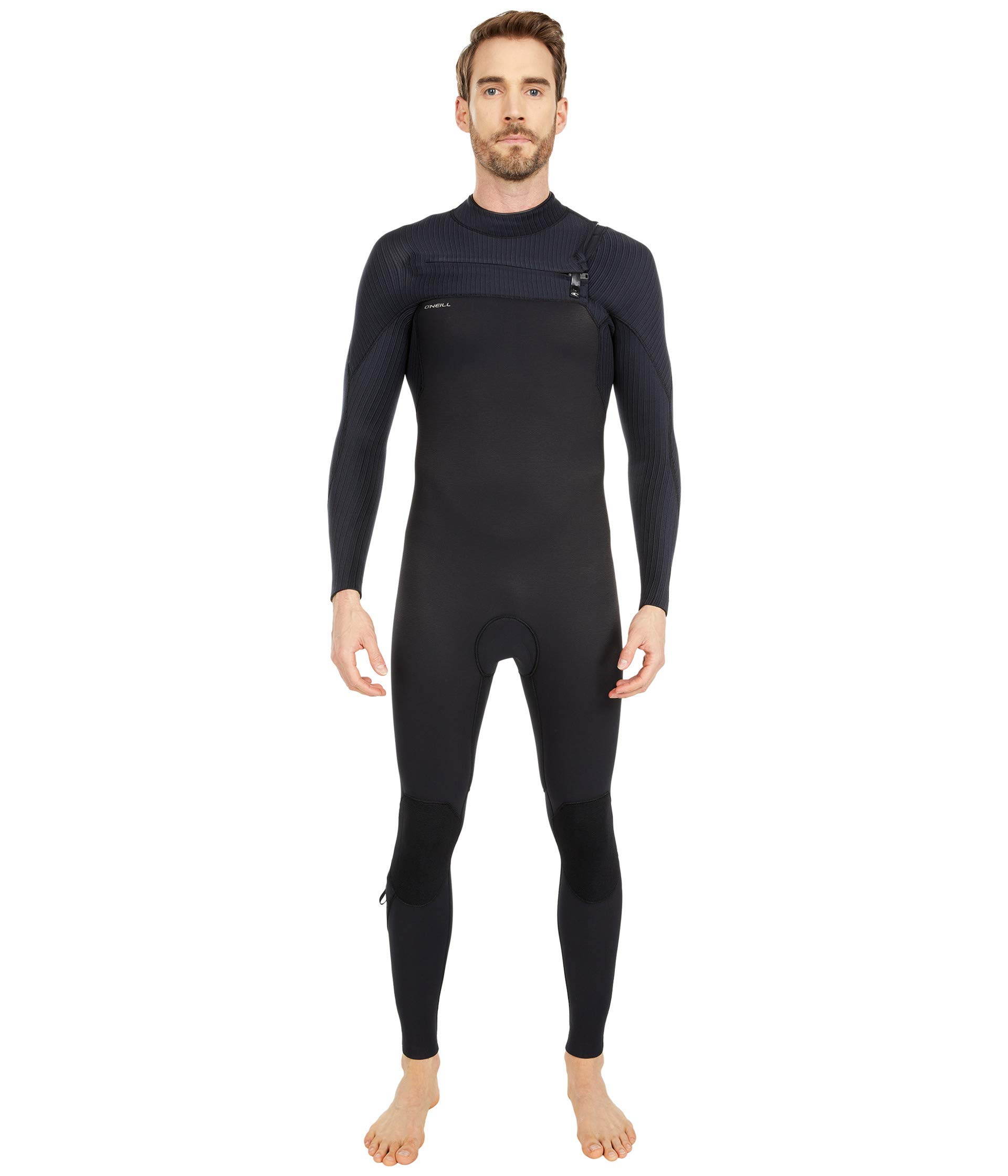
O'Neill
$419.95
In stock on Amazon
Check price on AmazonH3: The Reactor-2’s Flatlock Build and Where It Shines
The O’Neill Reactor-2 uses flatlock seam construction on most panels. Flatlock stitching is durable and flexible, but the needle passes all the way through the neoprene. In water above 60°F, that’s a livable trade-off. In 50°F Atlantic winter water, those needle channels allow enough cold water exchange to matter — especially over a session lasting longer than an hour.
Where the Reactor-2 earns genuine praise is in its windproof chest panel and targeted armpit flex zones. Aggregated buyer reviews collected by Cleanline Surf on the Reactor-2 consistently highlight these features for surfers who paddle hard — and increasingly for kiters and stand-up paddleboarders who put high torque through the shoulders. For that demographic, the Reactor-2 over-delivers for its price bracket when water temperatures are above 58–60°F.
The Reactor-2 spring suit configurations also include tall sizing, a detail that matters to longer-torso surfers. Multiple buyers report that regular sizing in this category creates shoulder restriction and a suit that rides up during duck dives. The tall cut resolves both problems.
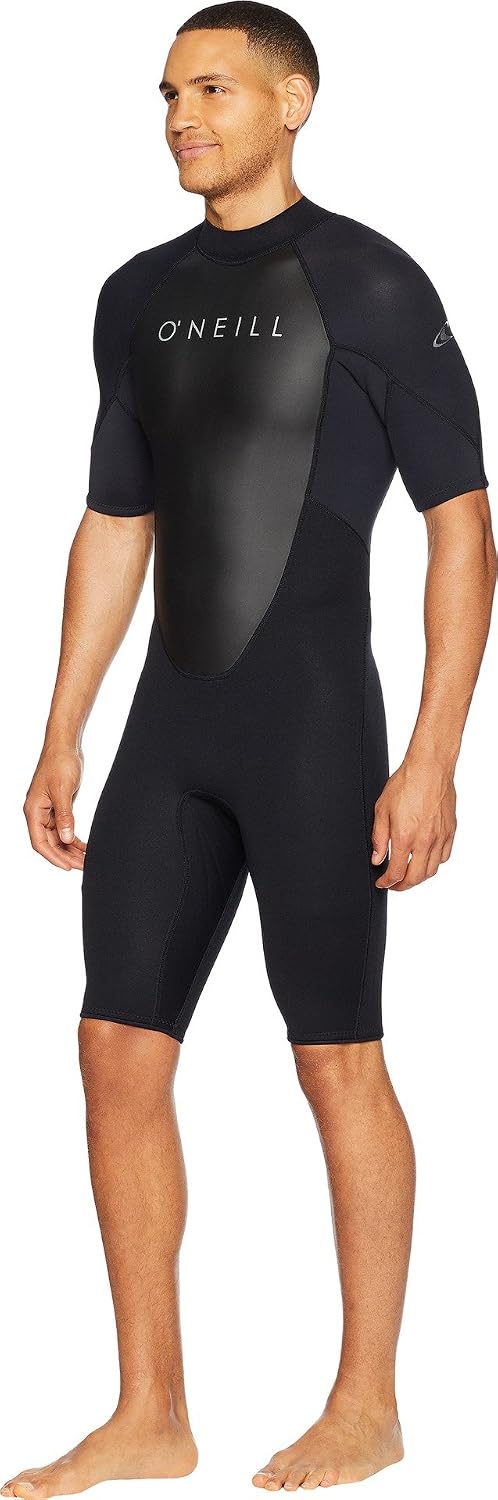
O'Neill
$99.99
In stock on Amazon
Check price on AmazonH3: Head-to-Head Across the Atlantic Calendar
The Atlantic water temperature band is predictable enough that you can pre-decide which suit belongs in which months. Boardcave’s wetsuit temperature guide outlines that 4/3 suits are designed for the 48–62°F range, while 3/2 suits are appropriate from roughly 58–68°F. The Reactor-2 4/3 performs best at the warmer end of the 4/3 bracket, given its flatlock construction. The Epic 4/3 covers the colder end with authority.
| Feature | O’Neill Epic 4/3 | O’Neill Reactor-2 4/3 |
|---|---|---|
| Seam type | Glued & blind-stitched (GBS) | Flatlock |
| Neoprene grade | Ultraflex DS | Standard flex |
| Entry system | Chest zip | Back zip |
| Recommended temp range | 48–62°F | 58–68°F |
| Tall sizing available | No | Yes (spring suit line) |
| Price tier | Mid ($$) | Entry-mid ($) |
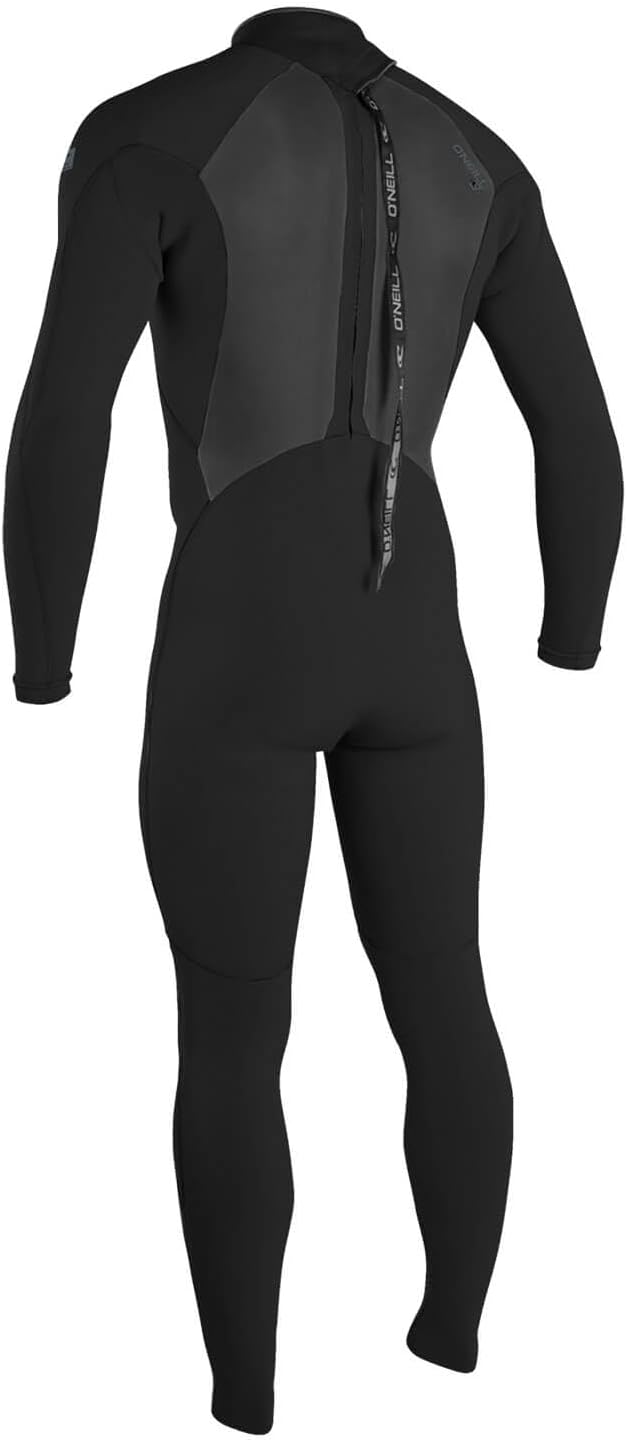
O'Neill
$244.95
In stock on Amazon
Check price on AmazonTemperature Ranges: Where Each Suit Actually Works
Use the Epic 4/3 when:
- Your sessions run from November through March anywhere from Maine to the Carolinas
- Water temperatures are consistently below 58°F
- You surf more than 90 minutes per session — cold accumulates over time, and seam flushing compounds it
- You’ve finished a session shivering despite wearing a 4/3 before — that’s typically a seam problem, not a thickness problem
Use the Reactor-2 4/3 when:
- Your window is October or April — shoulder season, 58–64°F
- You’re budget-constrained and need a functional suit now, with a plan to upgrade for winter
- You run warm naturally and find most 4/3 suits excessive by mid-spring
Use the Reactor-2 spring suit (2/2 or shorty configurations) when:
- Water temps are above 65°F and air temps are mild
- You’re primarily paddleboarding or kitesurfing with high paddle volume
- You need tall sizing: the Reactor-2 spring suit line’s tall cuts resolve the torso-length fit problems that plague regular sizing in this category
Wavelength Surf Magazine’s 2025 Wetsuit Buyer’s Guide notes increasing demand in the spring suit category from cross-discipline users — kiters and SUP surfers in particular — which matches what Reactor-2 spring suit owners consistently report: this suit handles high-paddle-volume activities above expectations for its price point.
The Seam Question, Answered Directly
Glued seams versus flatlock: does it actually matter for Atlantic surfing, or is it marketing language?
For water below 58°F, it matters — and it matters more than neoprene thickness alone. The Surf Simply Technical Blog’s wetsuit construction guide explains the mechanism: when a flatlock seam flushes, cold water entering the suit must be warmed by your body before it creates a usable thermal layer. In brief exposures, this cycle is manageable. Over a full session, repeated flushing — particularly around the shoulders, neck, and lower back — creates cumulative heat loss that additional thickness alone cannot compensate for.
The Epic’s GBS construction slows that flushing cycle dramatically. It doesn’t eliminate water exchange entirely — no suit does — but it reduces the frequency and volume of cold-water intrusion enough to matter across a full winter session. Aggregated buyer reviews on Cleanline Surf for the Epic 4/3 reflect this consistently: surfers who previously ran cold in flatlock suits report the Epic holding warmth through longer sessions in equivalent water temperatures. One reviewer — a larger-framed surfer who surfed regularly in 50–55°F conditions — described the suit as making the water temperature effectively unnoticeable over the session. That’s a useful thermal benchmark.
If your Atlantic surfing is concentrated in summer — June through September, when New England water climbs to 65–72°F and conditions south of the Delmarva run even warmer — the seam difference is largely irrelevant. The Reactor-2’s flexibility and price are the right call in that range. But if winter surfing is part of your calendar, the Epic’s seam construction is not a luxury feature. It’s doing functional thermal work that the Reactor-2’s flatlock panels cannot replicate.
Fit, Sizing, and the Universal Size-Up Rule
Both suits require close attention to sizing. The consistent message across buyer reviews for both lines is the same: size up.
O’Neill neoprene runs snug across both models. A suit that fits perfectly in the shop may restrict shoulder rotation on the paddle-out within the first session. The Epic in particular — with its chest-zip entry system — needs to fit your torso length precisely. If the torso is too short, the chest zip creates a pressure point at the sternum and the suit pulls down during overhead paddle strokes.
For the Reactor-2, the tall sizing option in the spring suit configurations is worth calling out explicitly. Surfers with longer torsos — typically those 6’1” and above — report that regular sizing creates a pulling sensation at the shoulders and a suit that rides up during duck dives. The tall cut resolves both. If you’re on the fence between a regular and tall size in the Reactor-2, the tall is the safer choice.
Practical fit tests to run before buying:
- Raise both arms fully overhead — if the lower back of the suit lifts away from your body, the torso is too short
- Simulate a paddle stroke — if your shoulder rotation is restricted within the first five strokes, size up
- Check the neck seal: it should be snug without creating a choking sensation; a gaping neck on a 4/3 defeats the seam advantage
The Budget Bracket Decision
Entry-mid tier — Reactor-2: If you’re newer to cold-water surfing, surfing fewer than 20 days a year on the Atlantic, or primarily surfing shoulder season (April–May and September–October), the Reactor-2 delivers genuine value. It’s not a compromise suit for those conditions — it’s the correctly specified tool. The windproof chest panel is a real feature, not filler, and the armpit flex zones reward surfers who paddle hard.
Mid tier — Epic: If winter surfing is on your calendar, if you’ve already experienced being cold in a flatlock suit, or if you’re regularly in the water for two or more hours at a stretch, the Epic is the correct investment. The GBS seam construction earns back its price premium across a full Atlantic winter season. Boardcave’s wetsuit temperature guide supports the logic: once you’re below 55°F consistently, thermal performance at the seams outweighs other variables.
Price volatility note: The Epic, particularly in the 3/2 configuration, has appeared at significant seasonal discounts — buyers who timed purchases during post-peak clearance cycles have reported markdowns in the 40–45% range. If you’re buying for next fall, a spring purchase during clearance windows can put Epic-level GBS construction within range of Reactor-2 pricing. Watch both Cleanline Surf and Boardcave’s product listings through late spring for movement on Epic pricing.
Frequently Asked Questions
What temperature range is where the Epic 4/3 meaningfully outperforms the Reactor-2 4/3? The functional gap opens below 58°F. Boardcave’s wetsuit temperature guide and aggregated Epic buyer reviews at Cleanline Surf both point to the 48–57°F range as where GBS seam construction delivers a noticeably warmer experience. Above 60°F, the difference narrows enough that casual surfers may not justify the price delta.
Do glued seams actually make a difference for Atlantic winter surfing? Yes — especially over sessions longer than 60–90 minutes. The Surf Simply Technical Blog’s wetsuit construction guide explains that GBS seams reduce water exchange at panel joints, which compounds into measurable warmth retention over a full session. This is a mechanical advantage, not a marketing claim.
Should I size up in both suits, and by how much? Size up one size in both if you’re between sizes. For the Reactor-2 spring suit specifically, surfers with longer torsos should prioritize tall sizing over simply going up a regular size — the tall cut addresses the shoulder restriction and lower-back riding that regular sizing creates in this line.
Does the Reactor-2 spring suit work for kitesurfing and paddleboarding? Yes, and the design supports it specifically. The windproof chest panel and armpit flex zones are well-suited to high-paddle-volume activities. Reactor-2 spring suit owners who kite and SUP consistently rate it above expectations for its price point in those applications, as noted in buyer review patterns on Cleanline Surf.
Is the price difference between the Epic and Reactor-2 worth it for a beginner? If you’re surfing above 60°F water — late spring through early fall on most of the Atlantic — the Reactor-2 is the smarter starting point. You’re not paying for features the conditions require. If you’re starting in winter, or in a program that surfs year-round, the Epic’s seam construction will keep you in the water longer and more comfortably, which matters more for progression than most beginners anticipate.
The Decision Rule
If your Atlantic water temperature is below 58°F and you’re surfing more than once a week in winter, buy the Epic 4/3. The GBS seam construction is doing thermal work that the Reactor-2’s flatlock panels cannot match at that temperature.
If your sessions are concentrated in shoulder season or summer, the Reactor-2 is the right call — functional, flexible, and correctly priced for conditions where the Epic’s construction premium is overkill.
Watch Epic pricing through spring clearance cycles. The dollar gap between these two suits shrinks considerably when the Epic goes on markdown — and at that point, the seam construction decision becomes straightforward.