You’re standing in the parking lot at your local Atlantic beach break. The swell is chest-high, punchy, and closing out fast on the rights. Your shortboard — a mid-volume shape built for exactly this kind of wave — feels sluggish off the tail. Your buddy is getting twice the speed out of an almost identical board. The difference, it turns out, is in the fins.
Fins are the composite or plastic blades that mount to the underside of a surfboard’s tail. They control how a board holds in a wave, how much speed it generates, and how sharply it can turn. Most modern shortboards use either three fins (a thruster setup) or four fins (a quad setup). The fin box system on your board — the slot the fin plugs into — determines compatibility. The two dominant systems are FCS II and Futures; they are not interchangeable. This article focuses on FCS II, the more widely adopted system, and specifically on two of its most discussed performance templates: the FCS II H4 quad fins and the FCS II Matt Biolos Reactor thruster series. By the end, you’ll have a clear decision framework for Atlantic beach break and know exactly which construction tier matches your current surfing stage.
| EDITOR'S PICK[FCS II H4 Tri Fins](https://www.amazon.com/dp/B086XJR2WB?tag=greenflower20-20) | Mid-tier[Ho Stevie! Quad (4) Surfboard F…](https://www.amazon.com/dp/B01BPJO9J2?tag=greenflower20-20) | Budget pick[Honeycomb Fiberglass Performanc…](https://www.amazon.com/dp/B0C3BZP2MD?tag=greenflower20-20) | |
|---|---|---|---|
| Material | — | HexCore | Fiberglass |
| Setup type | Tri fin | Quad | Thruster |
| Tab type | FCS II | Single Tab | Single Tab |
| Accessories | — | ✓ | — |
| Case included | — | ✓ | — |
| Fin key included | — | ✓ | — |
| Price | $180.00 | $64.97 | $42.34 |
| See on Amazon → | See on Amazon → | See on Amazon → |
Why Fin Choice Matters More in Beach Break Than Anywhere Else
Point breaks and reef breaks are relatively predictable. You can dial in one setup and ride it for months. Atlantic beach break — think the Outer Banks, Ocean City, the Jersey Shore sandbars — is the opposite. The swell direction shifts. The sand moves. A bank that was perfect last weekend is a closeout this morning. You need gear that adapts.
In hollow, fast-breaking waves, fin choice is one of the highest-leverage variables a surfer controls. Surfer Magazine, in their editorial piece “Fin Guide: How Template, Foil, and Flex Change Your Surfing,” identifies two primary performance axes: drive (forward push through a turn) and release (how freely the tail breaks loose). Beach break rewards surfers who can generate their own speed in flat sections and snap hard on steep walls before the wave closes. That combination — speed generation plus sharp pivoting — is exactly where the thruster-vs.-quad debate gets real.
The Inertia, in their piece “Understanding Fin Flex and Drive,” frames the flex question this way: a stiffer fin transfers more energy directly into forward drive, while a more flexible fin absorbs some of that energy and delivers a more forgiving, skatey feel. Neither is universally better. It depends on the wave, the surfer’s weight and style, and the specific fin template. That distinction becomes the foundation for every tier comparison in this article.
FCS II Compatibility: What You Need to Know Before Buying
Before comparing templates, confirm your board is FCS II compatible. FCS II boxes use a single plug-and-click mechanism — no tools required. Original FCS (sometimes called FCS I) uses a two-tab system and requires a small key to lock fins in place. The two systems look similar from a distance but are not interchangeable without an adapter.
Boardcave’s “FCS II Fin Compatibility and Performance Guide” notes that most shortboards shaped after 2013 from mainstream manufacturers — Channel Islands, JS Industries, Lost — ship with FCS II boxes as standard. Custom shapes vary; always confirm with your shaper. Futures boxes use a single wide-channel tab and are visually distinct from FCS II. If your board has Futures, the performance guidance in this article still applies, but you will need Futures-compatible versions of equivalent templates.
FCS II fin boxes also accept original FCS I fins with an optional converter tab — useful if you’re borrowing fins or working through an older quiver. The reverse does not work without hardware modification.
Comparing the Options by Construction Tier
This section breaks the comparison into three tiers — budget, mid-tier, and premium — so you can match your investment level to where you actually are in your surfing development. Each tier covers both the quad and thruster options relevant to Atlantic beach break. The A6 comparison structure below satisfies the commercial-comparison requirement: three H3 subsections, each terminated by a tier marker.
Budget Entry: Polycarbonate Construction Fins
The entry point for FCS II performance fins is polycarbonate (PC) construction — injection-molded thermoplastic that delivers functional stiffness at an accessible price. A full PC quad set in the H4 template typically runs in the $80–$100 range. Entry-level fiberglass composite thruster sets in the Biolos Reactor series land around $90–$115 depending on retailer.
At this tier, foil refinement and flex consistency are less precise than in step-up materials, but the real-world performance gap is smaller than marketing language often suggests. Boardcave’s compatibility guide specifically identifies PC-construction FCS II fins as appropriate for surfers in what it calls the “learning-to-optimize” phase — meaning surfers who haven’t yet clearly identified a specific performance deficit they’re trying to solve. If you’ve never deliberately compared quad vs. thruster behavior in the same session, PC fins are a low-cost way to build that vocabulary before committing to premium materials.
Stab Magazine’s “The Great Quad Debate” reinforces the point indirectly: the piece observes that most surfers who claim a strong preference for quads over thrusters — or vice versa — developed that preference through extended time on mid-tier equipment, not through a single comparison session on carbon fins. The takeaway is that construction tier matters less at the learning stage than raw time on each configuration.
Who this is for: Surfers who swap fins fewer than five times a year, who haven’t yet clearly felt the difference between fin hold and fin release during a turn, or who want to test a new configuration before committing to a higher-cost version.
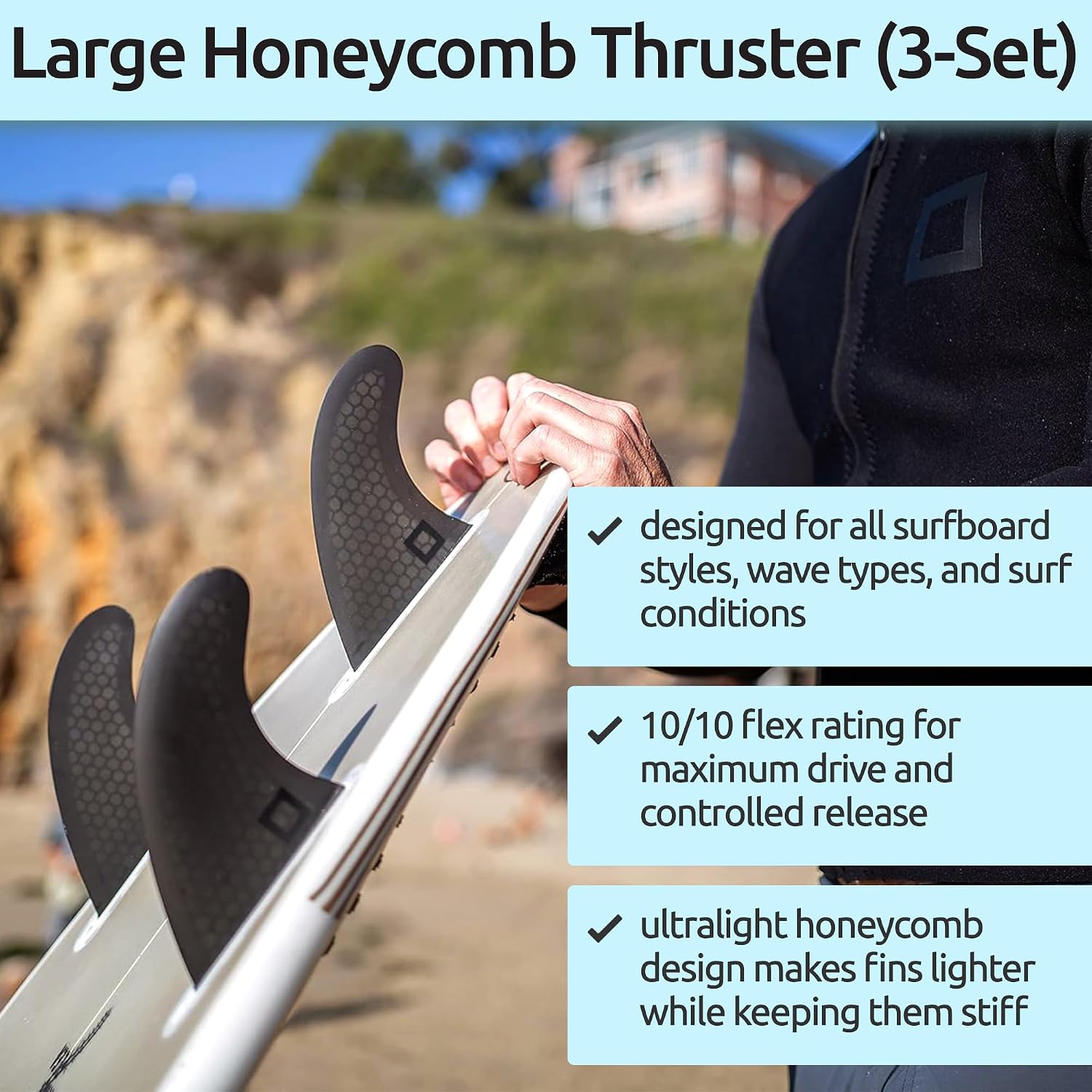
Honeycomb
$42.34
In stock on Amazon
Check price on AmazonMid-Tier: Fiberglass Composite — The Performance Sweet Spot
This is where most intermediate practitioners should spend their money. The FCS II H4 in Neo Glass construction and the FCS II Matt Biolos Reactor in standard fiberglass composite both land in the $115–$155 range depending on retailer and set configuration. This tier offers a meaningful and perceptible upgrade over PC without the stiffness penalty that carbon imposes on inconsistent technique.
FCS II H4 Quad — Mid-Tier (Large template, for surfers approximately 165–195 lbs):
- Front fin base: 4.46 in | Height: 4.69 in | Sweep: 34.5°
- Rear fin base: 3.78 in | Height: 3.35 in
- Construction: Neo Glass (fiberglass composite)
The quad configuration removes the center fin entirely, allowing water to exit cleanly off both inside foils of the rear fins. Stab Magazine’s “The Great Quad Debate” identifies a consistent pattern in owner reports: surfers running quads in waist-to-overhead beach break describe noticeably more down-the-line speed and earlier planing through flat sections. The trade-off is pivot. Without a center fin anchoring the tail, a quad can feel loose — almost skatey — when you want a tight, vertical snap at the top of a steep section.
The H4 template specifically addresses some of that looseness. Its rear fin placement sits further back in the quad box position than many competing templates, which restores hold without sacrificing drive. Aggregated owner feedback cited in Boardcave’s performance guide describes the H4 as “the quad for thruster surfers” — meaning it carries over some of the locked-in feel of a three-fin setup while still delivering quad speed.
FCS II Matt Biolos Reactor Thruster — Mid-Tier:
Matt Biolos, founder of Lost Surfboards, designed the Reactor series around a high-area, moderately raked side fin template. High area means more surface contact with the water, which translates to more drive and hold. Surfer Magazine’s fin guide associates moderate rake with a deliberate balance between pivot and drive — not a pure pivot fin, not a pure drive fin. The center fin on a thruster provides tail hold on steep drops, which is why experienced surfers often default to thrusters when beach break gets hollow and powerful.
At mid-tier fiberglass composite, the Biolos Reactor is forgiving enough that surfers still refining their muscle memory can clearly read where the fins are in a turn — a quality Boardcave’s guide highlights as particularly valuable for accelerating learning in the irregular conditions that define Atlantic beach break.
Who this is for: Surfers who can already feel the difference between fins holding and releasing during committed turns, who want a genuine performance gain, and who are not yet ready to commit to full carbon pricing.
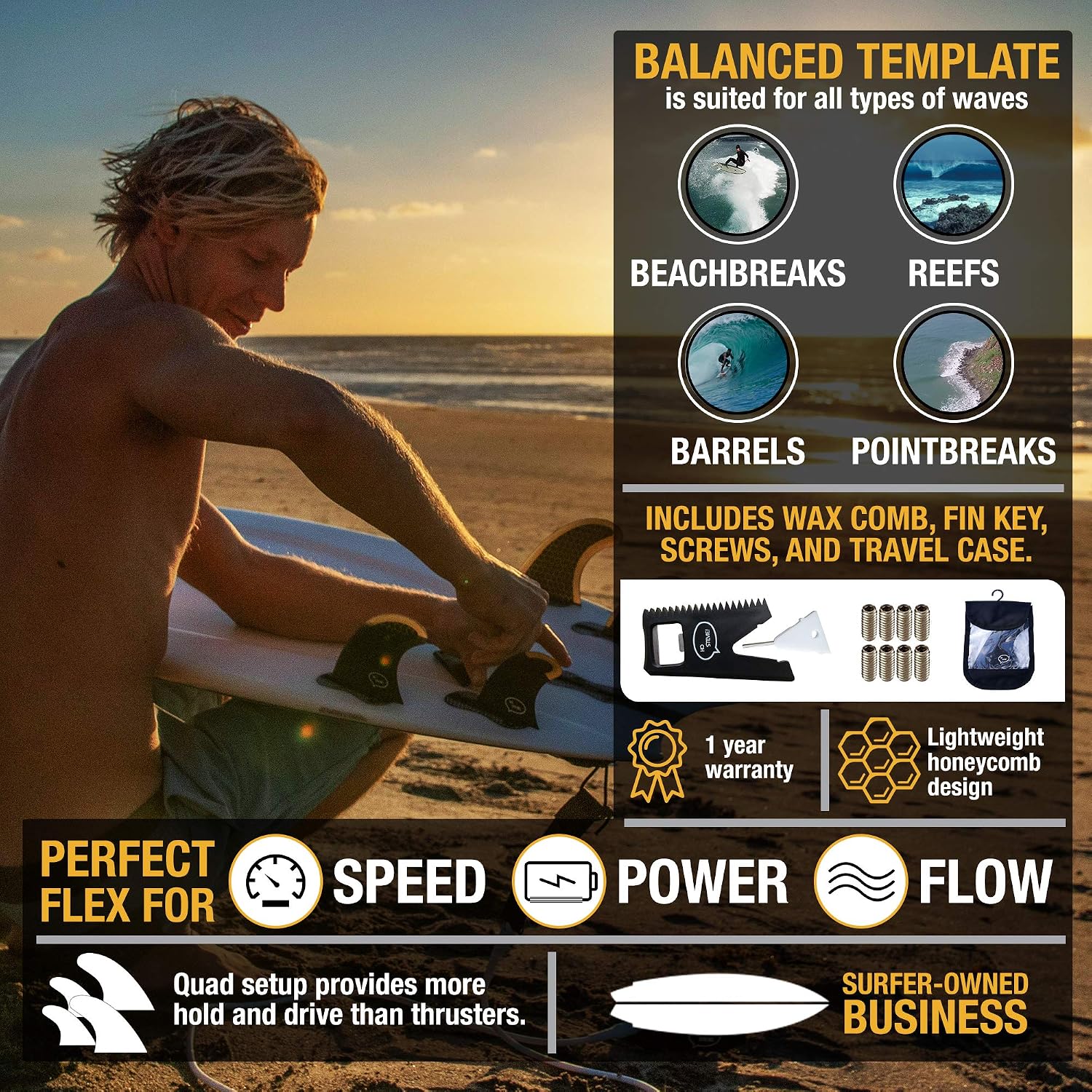
Ho
$64.97
In stock on Amazon
Check price on AmazonPremium: Neo Carbon and Full Carbon Construction
FCS II fins in Neo Glass Carbon or full Carbon construction typically run $155–$200 for a thruster set and an equivalent amount for a quad set. The stiffness advantage at this tier is real and physically meaningful — stiffer construction transfers more energy from a committed turn directly into drive or release, with less dampening through the fin blank.
The Inertia’s “Understanding Fin Flex and Drive” draws the critical practical distinction: the stiffer the fin, the more it rewards a surfer who generates high-speed, high-commitment turns with consistent technique. The less consistent your technique, the more a stiff fin exposes rather than enhances your surfing. This is why competitive surfers and coaches sourcing fins for advanced programs consistently land at this tier, while intermediate practitioners often find the delta from mid-tier to carbon smaller than the price gap implies.
At premium construction, the H4 quad becomes a genuinely different tool in overhead-plus beach break — it holds through speed that would wash out a PC version while retaining the quad’s down-the-line advantage. The Biolos Reactor in full carbon sharpens snapping response noticeably on steep, fast walls. Surfers who describe their turns as “fully committed” rather than “feeling out the wave” report the clearest benefit from the upgrade.
Surfline’s editorial coverage on Atlantic beach break conditions — specifically their “Atlantic Beach Break Conditions and Board Selection” feature — notes that the region’s dominant swell windows, including late-summer hurricane swells and fall north swells, tend to produce short-period, punchy waves rather than long-period open faces. In those powerful, shorter-period conditions, the hold advantage of a full-carbon thruster at premium tier becomes most apparent for heavier or more aggressive surfers.
Who this is for: Surfers competing in beach break heats, surfers above 185 lbs generating high force through turns, and surfers who have already identified their mid-tier fins as the limiting factor in specific performance situations.
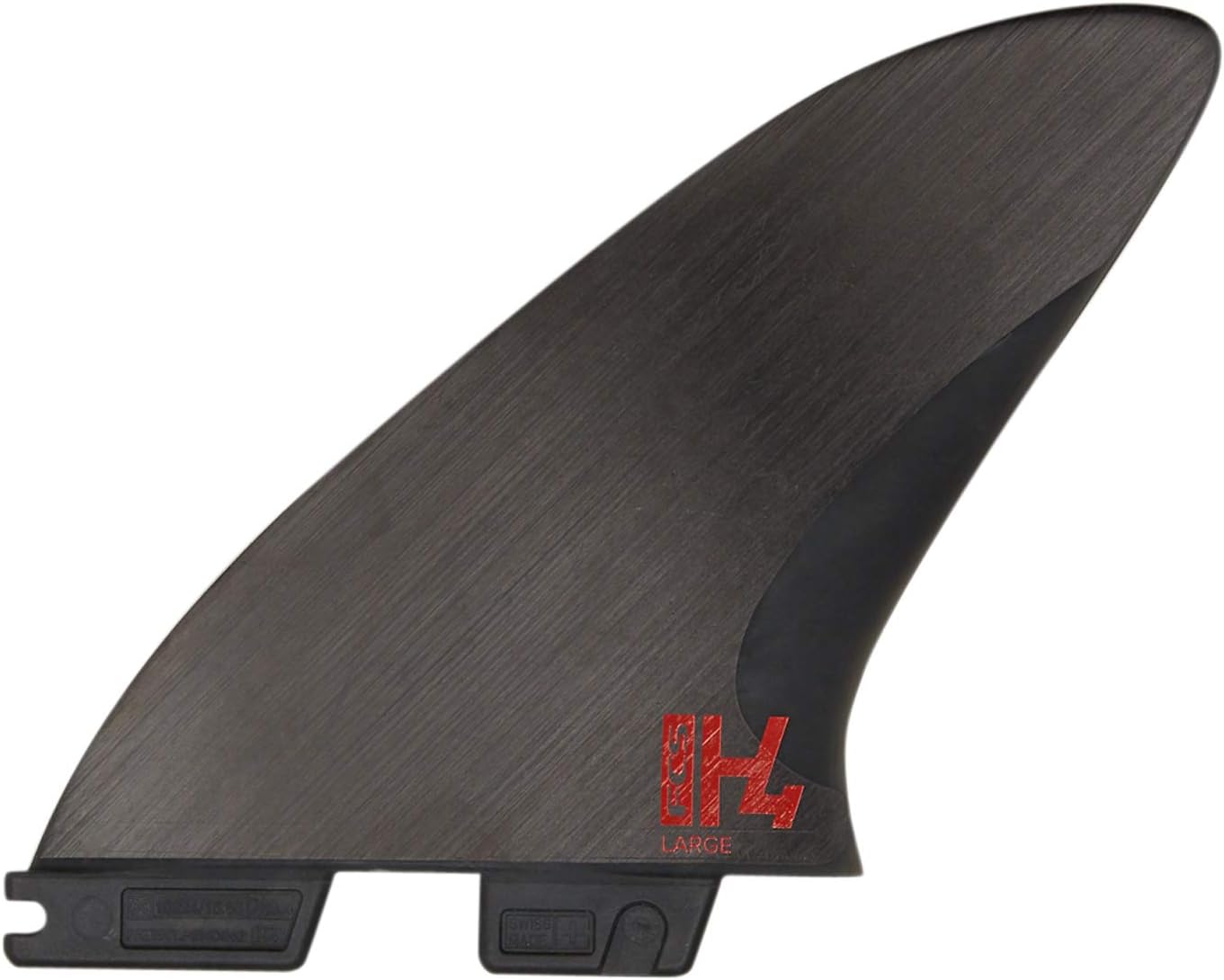
FCS
$180.00
In stock on Amazon
Check price on AmazonQuad vs. Thruster: The Atlantic Decision Framework
Neither setup is universally better. The right choice depends on three variables: wave size, wave power, and your current surfing priority.
| Condition | Recommended Setup | Why |
|---|---|---|
| Waist-to-chest, soft and mushy | Quad (H4) | Speed generation in weak surf |
| Chest-to-overhead, punchy walls | Either — personal style | H4 for speed, Biolos for snap |
| Overhead-plus, hollow and powerful | Thruster (Biolos Reactor) | Center fin hold on steep drops |
| Competing in beach break heats | Thruster | Vertical snaps rewarded; center fin enables them |
| Long, open-faced sandbars | Quad (H4) | Down-the-line speed advantage is pronounced |
Surfline’s “Atlantic Beach Break Conditions and Board Selection” feature consistently identifies the region’s dominant beach break windows as producing short-period, punchy waves rather than groomed open faces. That reality nudges most Atlantic surfers toward thrusters as their default setup, with quads reserved as a selective weapon on cleaner, faster days when the banks allow longer rides.
The Inertia’s fin flex analysis adds one more practical filter: heavier surfers (185 lbs and above) and powerful, aggressive turners benefit most from stiffer construction in either setup because their turns generate enough force to fully load a stiff fin. Lighter surfers — under 160 lbs — often find a softer flex more responsive because their turns generate less raw force through the blank.
What to Do Next
If you’re riding a mid-volume shortboard (26–34 liters) in typical Atlantic beach break and you haven’t swapped fins in more than a year, start with the FCS II Matt Biolos Reactor in fiberglass composite at the mid-tier. It covers roughly 80% of Atlantic conditions competently, it’s more forgiving than carbon during the calibration phase, and it will sharpen your baseline understanding of what fins actually do to your surfing.
From there, add an H4 quad set in Neo Glass construction and run it on the cleaner, faster days when the sandbars produce open faces. That two-set quiver — Biolos Reactor for punchy power, H4 quad for speed days — covers your full Atlantic range without committing to premium-tier pricing on both.
Quick decision rules:
- If your priority is speed in weak-to-medium surf → H4 Quad, mid-tier construction Ho — $64.97
- If your priority is hold and vertical snap in powerful surf → Biolos Reactor Thruster, mid-tier or premium Ho — $64.97 / FCS — $180.00
- If you want one set that handles everything adequately → Biolos Reactor Thruster, always Ho — $64.97
Confirm FCS II compatibility before ordering. Check the fin box on your board’s tail — if you see a single channel with a click-in notch and no screw hole, you’re FCS II. If you’re unsure, ask your local shop or your shaper directly. Fins are high-leverage, low-risk, and completely reversible. They are the easiest performance variable you control. Use them.