It’s late May. Water temps along the mid-Atlantic coast are creeping into the low-to-mid 60s Fahrenheit — warm enough that a full-length wetsuit (a suit covering arms and legs completely) feels like overkill, but cold enough that boardshorts alone will have you out of the water after twenty minutes. This is exactly the window where a shorty wetsuit — a suit with short legs and short or no sleeves, typically made from 2mm to 3mm of neoprene rubber — becomes your most-used piece of gear. The question isn’t whether you need one. The question is which one, and whether paying more actually gets you something real.
This article compares two specific suits that keep surfacing in serious buyer conversations: the ScubaPro Definition 2.5mm and the O’Neill Reactor-2 Spring Suit. One comes from the dive world, one from surf. Both are positioned as premium options. Neither is perfect. If you’ve got one of these under consideration right now, here’s what aggregated owner reviews and published specs actually say — and a clear decision rule at the end.
| EDITOR'S PICKSCUBAPRO Definition Shorty 2.5… | Mid-tierO'Neill Men's Reactor-2 2mm Bac… | Budget pickO'Neill Women's Reactor Back Zi… | |
|---|---|---|---|
| Thickness | 2.5 mm | 2 mm | — |
| Gender | Men's | Men's | Women's |
| Zip style | — | Back zip | Back zip |
| Size | XL | X-Large | 12 |
| Fit range | Chest 42"-44" | — | — |
| Price | $149.00 | $88.95 | $75.50 |
| See on Amazon → | See on Amazon → | See on Amazon → |
The ScubaPro Definition 2.5mm: Impressive Material, Brutal Sizing Reality
ScubaPro built its reputation in technical diving, and the Definition 2.5mm reflects that DNA. The neoprene is legitimately supple — reviewers on ScubaPro’s own platform and across aggregated dive-community reviews consistently describe the stretch as closer to a premium surf suit than a typical dive shorty. That matters for paddle-out and pop-up mechanics just as much as it does for arm reach on a descent.
But here’s the sizing problem, and it’s not a footnote — it’s the headline.
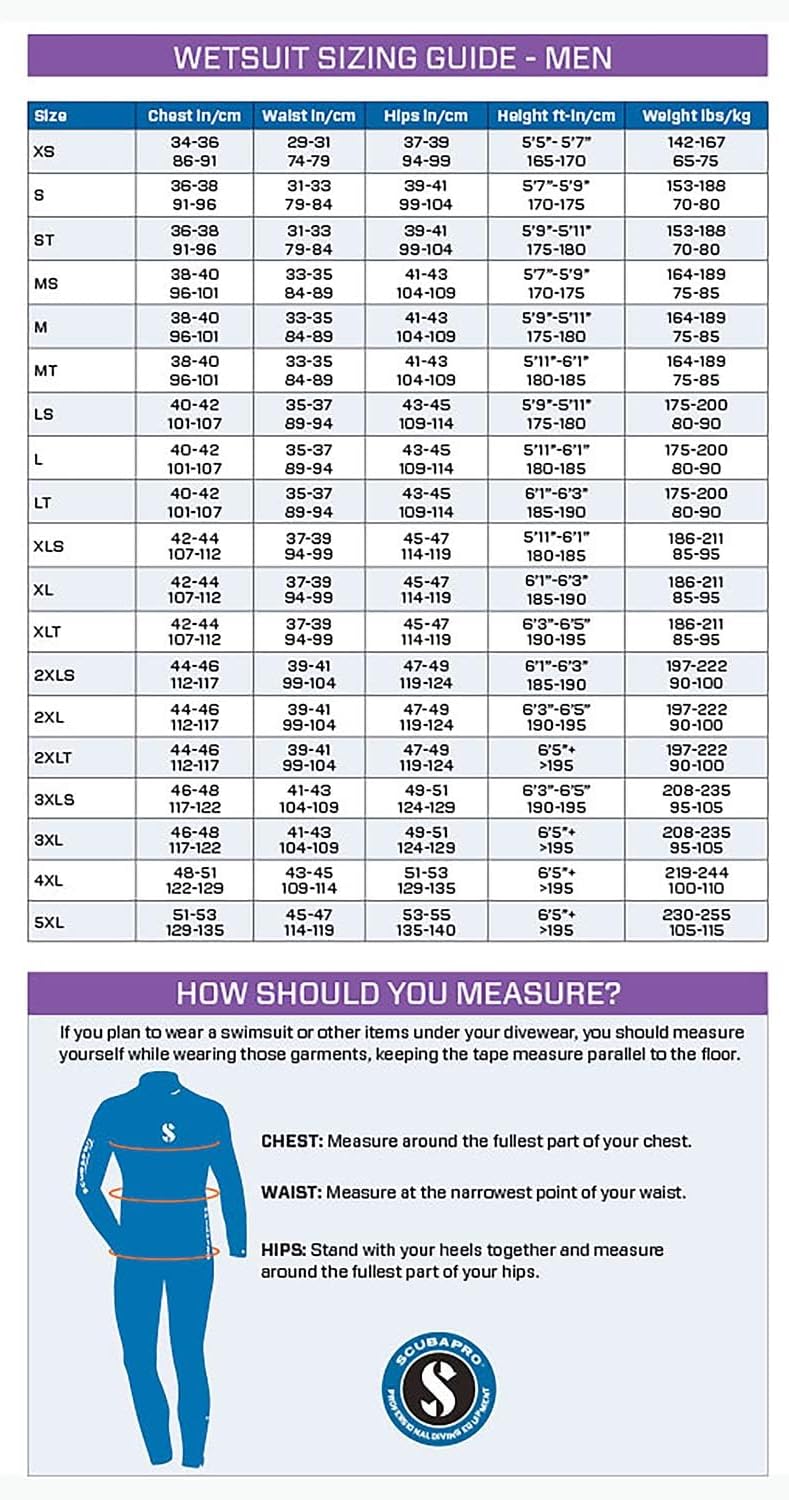
Across multiple verified buyer reviews, the sizing chart runs dramatically small. A buyer documented at 6’3” and 250 lbs — who measured squarely into a 2XL by the published chart — needed a 3XL to achieve a functional fit. A separate reviewer at 5’10” and 210 lbs reported the identical mismatch: charted size too small, needed to go up. This isn’t one outlier. The pattern across aggregated reviews is consistent enough that ordering one full size up from your chart measurement is the minimum; two sizes up is the safer rule if you’re broad through the chest or shoulders.
This matters for Atlantic surfers specifically because a too-small shorty compresses your paddle stroke. If the suit restricts shoulder rotation, you’re fatiguing faster in the lineup — which defeats the purpose of wearing a flexible suit in the first place.
Thermal Ceiling: One Tank, Not Two
For surfers thinking about the ScubaPro for longer sessions or shoulder-season water, there’s a specific thermal data point worth knowing. A reviewer documented comfort during a first dive tank in Hawaii — warm, clear water, relatively short duration — followed by shivering during the second tank as core temperature dropped. The reviewer’s conclusion matched what Wavelength Surf Magazine’s shorty wetsuit guide describes as a general principle: 2.5mm suits are warm-water tools, not extended cold-water tools.
The practical translation: In Atlantic water temps above 68°F, the ScubaPro Definition 2.5mm is genuinely comfortable for a standard 90-minute to two-hour surf session. Below that, or for back-to-back sessions without a warmup period, you’re at the suit’s limit. Plan accordingly.
By the Numbers: ScubaPro Definition 2.5mm
| Spec | Detail |
|---|---|
| Thickness | 2.5mm throughout |
| Zip type | Back-zip |
| Sleeve style | Short arm, short leg |
| Sizing offset (reported) | Order 1–2 sizes up from chart |
| Warmth range | Comfortable above ~68°F water; limit reached at second consecutive session |
The O’Neill Reactor-2 Spring Suit: The Workhorse With Hidden Features
The O’Neill Reactor-2 is the other end of this conversation — a surf-native design that’s been iterated through multiple generations. At its price point it sits in the $$ tier, and the published specs are familiar: 2mm Ultraflex neoprene, back-zip entry, short arms and legs. What makes it interesting for Atlantic conditions specifically are two features that don’t get top billing in O’Neill’s marketing but come up repeatedly in owner reviews.
The Windproof Chest Panel
A kitesurfer reviewing the Reactor-2 flagged this as the suit’s most important underpublicized feature. The chest panel uses a windproof laminate layer that the standard neoprene panels don’t have. On a kite session, the reviewer was moving fast through air temperatures roughly 15°F colder than the water — a scenario that would normally make a thin shorty feel inadequate even in warm water.
This is directly relevant to Atlantic mornings. Spring and early summer on the mid-Atlantic coast routinely produce exactly that split: 68–72°F water with 52–55°F air, offshore winds running hard. Without a windproof layer, cold air draws heat through wet neoprene faster than the water ever would. The Reactor-2’s chest panel addresses this without adding bulk.
Per Surfer Magazine’s coverage of modern neoprene technology, windproof laminate panels have become a meaningful differentiator in thin wetsuits precisely because warmth loss in shorties is disproportionately driven by wind chill on the torso, not water temperature alone.
The Velcro-Lock Zipper Pull: Functional, Not Cosmetic
Back-zip wetsuits have a well-known failure mode: the zipper pull gets caught on a leash, a board rail, or just the chaos of a wipeout and the suit unzips mid-session. It’s annoying at best and actually limits thermal performance as water flushes into the suit.
O’Neill’s solution on the Reactor-2 is a velcro-lock mechanism on the zipper pull — it tucks and secures the pull so it can’t be snagged. Reviewers specifically flag this as the detail that separates the Reactor-2 from budget competitors. Cleanline Surf’s gear notes on spring suits describe zipper security as one of the most underrated features in shorty evaluation, and the Reactor-2 implementation gets consistent praise for actually working under real-use conditions.
Women’s Sizing: A Useful Real-World Data Point
The women’s Reactor-2 adds a sizing nuance worth naming. A reviewer describing herself as a “solid size 12” curvy build found that a size 14 fit correctly — the suit runs snug through the hips and thighs relative to standard apparel sizing. This mirrors the general pattern Cleanline Surf’s sizing guides describe for surf-oriented shorties: they’re cut with athletic linearity in mind, and buyers with curvier proportions should size up one.
If you’re buying the women’s Reactor-2, apply the same logic as the ScubaPro: use the measurement chart, then consider going up if you’re fuller through the hips or thighs.
Head-to-Head Decision Framework
Here’s where the two suits actually differ in ways that should drive your choice:
ScubaPro Definition 2.5mm is the pick if you’re primarily doing warm-water dive sessions (Hawaii, Caribbean, Florida Keys in summer), you want the best possible neoprene flexibility in this price range, and you’re willing to absorb the sizing chaos of ordering two sizes up. It is not the pick for an Atlantic morning session with 15-knot offshore wind and air temps in the low 50s.
O’Neill Reactor-2 is the pick if your sessions are Atlantic-facing, wind is a regular factor, and you want a suit you can trust not to unzip on a late drop. The windproof chest panel is a genuine functional advantage in this environment, not a marketing claim. The velcro zipper lock addresses a real failure mode. The neoprene flexibility is good — reviewers consistently rate it as above-average for the price — but it doesn’t match the ScubaPro’s material premium.
Price tier anchor: Both sit in the $$ bracket for premium shorties — above the budget options from brands like Body Glove or Rip Curl’s entry tier, below the $$$ custom-grade suits. The O’Neill offers more condition-specific value for Atlantic use. The ScubaPro offers better raw material quality for controlled warm-water environments.
If/then decision rule:
- If your sessions are Atlantic-facing, air temps vary significantly from water temps, and you’re surfing or kitesurfing: O’Neill Reactor-2.
- If your sessions are warm-water diving or flat-water paddling in consistently warm conditions, and you prioritize neoprene quality above all: ScubaPro Definition 2.5mm — but size up aggressively.
- If you run a surf school or junior development program ordering in volume: the Reactor-2’s durability track record and predictable (if size-up-adjusted) fit make it the safer fleet purchase.
Frequently Asked Questions
How many sizes up should I order in a ScubaPro shorty wetsuit? Order at least one size up from your chart measurement. If you’re broad through the chest or shoulders, go two sizes up. Multiple verified buyer reviews document the same pattern: the chart runs dramatically small, and a suit that’s too tight across the torso will restrict your paddle stroke and be uncomfortable regardless of neoprene quality.
Will a 2.5mm shorty keep me warm for two consecutive dive tanks? Probably not. Reviewer documentation places the ScubaPro Definition 2.5mm’s thermal limit at roughly one tank — comfortable in Hawaii-temperature water for a standard session, but followed by shivering on a second tank as core temperature drops. For back-to-back sessions in water below 70°F, you need 3mm or supplemental warmth layers.
Does the O’Neill Reactor-2 spring suit work for kitesurfing? Yes, specifically because of the windproof chest panel. A kitesurfer reviewing the suit flagged this as its most important underpublicized feature — it prevents cold air from pulling heat through the wet neoprene at speed. For any Atlantic activity where you’re moving fast through air significantly colder than the water, this panel matters.
What does the windproof chest panel on the Reactor-2 actually do? It adds a laminate layer to the chest neoprene that blocks wind penetration. Standard neoprene is porous enough that cold air moving across a wet suit draws heat from your core faster than the water temperature would predict. The windproof panel stops that mechanism at the chest — where most heat loss through wind occurs — without adding meaningful bulk or restricting movement.
Is the ScubaPro Definition worth the price for casual warm-water use? If your sessions are genuinely warm-water — Florida, Caribbean, Hawaii — and you value neoprene quality and stretch, yes, with the size-up caveat firmly in mind. If you’re buying it for Atlantic shoulder-season use or any session involving significant wind chill, the warmth ceiling and sizing complexity make it a harder sell compared to the Reactor-2.
How does the O’Neill spring suit back-zip prevent unzipping during a session? The Reactor-2 uses a velcro-lock mechanism on the zipper pull that secures it flat against the suit. Budget back-zip suits leave the pull loose, where it can snag on leashes, board rails, or wipeout turbulence and unzip mid-session. The locked pull eliminates that failure mode. Reviewers who’ve used budget alternatives specifically note this as the detail that justifies the Reactor-2’s price step up.