You’re standing on the beach in late May. The air is 72°F, the sky is clear, and a chest-high swell is pushing through. But the water is sitting at 62°F — cold enough to ache if you’re just in a swimsuit, not cold enough to justify a 4/3mm full suit that’ll have you sweating on the paddle out. This is the Atlantic shoulder season in a nutshell, and it’s where most surfers make their biggest layering mistakes: either overdressed and overheating, or underdressed and bailing early.
This guide is about those in-between moments. A rashguard is a close-fitting athletic shirt — usually lycra or polyester — that protects your skin from board rash and sun but adds almost no thermal warmth. A wetsuit top (also called a “neo top” or jacket) is a thin neoprene — the same rubbery insulating foam used in full wetsuits — upper-body layer, typically 1–2mm thick, worn alone or over a swimsuit. A spring suit (sometimes called a shorty) is a one-piece wetsuit with short arms and short legs, usually 2–3mm thick, designed for warmer water. Each solves a different problem. Knowing which one to reach for — and when to stack them — is the decision this article is here to help you make.
| EDITOR'S PICKO'Neill Men's Reactor-2 2mm Bac… | Mid-tierO'NEILL Men's Reactor-2 1.5mm L… | Budget pickO'Neill Men’s Basic Skins Long… | |
|---|---|---|---|
| Thickness | 2mm | 1.5mm | — |
| Sleeve length | Short sleeve | Long sleeve | Long sleeve |
| Closure | Back zip | Pullover | — |
| Sun protection | — | — | UPF 50+ |
| Available size | X-Large | Medium | Large |
| Price | $88.95 | $74.96 | $29.96 |
| See on Amazon → | See on Amazon → | See on Amazon → |
The Atlantic Temperature Map: What You’re Actually Dressing For
Surfline’s Atlantic Coast water temperature data for 2025–2026 shows a range most mid-Atlantic and New England surfers already feel in their bones:
| Month | Mid-Atlantic (NJ/VA) | Southeast (NC/SC) |
|---|---|---|
| January–March | 38–48°F | 52–60°F |
| April–May | 50–63°F | 62–68°F |
| June–August | 68–76°F | 74–80°F |
| September–October | 65–72°F | 68–74°F |
| November–December | 50–62°F | 58–65°F |
The Inertia’s wetsuit thickness guide frames 62–68°F as the classic “2mm spring suit or 3/2mm full suit” zone — the exact range where the layering decision gets complicated. Below 60°F, you’re in full-suit territory no matter what. Above 70°F, a rashguard alone is often enough. It’s that 60–70°F band, and the shoulder months on either side of it, where this guide earns its keep.
Rashguards: What They Do and What They Don’t
A rashguard does two things well: it protects your skin from board wax and deck grip rash on your chest and stomach, and it blocks UV radiation (UPF ratings — Ultraviolet Protection Factor — measure how much UV the fabric blocks, with UPF 50+ blocking over 98% of rays).
What a rashguard does not do is keep you warm in Atlantic water. Lycra and polyester have virtually zero insulating value. Wavelength Surf Magazine’s 2025 wetsuit buyers guide is explicit about this: rashguards are not rated for thermal protection and should not be used as a warmth layer in water below 70°F.
Where rashguards shine:
- Summer Atlantic sessions from June through early September when water is at or above 68–70°F
- Reef and rock-bottom point breaks year-round, where skin protection matters regardless of temperature
- Under a full wetsuit as a base layer (more on this below)
- Kids and beginners logging long beach sessions with high sun exposure
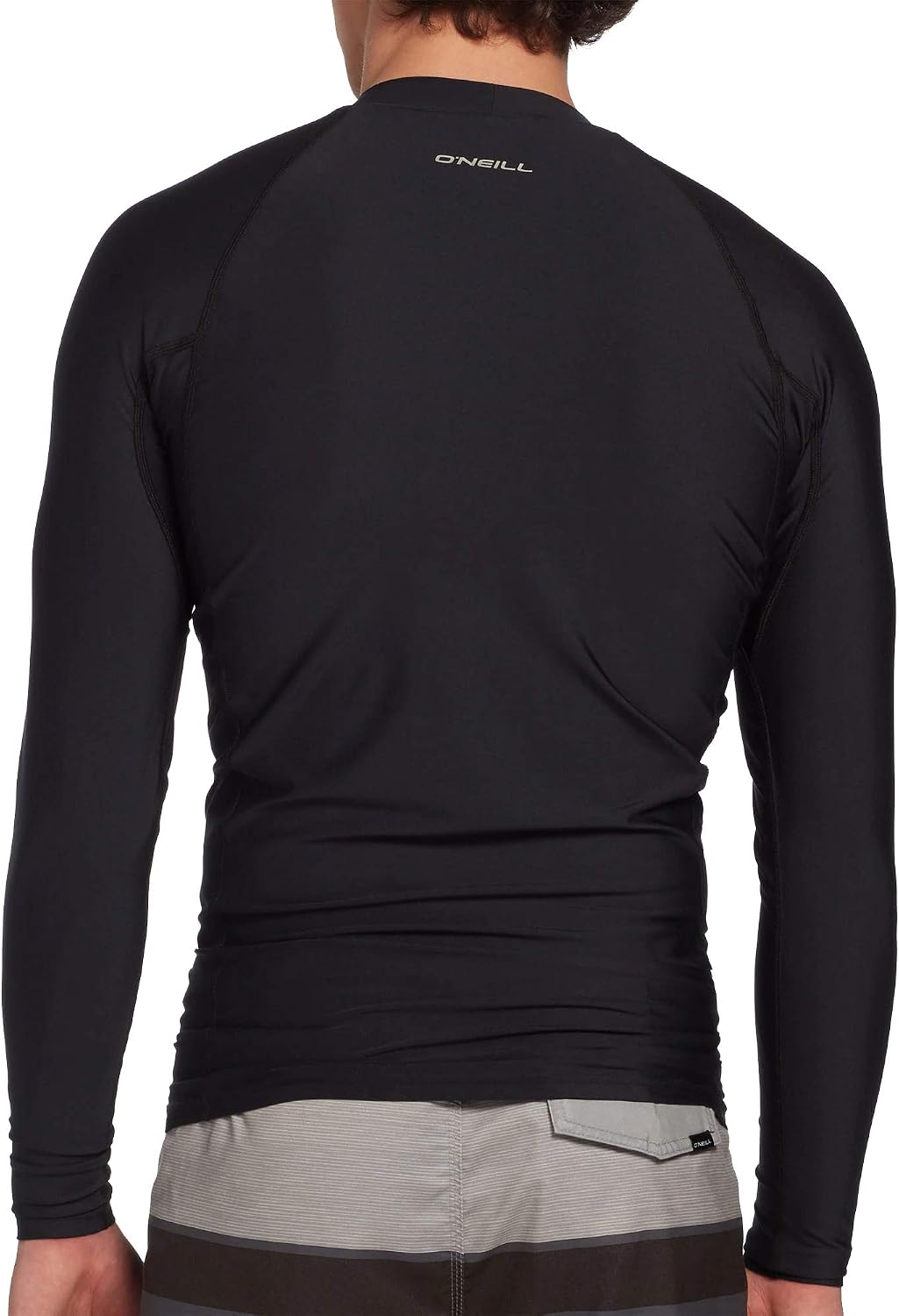
The O’Neill Basic Skins rashguard gets consistently strong reviews for its UPF 50+ protection and close, athletic fit. The near-universal note from reviewers: size up. The design is intentionally compressive — one reviewer described it as “built like a second skin” — but that compression is a feature, not a flaw, because a loose rashguard bunches under a wetsuit and creates pressure points. If you’re ordering for use under neoprene, sizing up also gives you easier entry and exit. If you’re wearing it standalone in the lineup, the fitted size is fine.
Price tier: $ — Rashguards sit firmly in the entry-level budget bracket. They’re consumable gear; buy two.
Wetsuit Tops: The Misunderstood Middle Layer
A neoprene wetsuit top — typically 1mm to 2mm thick — is the layer most Atlantic surfers underestimate. It’s not a rashguard (it does add meaningful warmth) and it’s not a spring suit (it doesn’t cover your legs at all). It exists in a functional gap: adding 5–8°F of effective warmth to your upper body without the commitment of a full suit.
The O’Neill 1.5mm wetsuit top illustrates both the appeal and the tradeoff clearly. Reviewers consistently praise it for blocking wind and adding noticeable warmth on cool mornings. But one practical complaint surfaces repeatedly in aggregated reviews: it takes all day to dry. For Atlantic surfers running back-to-back sessions — a dawn patrol followed by an afternoon window — a 1.5mm neoprene top pulled damp from your bag for round two is a genuinely uncomfortable experience. This isn’t a defect; it’s physics. Neoprene holds water longer than lycra or polyester. If you’re multi-sessioning on consecutive days, you need either two tops or a plan to hang it somewhere with airflow between sessions.
What a wetsuit top solves:
- That 62–66°F late April / early October window when full suits feel like overkill but bare skin stings
- Wind protection on cool mornings when air temp drops 15–20°F below water temp — a common Atlantic pattern in spring and fall
- Layered over a spring suit for extra core warmth in colder conditions
What it doesn’t solve:
- Lower-body chill — your legs are fully exposed
- Sub-60°F water — at that point, you want a 3/2mm full suit minimum
Price tier: $$ — Quality neoprene tops run $60–$120. Think of them as a targeted tool, not a substitute for a proper wetsuit.
Spring Suits: The Atlantic Shoulder-Season Workhorse
A spring suit (or shorty) is a one-piece wetsuit with short arms — usually to the bicep — and short legs, cut above the knee. Thickness typically runs 2mm to 3/2mm (meaning 3mm on the body, 2mm on the arms for flex). It covers your core, where heat loss is highest, while leaving limbs free for paddle mobility.
Boardcave’s 2025 guide to spring suits notes that the short-arm design prioritizes shoulder rotation — the motion you use on every single paddle stroke — over thermal coverage. For warm-to-moderate water, this is the right trade-off.
The Reactor-2 2mm spring suit has drawn particular attention for one feature that reviewers consistently flag as genuinely functional rather than marketing language: its windproof chest panel. Atlantic coastal conditions regularly combine moderate water temps with offshore or cross-shore winds that pull heat away from your chest on the surface. Reviewers confirm the chest panel makes a real difference in these conditions — not just in the water, but during the paddle out and while sitting in the lineup between sets.
Is a 2mm spring suit enough for Atlantic water in May or September?
This is the honest answer: maybe, but not always. Surfline’s temperature data puts May water at 55–63°F in the mid-Atlantic. A 2mm spring suit will keep you comfortable at the upper end of that range (62–63°F) for sessions under 90 minutes. Drop below 60°F and your legs will start protesting within 30–45 minutes. September is more forgiving — mid-Atlantic water peaks in late August and holds into the mid-to-upper 60s°F through most of September, which is solid spring suit territory.
One important gap to flag honestly: Most consumer reviews of spring suits and shorties — including Seaskin and Hevto models — are written by users testing at pool temps or in ocean conditions at or above 65°F. There is very little review data from surfers running these suits in the 58–62°F shoulder-season Atlantic window. If you’re planning October sessions in New Jersey or Virginia Beach, a 2mm shorty is an optimistic call. A 3/2mm full suit with short-arm option, or a spring suit layered with a wetsuit top, is a more reliable choice.
One notable crossover use case: Aggregated reviews include a user who wore a spring suit to an outdoor pool on a 90°F day alongside a long-sleeve swim shirt — evidence that these pieces travel well beyond the surfing context into open-water swimming, paddleboarding, and outdoor recreation. For buyers considering utility across multiple uses, that’s worth noting.
Price tier: $$–$$$ — Quality spring suits run $80–$250 depending on neoprene grade and construction.
Layering Logic: The Decision Framework
Here’s the simple decision tree based on Atlantic conditions:
Water above 70°F (June–August, Southeast year-round): Rashguard only. Sun protection is your priority. Size up if you’re wearing it under anything.
Water 65–70°F (September mid-Atlantic, Southeast shoulder season): Spring suit or 2mm shorty. No layering needed unless wind chill is a factor.
Water 60–65°F (May and October mid-Atlantic, Southeast winter): Spring suit plus wetsuit top, or a 3/2mm full suit. This is where the layering combination earns its keep.
Water 55–60°F (April and November mid-Atlantic): 3/2mm full suit minimum. A rashguard underneath adds a small buffer of warmth and prevents hood and collar chafe.
Water below 55°F (winter mid-Atlantic, New England spring/fall): 4/3mm or 5/4mm full suit with gloves and booties. No layering hack replaces proper neoprene thickness here.
Outside Online’s 2025 warm-water wetsuit roundup reinforces this framework: layering thinner pieces only makes practical sense in the middle of the temperature range. At the cold extremes, total neoprene thickness wins.
Frequently Asked Questions
Can I wear a rashguard under a full wetsuit to add warmth?
Yes, and it’s a legitimate strategy. A thin lycra layer traps a small amount of body heat between your skin and the neoprene. More practically, reviewers consistently note it makes donning and doffing a tight wetsuit easier — lycra slides against neoprene where bare skin drags. Size up on the rashguard if this is your primary use case.
Does the O’Neill 1.5mm wetsuit top actually add meaningful warmth or is it mostly wind protection?
Both, but the wind protection is the more consistent benefit. At 1.5mm, the thermal gain is real but modest — reviewers estimate it’s most noticeable in air temperatures below 65°F and in windy conditions. In flat, warm air, the thermal benefit is minimal. Think of it as a windbreaker with a neoprene bonus, not a substitute for a thicker suit.
Is a 2mm spring suit enough for Atlantic water in May or September?
September: generally yes, especially mid-Atlantic where water holds into the mid-60s°F. May: only at the warmer end of the range (62°F and above) and for shorter sessions. Below 60°F in May, your legs will get cold faster than your core, which no spring suit addresses.
How long does a wetsuit top take to dry between morning and afternoon sessions?
Reviewers of the O’Neill 1.5mm top note it can take 6–8 hours to dry fully in moderate conditions — longer in humid, low-wind Atlantic coastal weather. If you’re running a dawn patrol at 6am and want to session again at 2pm, hang it in a sunny, breezy spot immediately after your first session. In overcast conditions, expect it to still be damp for round two. Bring a spare if multi-sessioning is your regular routine.
Do I need to size up in O’Neill rashguards the same way I do in their wetsuits?
The sizing issue in O’Neill rashguards is a fit preference, not the same phenomenon as wetsuit sizing. O’Neill wetsuits run true to size but size up recommendations exist for surfers between sizes or with athletic builds. The rashguard fit is intentionally compressive at true size — reviewers describe it as functional, not uncomfortable. Size up on the rashguard if you dislike compressive fits or plan to layer it under a wetsuit where extra room helps with entry.