You’re standing in the parking lot at 6:45 a.m. The water’s 68°F. You’ve got a 2mm shorty (a short-armed, short-legged wetsuit that covers your core and upper thighs) in one bag and a 3mm shorty in the other. The 1mm difference sounds trivial. It isn’t. One extra millimeter of neoprene — the synthetic rubber used to make wetsuits — changes how warm you stay, how freely your arms move, and how long the suit lasts before the seams give out. Atlantic water in summer sits in a band from about 65°F to 74°F depending on latitude and season, and that 9-degree spread is exactly where the 2mm vs. 3mm decision gets genuinely complicated. This article walks through the tradeoffs in plain terms, names the specific products worth knowing, and ends with a clear rule for which thickness to choose.
| EDITOR'S PICKO'Neill Men's Reactor-2 2mm Bac… | Mid-tierSeaskin Mens 3mm Shorty Wetsuit… | Budget pickHevto Men Wetsuit Shorty 2mm Ne… | |
|---|---|---|---|
| Thickness | 2mm | 3mm | 2mm |
| Sleeve type | Short sleeve | Shorty | Shorty |
| Zip position | Back zip | Front zip | Front zip |
| Full body | ✗ | ✓ | ✗ |
| Use for | Water activities | Diving, snorkeling | Surfing, diving |
| Size shown | X-Large | Medium | XX-Large |
| Price | $88.95 | $47.19 | $42.12 |
| See on Amazon → | See on Amazon → | See on Amazon → |
The One-Millimeter Warmth Gap Is Real — Here’s the Math
A millimeter of neoprene doesn’t sound like much. But warmth in a wetsuit isn’t linear — it compounds. The suit traps a thin layer of water against your skin, your body heats it, and the neoprene slows heat loss to the ocean. More thickness means slower heat loss.
By the numbers:
| Thickness | Ideal Water Temp | Typical Flex Rating | Best For |
|---|---|---|---|
| 2mm | 68°F–74°F+ | High | Mid-morning to afternoon sessions |
| 3mm | 65°F–70°F | Moderate | Early morning, overcast, wind |
According to Wavelength Surf Magazine’s Wetsuit Buying Guide 2025, a 2mm suit starts to feel cold below 67°F when wind chill is factored in — and Atlantic wind chill before 8 a.m. is a real variable, not a footnote. Surfline’s Atlantic Water Temperature Report for Spring-Summer 2025 puts average mid-Atlantic surface temps at 66°F–69°F in May and June, rising to 70°F–74°F by late July. That means from Memorial Day through mid-June, a 3mm is the more honest choice for early risers.
The Inertia’s overview “Everything You Need to Know About Wetsuit Thickness” confirms the pattern: the crossover point is roughly 68°F. Above that, a 2mm delivers enough warmth and your paddling mobility improves noticeably. Below it — especially before the sun hits the water — you’ll be hunching your shoulders and cutting sessions short.
Comparing the Field: Six Shorty Wetsuits Worth Knowing
The options below are organized by thickness tier and price point. Each subsection closes with a tier marker so you can scan directly to your budget.
Budget 2mm: Hevto Men’s Front-Zip Shorty
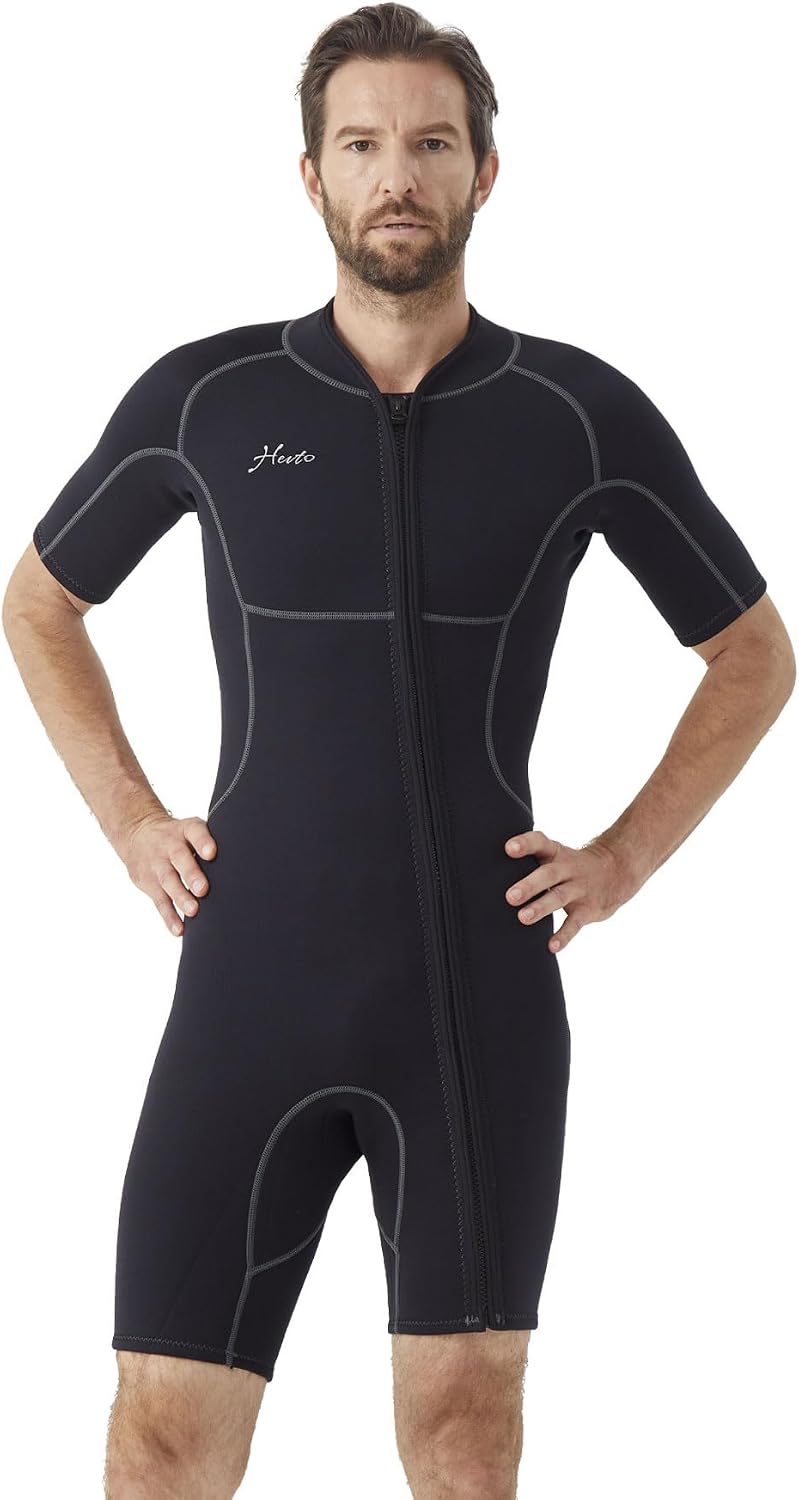
The Hevto men’s 2mm front-zip shorty sits at the accessible end of the price range and covers the basics: reasonable warmth in water above 70°F, front-zip closure for reduced flushing when duck-diving under waves, and a fit that works for average builds. The documented caveat is durability under chlorine exposure. In one owner account, the zipper jammed and the suit tore after ten months of three-times-weekly pool sessions. Boardcave’s Wetsuit Thickness Guide notes that neoprene degrades faster in chlorinated water than in salt water — this failure mode is consistent with that pattern. For ocean-only use in reliably warm Atlantic water, the Hevto is a functional starting point. For anyone planning regular pool sessions, the replacement math changes the calculus quickly.
Hevto
$42.12
In stock on Amazon
Check price on AmazonMid-Tier 2mm: O’Neill Reactor-2 Spring Suit
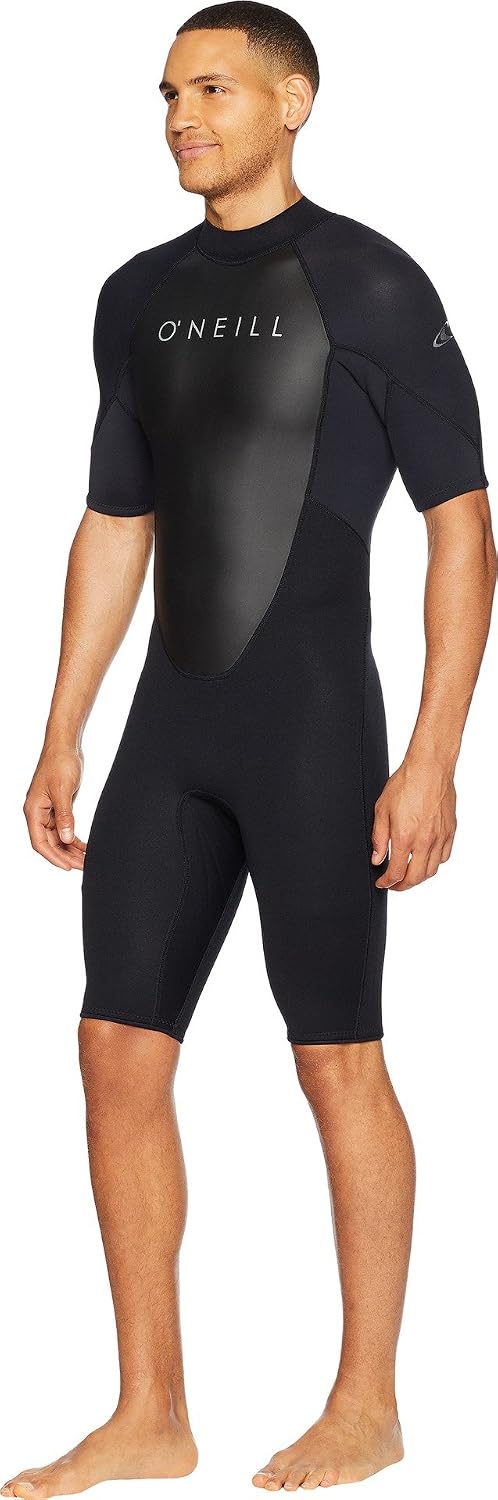
The O’Neill Reactor-2 2mm spring suit is the most-cited 2mm shorty in aggregated Atlantic surf reviews, and the standout feature is one buyers discover in use rather than in the product description: the chest and back panels provide meaningful wind resistance. Reviewers — including at least one kitesurfer who specifically noted it — describe the suit as blocking offshore wind in a way that budget 2mm options don’t approach. That’s not marketing language; it shows up repeatedly in independent accounts across multiple seasons.
The back-zip closure deserves a specific mention. A velcro flap folds over the zipper pull and holds it flat against the spine. Mid-session unzipping on back-zip suits is a known annoyance — the gap opens, cold water flushes in, you lose core temp and focus. The velcro cover prevents it. Budget back-zip suits skip this detail. If you’ve ever had a suit gap open in the lineup, you understand why it matters.
Front-zip vs. back-zip: Front-zip suits (zipper at the chest) seal tighter and flush less water when duck-diving. Back-zip suits (zipper runs down the spine) are faster to get on and off. The Reactor-2 is back-zip with the velcro cover. Neither format is universally better — it comes down to whether entry speed or flush resistance is your priority.
Seaskin
$47.19
In stock on Amazon
Check price on AmazonPremium Women’s 2mm: Rip Curl Dawn Patrol
For women’s buyers at the upper price tier, the Rip Curl Dawn Patrol 2mm earns consistent marks for warmth performance above its stated thickness. The neoprene blend runs warmer than the number suggests — a function of neoprene density and panel construction rather than marketing. Wavelength Surf Magazine’s Wetsuit Buying Guide 2025 identifies sealed chest panels and higher-density neoprene as the primary warmth multipliers within a given thickness tier, and the Dawn Patrol checks both boxes. If you’re surfing Atlantic water in the 68°F–71°F range and want a 2mm that behaves more like a 2.5mm without the mobility penalty, this is the clearest women’s option in the segment.
O'Neill
$88.95
In stock on Amazon
Check price on AmazonThe 3mm Tier: Early Morning, Wind, and the Exit Problem
Budget 3mm: No-Name Women’s Options
The budget no-name 3mm category generates a specific and consistent complaint that Boardcave’s Wetsuit Thickness Guide indirectly validates: warmth is adequate for the price, but removal is difficult. A scuba instructor’s account of using one in a chlorinated pool described the suit as warm and affordable — but hard to get off after a session. This pattern (good warmth, difficult exit, marginal durability in chlorinated water) appears across multiple budget 3mm reviews from different brands. The throughline is that budget 3mm neoprene tends to stiffen at the seams faster, which tightens the suit over time and makes removal progressively harder. For occasional ocean use in 65°F–68°F water, budget 3mm suits cover the warmth need. For back-to-back sessions or coaching days, the exit struggle becomes a real time cost.
Hevto
$42.12
In stock on Amazon
Check price on AmazonMid-Tier 3mm: Seaskin Shorty with Side Zipper
The Seaskin 3mm shorty earns the most unusual praise in the shorty category: it runs a full side zipper from neck to ankle hem. Across shorty reviews, exit difficulty is the single most common frustration — peeling a 3mm off your arms after a session when you’re tired and your hands are cold is legitimately miserable. Reviewers describe Seaskin’s side-zip design as eliminating that struggle entirely. The Inertia’s wetsuit thickness overview notes that seam construction and closure design are underrated factors in suit usability — the Seaskin’s zipper placement is the clearest example of that principle applied to a shorty. It’s the kind of feature you only appreciate after you’ve owned a conventional shorty and cursed at it in a parking lot.
Seaskin
$47.19
In stock on Amazon
Check price on AmazonPremium 3mm: Full-Featured Suits for Serious Atlantic Sessions
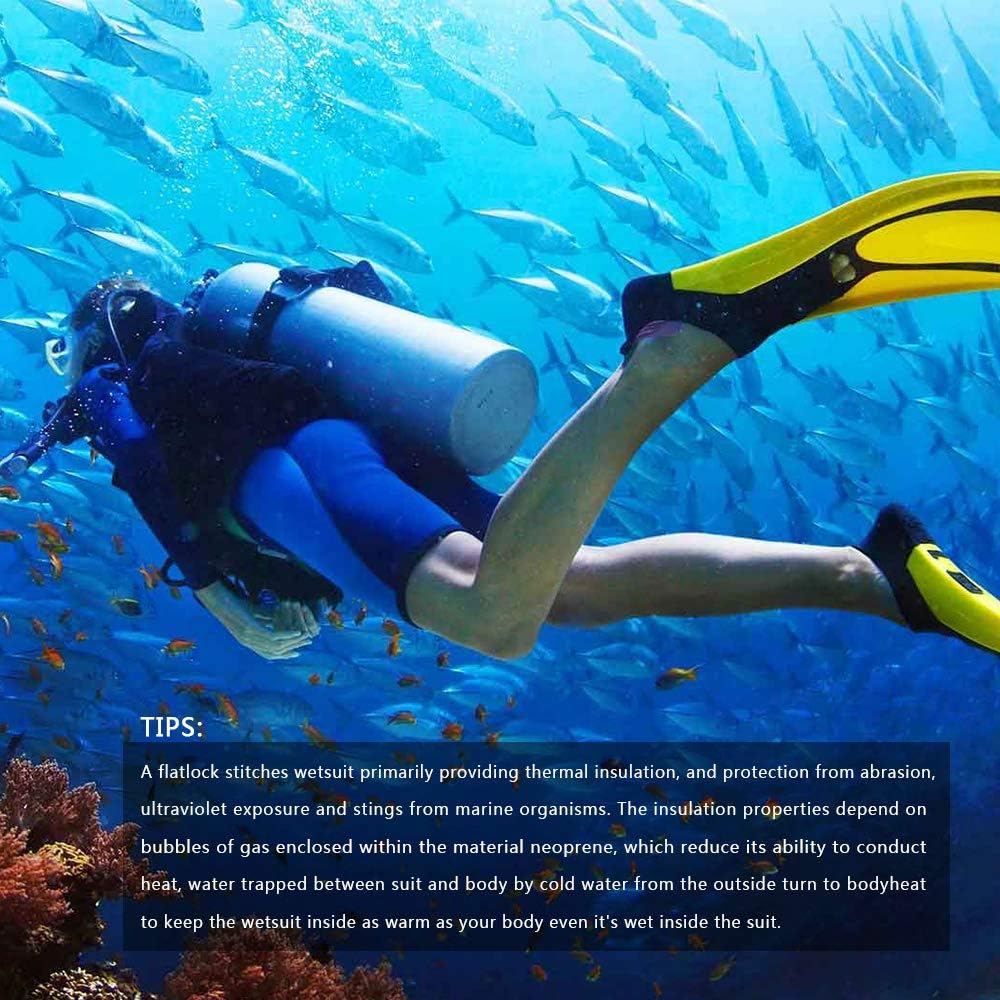
At the top of the 3mm tier, the differentiators are neoprene quality, seam sealing, and panel design. Flatlock seams — stitched flat so they don’t create raised ridges that rub — matter more across a full season of regular surfing than they appear to in a single session. Surfline’s Atlantic Water Temperature Report for Spring-Summer 2025 shows that the 65°F–70°F band persists across most mid-Atlantic and New England zones from late April through mid-June. A premium 3mm suit bought for that window earns its cost over multiple seasons if maintained correctly. The Inertia’s wetsuit care guidance — rinse in fresh water after every session, avoid prolonged sun drying, never store damp — applies with extra force at this price point.
O'Neill
$88.95
In stock on Amazon
Check price on AmazonPool Use vs. Ocean Use: A Caveat Worth Your Attention
This deserves its own section because the failure modes are genuinely different.
Ocean use: salt water, UV exposure, sand abrasion. The enemies are sun degradation on the neoprene and delamination at the seams. Rinse with fresh water after every session. A well-maintained suit lasts two to four seasons of regular surfing.
Chlorinated pool use: the chemistry actively degrades neoprene over time. The Hevto 2mm zipper failure at ten months of three-times-weekly pool sessions is a documented extreme, but it illustrates a real pattern. Boardcave’s Wetsuit Thickness Guide notes that no shorty on the market is designed for chlorinated water as a primary environment. If you’re a surf coach, swim instructor, or triathlete who plans to use a shorty in a pool regularly, factor in replacement cost when comparing prices. A suit that costs less upfront but fails in ten months at high frequency is not the lower-cost option over a full year.
The Inertia’s wetsuit care overview recommends rinsing chlorine-exposed suits in fresh water immediately after pool sessions and avoiding prolonged sun drying — both of which slow degradation but do not stop it.
Session Planning: When Thickness Changes Everything
A shorty wetsuit doesn’t change your fin setup or board choice — but water temperature and session timing should inform all three decisions together.
If you’re surfing Atlantic beach break in 67°F water at 6 a.m. with a performance shortboard (typically 5’8”–6’2” in length, 27–30 liters of volume, pulled-in tail for drive), the 3mm gives you enough core warmth to paddle hard through a two-hour session without losing power in your stroke. Cold core equals hunched posture equals missed waves and blown pop-ups.
By contrast, if you’re surfing the same break at 11 a.m. in 71°F water after the sun has been on it for three hours, a 2mm is the cleaner call. You’ll paddle more freely, and the O’Neill Reactor-2’s windproof panels will handle the onshore breeze that typically builds through mid-morning on Atlantic-facing beaches.
Frequently Asked Questions
Is a 2mm or 3mm shorty right for 68°F Atlantic water? At exactly 68°F, it depends on time of day and wind. Morning sessions with any offshore breeze: go 3mm. Mid-morning to afternoon with the sun up: 2mm is enough. Surfline’s Atlantic Water Temperature Report for Spring-Summer 2025 shows May and early June sitting in that exact band — the 3mm earns its keep until late June in most Atlantic zones.
Will a 2mm shorty keep me warm enough for early morning sessions? At 68°F and above in calm conditions, yes. Below 68°F or with wind chill, reviewers consistently describe 2mm suits as cutting sessions short. The O’Neill Reactor-2’s windproof chest panel helps more than most, but it doesn’t replace thickness when water temp drops below the threshold.
Do front-zip shorties actually stay sealed during surfing? Front-zip suits seal better than back-zip in duck-diving conditions because the zip sits on the low-flush side of the body. Reviewers with front-zip models report less flushing — cold water rushing in when you go under a wave — compared to back-zip. The tradeoff is slightly harder entry and exit.
Can I use a shorty wetsuit in a chlorinated pool regularly? You can, but durability will be reduced. Rinse immediately in fresh water after every pool session. Budget suits will degrade faster in chlorine than ocean-use suits of the same price, and the Hevto 2mm case is the documented example of what that degradation looks like at the far end of the curve.
What is the warmest shorty wetsuit for its thickness? Reviewers point to the Seaskin 3mm for warmth at thickness in the mid-tier, and the Rip Curl Dawn Patrol 2mm for overperforming its stated thickness in the women’s category. As Wavelength Surf Magazine’s Wetsuit Buying Guide 2025 identifies, warmth within a thickness tier comes down to neoprene density and seam construction — flatlock seams and sealed chest panels both contribute meaningfully.
The Decision Rule
Here it is, clean:
- Water above 70°F, morning or afternoon, low wind → 2mm. The O’Neill Reactor-2 is the clearest choice in this tier — the windproof panels handle the variable you didn’t know you needed covered.
- Water 65°F–70°F, or early morning, or Atlantic wind in the mix → 3mm. The Seaskin’s side zipper makes the removal problem disappear, which matters if you’re doing back-to-back sessions or coaching a group.
- Pool use, any thickness → factor in replacement cost. Budget suits and chlorine are a bad long-term pairing. The math changes when you account for replacement frequency.
- Women’s buyers, budget tier → read the exit difficulty reviews before committing. The warmth is real. So is the struggle to get out.
One millimeter. Real consequences. Now you know which one to grab.