It’s late May. The Atlantic is finally hitting that sweet spot — somewhere between “you’ll survive without a full suit” and “you really don’t need four millimeters of rubber anymore.” A shorty wetsuit — that’s a suit with short arms (or no arms) and short legs cut above the knee — is the practical answer for water temperatures ranging from roughly 65°F to 75°F. It keeps your core warm, lets your arms move freely, and doesn’t trap the heat that makes a full suit unbearable in summer swells. This article breaks down six budget shorty options (most under $100, all under $150) that come up repeatedly in aggregated buyer reviews, with particular attention to fit quirks, entry style, and the specific conditions along the Atlantic coast where each one makes sense. Whether you’re a beginner surfer picking your first spring suit or a surf coach sourcing gear for a junior program, here’s the honest picture.
| EDITOR'S PICK[O'Neill Men's Reactor-2 2mm Bac…](https://www.amazon.com/dp/B0757HXH54?tag=greenflower20-20) | Mid-tier[Seaskin Mens 3mm Shorty Wetsuit…](https://www.amazon.com/dp/B07Q6M1L4R?tag=greenflower20-20) | Budget pick[Hevto Men Wetsuit Shorty 2mm Ne…](https://www.amazon.com/dp/B0BWNB6KTY?tag=greenflower20-20) | |
|---|---|---|---|
| Thickness | 2mm | 3mm | 2mm |
| Zip Type | Back zip | Front zip | Front zip |
| Gender | Men's | Men's/Women's | Men's |
| Sleeve Length | Short sleeve | — | — |
| Warmth Tech | ✓ | — | — |
| Price | $88.95 | $47.19 | $42.12 |
| See on Amazon → | See on Amazon → | See on Amazon → |
Why Shorty Wetsuits Are Tricky to Buy (And Why Budget Ones Especially So)
The promise is simple: a bit of neoprene — the flexible synthetic rubber used in wetsuits — keeps your core from losing heat while your arms and legs stay free for paddling and footwork. The execution is where budget shorties consistently stumble.
Across aggregated buyer reviews on wetsuit-specific forums and retailer pages, three complaints dominate regardless of price point:
- Calf and wrist tightness — Even when the torso fits well, the cut-off edges grip aggressively, leaving marks and cutting circulation on longer sessions.
- Sizing inconsistency — Reviewers frequently report needing to try two or three sizes before landing on the right one, with brands running dramatically different from their published charts.
- Women’s fit in larger sizes — Multiple reviewers across brands describe returning suits repeatedly because standard patterns don’t accommodate curves, particularly in sizes 12 and up.
These are structural problems with the category, not just with cheap suits. Knowing them in advance changes how you shop.
According to Surfline’s Atlantic regional water temperature data, the shorty viable window by geography looks roughly like this:
| Month | Mid-Atlantic (°F) | Southeast Atlantic (°F) | Shorty viable? |
|---|---|---|---|
| April | 52–58 | 62–68 | Marginal (add a vest) |
| May | 60–66 | 68–72 | Yes, with 2mm |
| June–August | 68–76 | 74–80 | Ideal for 1–2mm |
| September | 66–72 | 72–76 | Yes, late-season stretch |
Wavelength Surf Magazine’s buyer guide “How to Choose a Wetsuit” draws the practical lower limit for shorty comfort at 65°F, noting that below that threshold a full 3/2mm suit retains heat meaningfully better than even a thick shorty. Keep that number in your head as you read the suit-by-suit breakdown below.
The Six Suits: What Reviewers Actually Say
1. O’Neill Reactor-2 2mm Spring Suit
The O’Neill Reactor-2 is probably the most frequently recommended entry-level shorty in Atlantic surf circles, and the review volume backs it up. Owners consistently report a comfortable torso fit, decent stretch from O’Neill’s Ultraflex neoprene, and a back-zip entry that’s secure without being a wrestling match to get on alone.
The women’s version gets specific praise in aggregated reviews: the cut in sizes 12–14 genuinely accounts for curves in the hip and chest, which is not something you can say about most budget suits. If you’ve returned two shorties because the torso fits but the chest doesn’t, the O’Neill Reactor women’s cut is worth trying before giving up on the category.
The calf-tightness complaint does surface here — it’s a thin suit and the leg openings are snug. Reviewers with larger calves consistently recommend sizing up by one.
Thickness: 2mm throughout. Zip: Back-zip. Fit note: Women’s version specifically sized for curves in the 12–14 range, per aggregated owner reviews. Price range: ~$70–$90.
Condition match: Mid-Atlantic late spring through summer; Southeast Atlantic April onward.
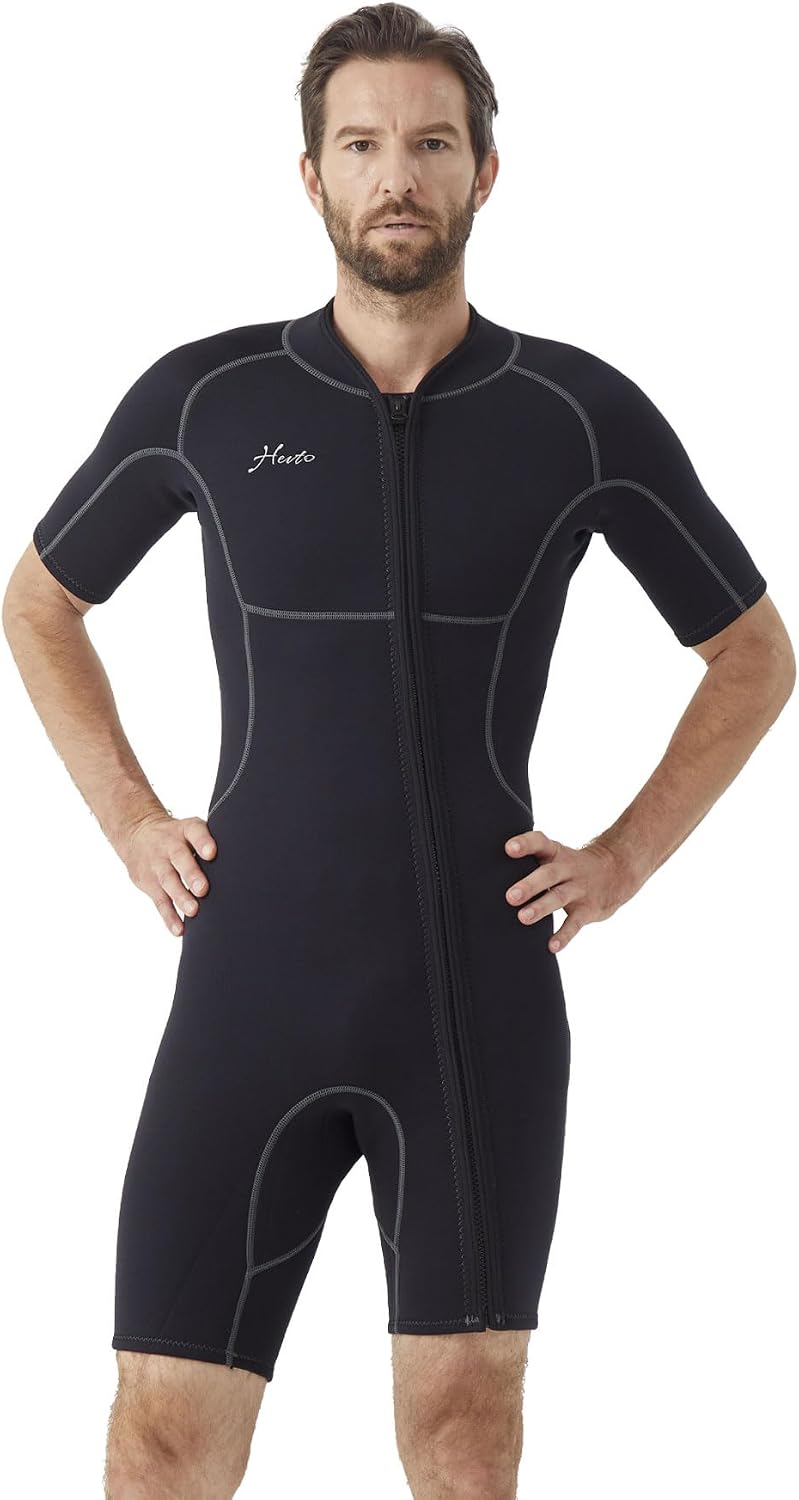
Hevto
$42.12
In stock on Amazon
Check price on Amazon2. Rip Curl Dawn Patrol 1.5mm Short Sleeve Spring Suit
Rip Curl’s Dawn Patrol line sits at the reliable end of budget. The 1.5mm version is thinner than most — good for genuine summer heat, less useful if you’re pushing into shoulder-season water. Owners report the E5 neoprene stretches well and the suit doesn’t restrict paddle reach the way stiffer budget options do.
The entry system is a back-zip with a longer pull cord, which matters for solo surfers — reviewers specifically call out how much easier it is to zip and unzip without a partner. Surfer Magazine’s spring suit buying overview cites the Dawn Patrol as a consistent value performer across its lineup, noting its entry-level price point rarely compromises on seam quality.
The fit runs slightly slim through the shoulders. Reviewers with broader builds consistently flag this.
Thickness: 1.5mm. Zip: Back-zip with extended pull cord. Fit note: Slim through shoulders; broader builds should size up. Price range: ~$80–$100.
Condition match: Southeast Atlantic summer, Mid-Atlantic July–August only at this thickness.
Hevto
$42.12
In stock on Amazon
Check price on Amazon3. Seaskin Shorty 3mm
Seaskin doesn’t have the brand recognition of O’Neill or Rip Curl, but it earns consistent praise in review aggregations for two specific reasons: side gussets (flexible panels sewn into the sides that dramatically increase hip and torso mobility) and an accurate size chart.
That second point is undersold. Sizing complaints dominate shorty reviews across almost every other brand. Reviewers of the Seaskin shorty consistently report that following the published chart produced a good fit — a small thing that turns out to be a significant differentiator when you’re buying online without trying it on.
The 3mm thickness also makes it the warmest option in this budget tier, which matters for Atlantic surfers trying to stretch a shorty into April or October sessions. Wavelength Surf Magazine’s “How to Choose a Wetsuit” buyer guide notes that 3mm is the upper practical limit for a shorty before thermal advantages are better served by a full suit.
The trade-off: at 3mm, flex is reduced compared to 1.5–2mm suits. The side gussets help compensate, but overhead paddle sessions in this suit are more fatiguing than in thinner options.
Thickness: 3mm. Zip: Back-zip. Notable: Side gussets for mobility; size chart accuracy praised across aggregated reviews. Price range: ~$65–$85.
Condition match: Mid-Atlantic shoulder season (May, September–October); reliable choice for surfers who run cold.
Hevto
$42.12
In stock on Amazon
Check price on Amazon4. Seavenger Odyssey 3mm Shorty (Front-Zip)
The Seavenger Odyssey is where the front-zip conversation becomes impossible to avoid. In aggregated reviews across surf, snorkel, and open-water swimming communities — because yes, shorty buyers skew well beyond surfers into pool aerobics, manta ray dives, and family beach days — the single most consistent praise for front-zip designs is solo entry and exit.
A front-zip suit has no zipper at the back of the neck. You step in through the chest opening, which closes via a zip across the front. Reviewers repeatedly describe this as a game changer for anyone getting in and out of a suit alone. It also eliminates the pressure point that back-zip neck seals create, which is a real comfort issue on longer sessions.
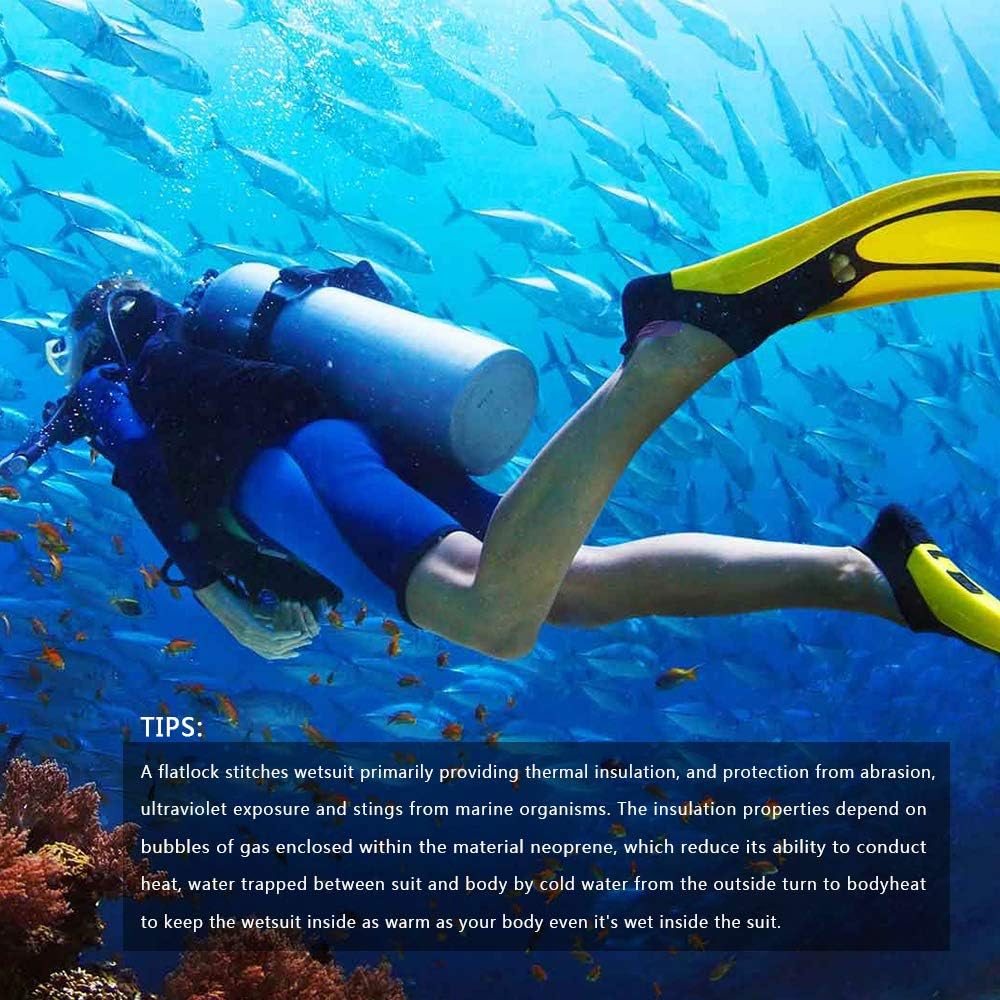
The Seavenger earns specific mentions for this. The 3mm thickness and sealed seams also make it a legitimate option for snorkeling and dive tourism in warmer Atlantic and Caribbean water, which is part of why review volume is higher than you’d expect for a budget brand.
Calf tightness is present here at roughly category-average frequency. Some reviewers note the chest zip seal is slightly less water-tight than a well-fitted back-zip — we address this directly in the FAQ below.
Thickness: 3mm. Zip: Front-zip (chest entry). Notable: Strong solo entry/exit feedback across aggregated reviews. Price range: ~$60–$80.
Condition match: Warm-water snorkel trips, Atlantic summer surf, beginner sessions.
Hevto
$42.12
In stock on Amazon
Check price on Amazon5. Henderson Thermoprene 3mm Spring Suit
Henderson’s Thermoprene line shows up in dive and water-aerobics communities more than in surf circles, but the suits transfer well to casual Atlantic sessions. Outside Online’s wetsuit materials explainer describes Thermoprene as a proprietary neoprene blend aimed at warmth retention at lower cost — the trade-off being that it’s stiffer than performance-grade neoprene.
Owners in aggregated reviews consistently describe the Henderson as durable — surf school operators and swim instructors specifically mention suits surviving multiple seasons of daily use. For a coach or program director sourcing a quiver of entry suits, that durability-per-dollar argument is real.
Flex is the limitation. This is not a performance surf suit at 3mm in Thermoprene — paddling overhead is noticeably more work. But for beginner surfers in waist-to-chest-high Atlantic beach break, reviewers report it’s plenty adequate.
Thickness: 3mm. Zip: Back-zip. Notable: Durability praised by repeat buyers and institutional users; stiffer flex profile. Price range: ~$70–$90.
Condition match: Beginner surf programs, swim instruction, casual coastal use.
Seaskin
$47.19
In stock on Amazon
Check price on Amazon6. NeoSport Premium 2mm Shorty
NeoSport sits at the affordable end of recognized dive brands. The 2mm suit is thinner than most in this roundup, which means it tops out at effective warmth around 68–70°F water — fine for Mid-Atlantic July and August, right on the edge in June or September. Per Surfline’s Atlantic water temperature data, Mid-Atlantic water in May averages 60–66°F and in September averages 66–72°F, which puts this suit near its limit on either shoulder-season month.
What reviewers call out consistently is fit across a wide size range without dramatic deviation from the published chart. It’s not as praised for accuracy as the Seaskin, but complaints are fewer than average for the category. The suit is also frequently cited in snorkel tourism and open-water swim reviews, which reflects that shorty buyers come from many directions.
Wrist and calf tightness appears here at roughly category-average frequency.
Thickness: 2mm. Zip: Back-zip. Fit note: Sizes run fairly true; lighter warmth profile suits peak summer only. Price range: ~$60–$80.
Condition match: Mid-Atlantic high summer; warm Southeast Atlantic spring.
Seaskin
$47.19
In stock on Amazon
Check price on AmazonDecision Rule: Which One to Buy
Shorty wetsuit decisions come down to three variables: water temperature, how you enter the water alone, and how your body fits standard patterns.
If you’re surfing Mid-Atlantic water in May or September — go 3mm. The Seaskin or Seavenger are the two best-reviewed options at that thickness in this budget range.
If you’re surfing solo and struggle with back-zip entry — the Seavenger front-zip is the clearest solution. Reviewers are unanimous on the ease-of-use advantage.
If you’re a women’s surfer in sizes 12–14 who has returned suits before — the O’Neill Reactor women’s cut is the most specifically praised option for accommodating curves at this budget tier.
If you’re sourcing suits for a surf school or junior program and durability is the primary concern — the Henderson Thermoprene’s multi-season track record in institutional use makes it the logical choice, even if it’s not the most performance-oriented option.
If you want the warmest suit under $80 at any thickness — the Seaskin 3mm earns that label based on published specs and sizing accuracy reported in reviews.
Frequently Asked Questions
Do shorty wetsuits protect against jellyfish and sea lice in Atlantic water? Partially. A shorty covers your torso and upper thighs, which reduces skin exposure in those areas. But uncovered arms, lower legs, and the neck remain vulnerable. Cleanline Surf’s wetsuit thickness and temperature guide notes that neoprene provides a physical barrier against direct contact, but sea lice — actually tiny larval jellyfish — can still enter through openings at the neck, wrists, and leg cuts. A full suit offers more complete protection; a shorty is a meaningful reduction in exposure, not elimination.
Should I order a size up in shorty wetsuits? Usually, yes — especially if you’re between sizes or have larger calves. The single most consistent sizing advice across aggregated reviews is to go up one size if the calf and wrist tightness described above sounds familiar from previous wetsuit experiences. The Seaskin is the notable exception; its chart is specifically praised for accuracy, so following it exactly is the consensus recommendation.
What is the warmest shorty wetsuit available under $80? Based on published specs, a 3mm shorty will always out-insulate a 1.5mm or 2mm option at the same fit quality. Among the suits reviewed here under $80, the Seaskin 3mm and Seavenger Odyssey 3mm are the strongest options at that warmth level.
Will a 2mm shorty keep me warm enough for Atlantic water in late spring or early fall? It depends on geography and your personal cold tolerance. Surfline’s Atlantic regional water temperature data shows Mid-Atlantic water in May averaging 60–66°F and in September averaging 66–72°F. A 2mm shorty is marginal at the lower end of those ranges for most people — you’ll feel it after 45 minutes. A 3mm shorty or a 2mm shorty plus a neoprene vest is a more reliable setup for shoulder-season sessions.
Is a front-zip shorty harder to seal against water than a back-zip design? Some reviewers note that a well-fitted back-zip creates a slightly tighter neck seal. But the difference is small for surface water activities like surfing and snorkeling — you’re not diving deep enough for pressure to force water through the chest seal. For most Atlantic surf sessions, front-zip suits are reported as equivalently water-resistant to back-zip options, with the meaningful advantage of easier solo entry and exit.
Can a shorty wetsuit replace a full wetsuit for beginner Atlantic surfers? For summer sessions (June–August) in the Southeast Atlantic and mid-summer in the Mid-Atlantic, yes — a 2mm or 3mm shorty is genuinely sufficient. Outside those windows, a full suit offers better heat retention as water temperatures drop below 65°F. Wavelength Surf Magazine’s “How to Choose a Wetsuit” buyer guide draws the practical line at 65°F as the lower threshold for comfortable shorty use; below that, a full 3/2mm suit is the better call. For a beginner who surfs June through August and wants one budget option, a shorty works. For year-round Atlantic surfing, it’s a supplemental piece, not a replacement.