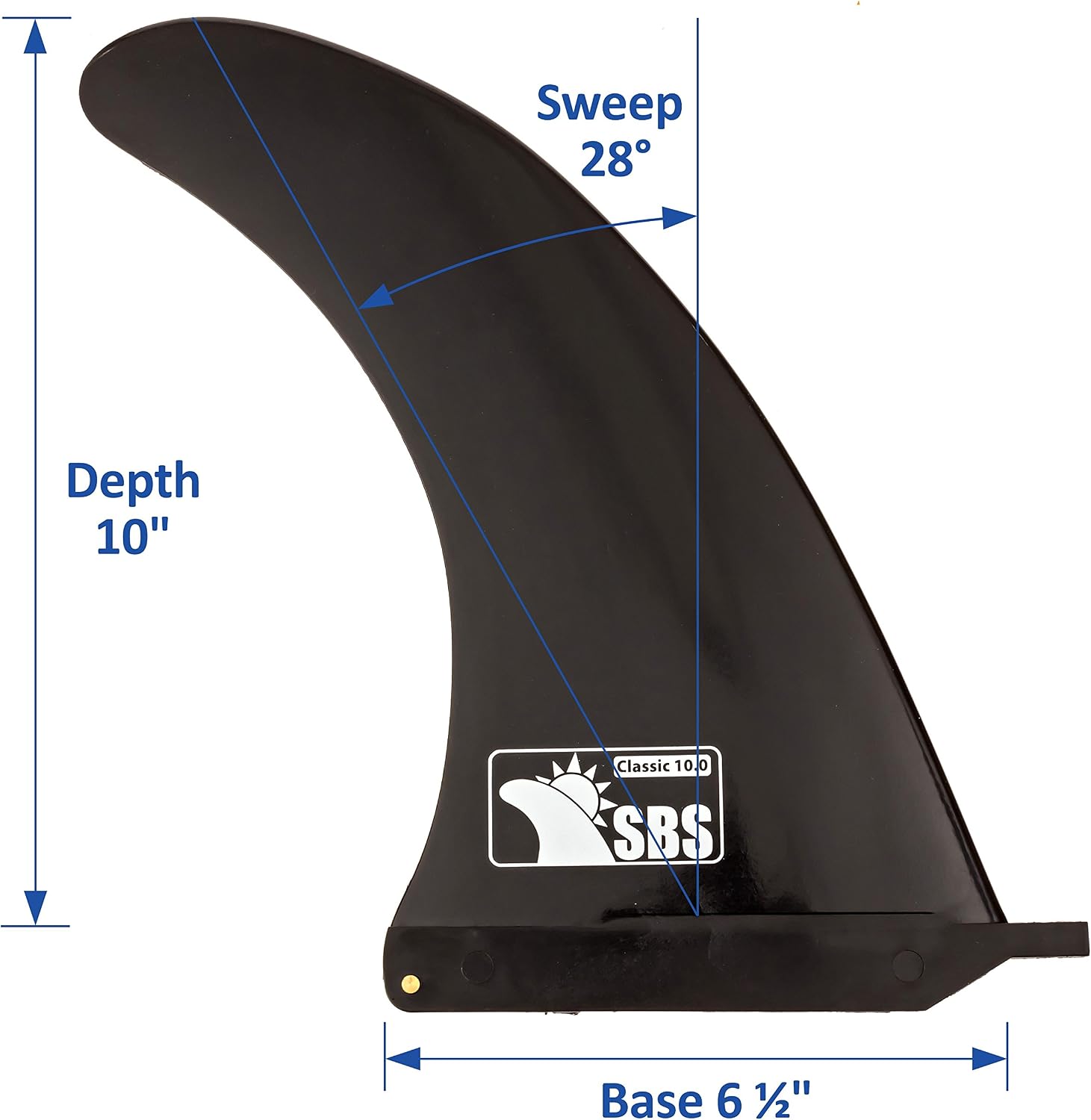
You paddle back to the beach, flip your board over, and notice the center fin is gone. Just — gone. Maybe it caught a sandbar. Maybe it sheared off in the shorebreak. If it’s a Jimmy Styks Click ‘N Go fin or another proprietary OEM (original equipment manufacturer — the fin that shipped with your board from the factory), you might discover the replacement is discontinued, backordered indefinitely, or only available as part of a full fin kit you don’t need. That’s the scenario dozens of paddleboard and longboard owners hit every season, and it’s exactly why the aftermarket replacement fin category exists.
This guide will help you identify your fin box type (the slot or channel built into your board that holds the fin), find a compatible replacement, understand what “no-tool installation” actually means in practice, and make a smart call between plastic OEM fins and fiberglass upgrades. Whether you’re riding a hardboard longboard, an inflatable SUP (stand-up paddleboard), or an entry-level foam paddleboard, the decision tree is shorter than it looks.
| EDITOR'S PICKSBS Fiberglass Longboard Single… | Mid-tierSBS 10" Surf & SUP Fin - Free N… | Budget pickSBS - 8 inch Longboard & SUP Si… | |
|---|---|---|---|
| Fin length | 6 in | 10 in | 8 in |
| Template | Greenough 4-A | — | — |
| Material | Fiberglass | — | — |
| Board type | Longboard | Longboard/SUP | Longboard/SUP |
| No-tool screw | — | ✓ | — |
| Color | — | Black | Black |
| Price | $30.75 | $18.95 | $15.15 |
| See on Amazon → | See on Amazon → | See on Amazon → |
Step One: Know Your Fin Box Before You Buy Anything
This is where most people go wrong. They buy a replacement fin based on length alone — a 9-inch fin for a 9-inch slot — and then discover the base geometry doesn’t match. The fin sits loose, rocks side to side, or won’t lock down at all.
There are three common fin box systems you’ll encounter on SUPs and longboards.
US Box (Universal Single-Fin Box): The most prevalent system on longboards and hardboard SUPs. It’s a long, narrow channel (roughly 10 inches) with a T-nut that slides along a track. One flathead screw locks it. Fins labeled “US Box,” “10-inch box,” or “longboard single fin” are built for this system. Boardcave’s SUP Fin Guide confirms that the vast majority of hardboard SUPs from mainstream brands use either a US Box or a direct derivative of it.
Slide-In / Click-N-Go / Proprietary Systems: These are brand-specific. Jimmy Styks used a Click ‘N Go mechanism. ISLE, Body Glove, and some Future Beach models use variations of a slide-in system with a locking tab. The problem, as owners of discontinued Jimmy Styks fins have discovered, is that when the OEM source dries up, you’re hunting for an aftermarket fin whose base taper matches a mold that may no longer be in production.
FCS II and Futures: These are the dominant systems on performance shortboards and some mid-length boards, but they’re rare on SUPs and traditional longboard single-fin setups. If you’re reading this because a thruster side fin snapped, Surfer Magazine’s fin systems explainer is the clearest breakdown of FCS II vs. Futures compatibility — they are not interchangeable, and adaptors exist but add complexity.
Quick check: Measure your fin box slot length, then look at your existing fin (or the broken base) and note whether it uses a screw-and-nut system, a lever/click mechanism, or a push-tab. That combination narrows your replacement options immediately.
The Real Cost of an OEM Replacement (and When to Skip It)
Here’s the math that changes the decision for a lot of buyers.
One SBS 10-inch replacement fin owner’s story illustrates it well: their original fin snapped at the base after a tree branch fell on the board over winter storage. The OEM replacement from the board manufacturer was quoted at $35 plus shipping — nearly $50 landed. A fiberglass aftermarket fin from SBS came in at a fraction of that. Across aggregated reviews, owners report the SBS fin installs without modification and performs comparably to the stock fin for flatwater and recreational surf paddling.
| Scenario | OEM Replacement | Aftermarket Alternative |
|---|---|---|
| SBS 10” fin, snapped base | ~$35 + shipping | Significantly less, ships Prime |
| Jimmy Styks Click ‘N Go | Discontinued — $0 available | Universal taper with minor fit check |
| Body Glove paddleboard center fin | OEM often backordered | Abahub 9” reported as direct fit |
That Body Glove compatibility point deserves attention. The Abahub 9-inch fin has generated one of the more credible aftermarket endorsements in this space: an owner reports it “fits and works better than the original” on their Body Glove paddleboard. “Better than original” is a strong claim, but it tracks — fiberglass fins are generally stiffer and more hydrodynamic than the injection-molded plastic fins that ship with entry-level boards. The Inertia’s SUP fin overview notes that stiffer fin material translates to more direct tracking, which matters most in longer open-water paddles and small surf.
What “No-Tool Installation” Actually Means (And Its Limits)
Several fin manufacturers market their products as tool-free or no-tool-required. For US Box fins, this usually means a hand-tightenable thumb screw replaces the traditional flathead bolt. You slide the fin’s base tab into the box, position it, and tighten by hand.
Does it work? Mostly, yes — with one important caveat.
The Culture Supply TFX fin has a documented base-taper fitting issue that multiple buyers have flagged: the taper at the bottom of the fin base doesn’t sit flush in some US Box slots, leaving a gap that causes wobble. Reviewers explicitly warn not to force the screw when this happens, because you risk cracking the fin box insert or stripping the nut. The fix — light hand-filing of the fin base taper — takes about five minutes with a flat file, but it requires knowing the problem exists before you’re standing in the water frustrated.
The SBS Fiberglass Butterfly fin has its own installation caveat worth flagging. One reviewer rates it four stars — not five — specifically because a locking nut came loose during a session. This is genuine safety information: if your fin dislodges mid-session on a SUP in open water, you lose directional control and potentially the fin. The practical fix is to check fin tightness before every paddle. Wavelength Surf Magazine’s longboard fin basics piece recommends this as routine maintenance regardless of fin brand — the same way you’d check a leash plug.
Tool-free reality check:
- True thumb-screw systems: hand-tight is sufficient for calm to moderate conditions
- Traditional screw-and-plate systems: you need a flathead screwdriver (usually included, often lost)
- Any fin showing play after hand-tightening: stop, investigate before entering water
Compatibility Table: Which SUPs Take Standard Universal Center Fins
One of the most useful things aggregated owner reviews surface is real-world compatibility data that manufacturers rarely publish clearly. Across multiple product listings and buyer Q&A threads, the following boards have been confirmed by owners to accept standard US Box / universal center fins without modification:
- ISLE Pioneer 2 and Pioneer 3 inflatable SUPs
- Future Beach Maui SUP
- Viper SUP (center fin position)
- Body Glove paddleboards (9-inch and 10-inch fin boxes)
If your board isn’t on this list, measure the box slot length, check for a T-nut track (vs. a tab-and-lever system), and cross-reference with the fin manufacturer’s compatibility notes before ordering.
Fiberglass vs. Plastic: Is the Upgrade Worth It?
The honest answer is: it depends on what broke.
If your plastic OEM fin cracked at the base from impact, a direct plastic replacement will crack the same way under the same impact. Fiberglass fins flex more before failing and resist point-impact damage better. Boardcave’s SUP fin guide notes that fiberglass construction improves tracking efficiency in flatwater conditions because the material holds its shape under load rather than flexing laterally.
For recreational paddlers doing flatwater tours or small beach break: a quality fiberglass replacement is a meaningful upgrade over a stock plastic fin, and the cost delta is usually minor at the aftermarket price point.
For competitive paddlers or those surfing larger, punchier waves on a longboard: you’re already in the territory where a fin from a dedicated longboard fin brand — think larger single fins with foiled leading edges — will make a bigger difference than material alone. At that level, fin template (the shape and area of the fin) matters as much as material.
Frequently Asked Questions
How do I know if a replacement fin will fit my SUP or longboard fin box?
Measure your existing fin box slot length (most are 9–10.5 inches for SUPs and longboards). Check whether it uses a T-nut track with a screw (US Box) or a proprietary tab/lever mechanism. US Box fins labeled “universal” will fit the vast majority of hardboard SUPs and longboards. Inflatable SUPs sometimes use a shallower proprietary box — confirm with the manufacturer before ordering.
What does “no tool required” installation actually mean, and does it work?
It means the fin uses a hand-tightenable thumb screw rather than a traditional bolt requiring a screwdriver. It works for most conditions, but check the fit before assuming hand-tight is secure enough. Some fins — like the Culture Supply TFX — require minor base filing to seat properly, which the product listing doesn’t always disclose upfront.
My fin snapped off at the base — can I replace just the fin, or do I need a new fin box?
You can almost always replace just the fin. The fin box itself is laminated into the board and rarely damaged by a fin breaking. Examine the box slot for cracks or delamination around the edges. If the box looks intact, a direct fin replacement will work. If the box is cracked or pulling away from the foam, that’s a repair job before a new fin goes in.
Why does my new fin feel loose in the box even after tightening the screw?
Two common causes: the fin base taper doesn’t match your box geometry (as seen with the Culture Supply TFX), or the locking nut inside the box has stripped or shifted. For the first problem, light filing of the fin base often resolves it. For the second, the T-nut inside the box may need to be reseated or replaced — a straightforward repair with a new T-nut and marine epoxy.
Is a fiberglass replacement fin actually better than the plastic OEM fin my board came with?
For most boards in the $300–$700 SUP or entry longboard range, yes. Stock plastic fins are optimized for cost, not performance. Fiberglass fins are stiffer, hold their shape under load, and resist the minor cracking that plastic develops over repeated impact. Owners consistently report improved tracking with fiberglass replacements on recreational SUPs. The gap matters less on high-performance longboards where the original fin is already a quality product.
The Decision Rule
If your original fin is OEM plastic and the board cost under $600: replace with a quality fiberglass aftermarket fin. The cost difference is small, the performance difference is real, and you’re not chasing a discontinued part.
If your fin box is a proprietary system (Click ‘N Go, tab-and-lever): confirm base taper compatibility before ordering any universal fin, and factor in a five-minute fitting adjustment with a flat file.
If the replacement fin feels loose after installation: do not paddle. Identify whether the issue is fin-base taper (file to fit) or a stripped T-nut (replace before water entry). A dislodged fin mid-session on a SUP is a safety issue, not just an inconvenience.
The aftermarket fin market has matured enough that OEM discontinuation is no longer a dead end — but it does require one careful fit-check before you hit the water.