You’re standing in a surf shop parking lot with a freshly shaped 6’4” shortboard under your arm — maybe a Channel Islands or a Pyzel — and someone asks if you’ve got a bag for it yet. You say yes, you’ve got a nylon sleeve at home. They wince. That wince is this article.
A surfboard bag is exactly what it sounds like: a padded or semi-rigid case designed to carry and protect a surfboard during transport. There are two main categories. A day bag (sometimes called a boardbag or travel sock) is a lightweight, single-board sleeve meant for getting your board to the beach and back — it’s the daily driver. A coffin case is a heavy-duty, multi-board bag engineered specifically to survive airline baggage handling, where conveyor systems, forklifts, and a complete absence of care are all part of the experience. Picking the wrong one for the job doesn’t just scuff a board. It can destroy one. This article gives you a clear framework for deciding which you need — and when you need both.
| EDITOR'S PICKPro-Lite Wheeled Coffin Surfboa… | Mid-tierCreatures of Leisure Shortboard… | Budget pickCurve *NEW* Surfboard Bag DAY S… | |
|---|---|---|---|
| Bag type | Wheeled coffin | Day use | Day cover |
| Fits boards | 2-4 | — | — |
| Board length | 7'6" | 5'8" | 6'3" |
| Width | — | — | 21" |
| Wheels | ✓ | — | — |
| Color | — | Black Silver | — |
| Price | $570.00 | $160.00 | $51.50 |
| See on Amazon → | See on Amazon → | See on Amazon → |
The Day Bag Tier Breakdown: Budget, Mid, and Premium
Most surfers buy a day bag first. That’s the right call. The question is whether they buy enough bag. The spectrum runs wide — from thin nylon travel socks to near-hardshell performance cases — and the right choice depends on how often you surf and how hard you are on gear.
Budget Day Bags: The Starting Point
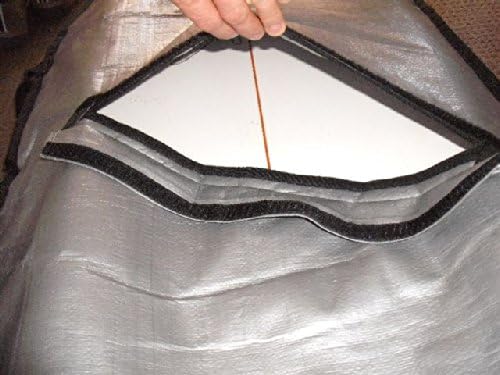
Entry-level day bags — typically sub-$50 nylon sleeves with 3–5mm of foam padding and a basic fleece lining — serve occasional surfers well for short car trips to the beach. They protect against light UV exposure and minor rail scratches during loading. What they don’t do: absorb meaningful impact, resist zipper stress at highway speeds, or add real nose and tail protection.
Cleanline Surf’s Surfboard Bag Buyer’s Guide (plain text; no hyperlink) identifies budget bags as a reasonable starting point for surfers who session fewer than two or three times per week and who transport boards exclusively by hand or short car ride. Beyond that use pattern, the limitations appear quickly — fraying zipper rails, compressed padding that no longer recovers, and thin end caps that offer no meaningful protection against the most common ding points.
Day bag sizing rule that applies at every tier: Size up 2 to 4 inches over your actual board length. A bag that exactly matches your board length leaves no room for nose and tail padding inserts — the two contact points most likely to ding during transport. Cleanline Surf’s buyer’s guide establishes this as baseline guidance, and it holds across every price point.
Curve
$51.50
In stock on Amazon
Check price on AmazonMid-Tier Day Bags: The Road-Trip Standard
Mid-tier day bags — typically $80–$150 — represent the practical sweet spot for Atlantic surfers doing regular road trips. Padding thickness increases to 10–15mm, zippers are heavier gauge, and reflective paneling (which reduces heat buildup inside a parked car) becomes standard. Internal board straps or nose and tail pockets start appearing at this price point, which meaningfully reduces board movement inside the bag during transport.
Wavelength Surf’s Travel Board Bag Reviews (plain text; no hyperlink) consistently flags internal board security as the underappreciated differentiator between budget and mid-tier options. A board that slides freely inside its bag during a roof-rack run will find the zipper teeth eventually. Repeated contact with internal zipper hardware is one of the more common causes of rail damage that owners attribute to mysterious dings that appear without any obvious impact event.
Roof rack note: Mid-tier day bags are better than budget options on roof racks but are still not engineered for sustained highway speeds. Wavelength Surf’s gear coverage notes that even quality day bags should be considered supplementary protection on a rack — boards benefit from additional nose and tail padding beneath the bag for regular long-haul rack transport.
| Your board length | Recommended bag size |
|---|---|
| 6’0”–6’2” | 6’4”–6’6” |
| 7’0”–7’4” | 7’6”–7’8” |
| 9’0”–9’3” | 9’4”–9’6” (or confirm bag runs generously long per model) |
Creatures
$160.00
In stock on Amazon
Check price on AmazonPremium Day Bags: When Build Quality Becomes the Argument
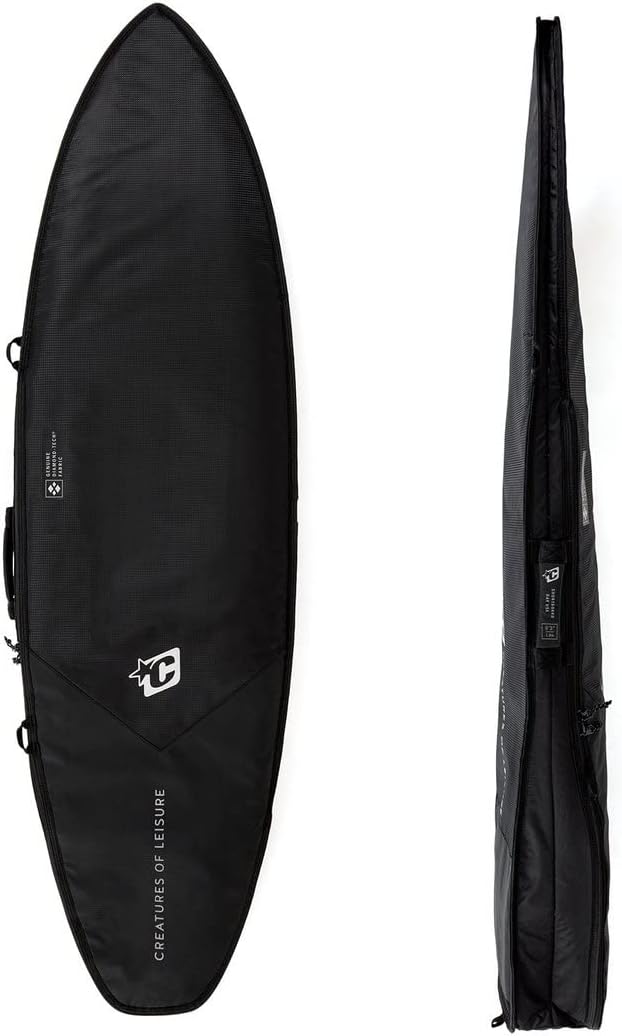
At the premium tier — $150 and above — day bags like the Creatures of Leisure DT2.0 operate in a different category. Owners consistently describe the DT2.0’s build quality as exceptional: heavier-duty zipper systems, denser foam with better compression recovery, reinforced handle and carry points, and end-cap construction that approaches the protection level of a travel coffin for local use. Surfers who step up to the DT2.0 from mid-tier options rarely return to lighter bags.
The Curve Supermodel day bag has developed a specific reputation in owner communities for dimensional generosity. The bag is reported to run long relative to its stated size — meaning a surfer with a 9’3” board who purchases the 9’2” Curve Supermodel bag may find the board fits with room to spare. That same generosity extends to thickness: the Curve Supermodel has reported capacity for boards measuring over 3 inches thick, which is common in high-volume longboards and fish shapes — boards with more foam through the middle, designed for easier paddling and stability. If you’re riding thick or unusually wide boards, the Curve Supermodel’s generous internal dimensions are worth confirming against your specific board’s measurements before purchasing.
Boardcave’s How to Choose a Surfboard Travel Bag guide (plain text; no hyperlink) notes that premium bag construction is particularly relevant for surfers managing thicker, higher-volume boards that stress standard bag dimensions — and that build quality at this tier translates directly to longevity across multiple seasons of regular use.
For daily use amortized over two to three surf seasons, the cost-per-session math on a premium day bag consistently favors the upgrade. Budget bags are a reasonable starting point. Dedicated surfers hit their limits quickly.
Pro-Lite
$570.00
In stock on Amazon
Check price on AmazonThe Coffin Case Decision: When Airlines Enter the Picture
Here’s the scenario you need to internalize before your first surf trip by air.
Surfboard travel accounts collected in The Inertia’s surfboard travel coverage (plain text; no hyperlink) describe a consistent pattern: surfers who fly with boards in day bags — even well-padded ones — face meaningfully higher rates of board damage than those using purpose-built coffin cases. Boards travel in cargo holds alongside freight, get stacked under heavy luggage, and are transferred on belts that were not engineered with finbox placement in mind. The structural problem with a day bag in this environment isn’t padding mass — it’s the absence of a rigid shell. When a heavy bag lands on top of a day bag in the hold, the padding compresses and the board absorbs the load directly.
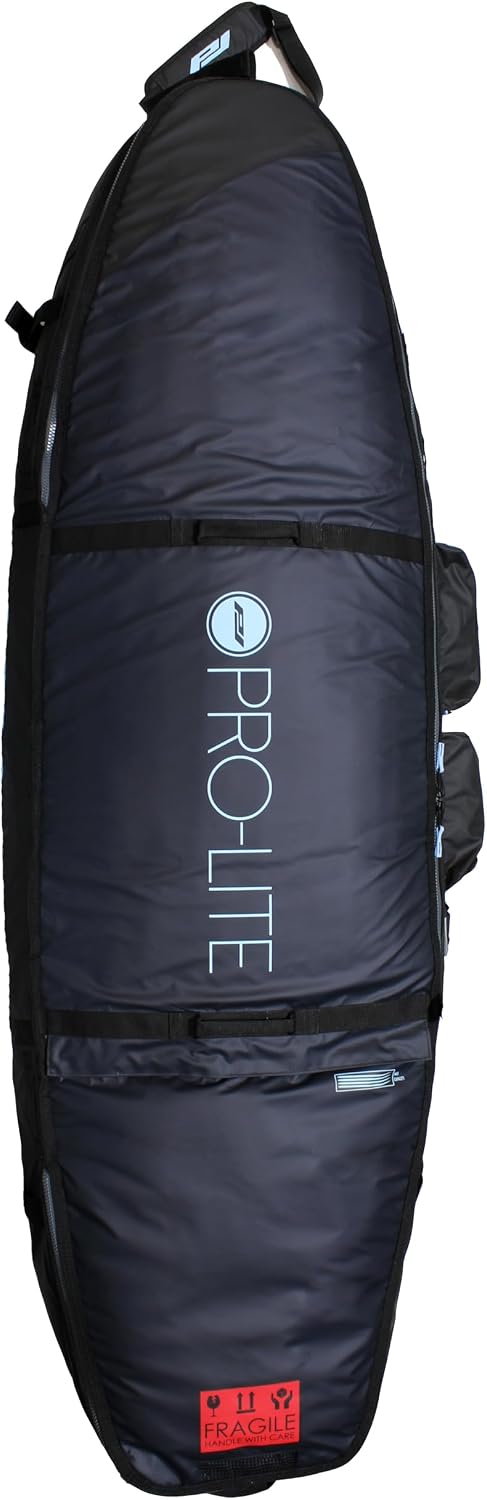
A coffin case — the Pro-Lite series is the most frequently cited by traveling surfers in long-haul reviews — is built for exactly this environment. Construction typically includes a rigid or semi-rigid outer shell, heavy-duty zipper systems, wheel hardware rated for airport floors, and internal padding thick enough to absorb impact from adjacent luggage. The Pro-Lite coffin is consistently reported to accommodate multiple boards — typically 2 to 3 boards depending on thickness — with maximum length depending on the specific model. Confirm dimensions before purchasing, as coffin cases come in multiple length configurations.
Boardcave’s How to Choose a Surfboard Travel Bag guide (plain text; no hyperlink) notes that stacking boards fin-to-tail alternating — rotating boards so fins face opposite directions and don’t stack directly against each other — reduces pressure points and is the standard packing method for multi-board coffins.
The decision rule is simple: Day bag for everything ground-level. Coffin case the moment an airline enters the itinerary.
If your board cost more than $600, the math is not complicated. A quality coffin case is a one-time investment that amortizes across every trip you take. A single ding repair on a performance shortboard runs $75–$200. A snapped board is a total loss.
Atlantic-Specific Travel Conditions: What Changes on the East Coast
Atlantic surf travel has a specific gear context that West Coast or Indo-focused advice often misses.
Road trips dominate. The Atlantic corridor — from Maine’s cold-water reef setups down through the Outer Banks beach breaks and into Florida’s warmer surf — is primarily road-trip territory. Most Atlantic surfers are more likely to strap boards to a roof rack on I-95 than check them at an airport. This makes a high-quality day bag the more frequently used piece of kit for most Atlantic surfers, with the coffin reserved for flight-based missions to Puerto Rico, the Azores, or beyond.
Temperature swings affect bag choice. Atlantic water temperatures range from below 50°F in New England winter to 80°F or above in Florida summer. Boards stored or transported in cold temperatures can become more susceptible to pressure dings at the nose and tail — the contact points where most transport damage occurs. A day bag with meaningful nose padding (not just a thin fleece cap) matters more in cold-water Atlantic regions than in the tropics.
Volume and quiver considerations. Surf coaches and junior development programs moving quivers for competition travel need to think in coffin terms from the start. Moving a six-board quiver — a range of board sizes and shapes for different surfers and conditions — by road in individual day bags is feasible. Moving that same quiver by air without a purpose-built multi-board coffin is how programs arrive at a contest with broken equipment.
Wavelength Surf’s Travel Board Bag Reviews (plain text; no hyperlink) specifically addresses multi-board travel logistics, noting that the transition from individual day bags to a centralized coffin system is the point at which most coaching programs see the sharpest drop in transit damage rates.
Home Storage: The Overlooked Third Use Case
Bags aren’t only for transport. A board stored in a garage or under a bed benefits from UV protection, ding prevention from accidental contact, and temperature buffering.
For home storage, a day bag works well — but sizing matters differently here. You want a snug fit to prevent the board from sliding inside and contacting internal zipper hardware repeatedly, which is a common cause of rail damage that owners only notice after months of storage. Cleanline Surf’s Surfboard Bag Buyer’s Guide (plain text; no hyperlink) recommends storing boards tail-down in a bag when space allows, which keeps fin pressure off the nose rocker and reduces stress on the tail block.
For quiver storage, many surfers use individual board socks — minimal-padding sleeves — stacked in a wall-mounted rack, reserving full bags for transport. This approach extends bag life by reducing zip-and-unzip cycles on bags that aren’t going anywhere.
The Decision Framework: If X, Then Y
- If you’re driving to the beach and back: A quality day bag matched to your budget and session frequency. The Creatures DT2.0 is the premium benchmark; the Curve Supermodel earns its reputation if you’re managing thicker or longer boards.
- If you’re road-tripping with boards on a rack: Mid-tier or premium day bag plus nose and tail padding inserts. Inspect zipper rails periodically for stress wear.
- If you’re flying anywhere with a board: Coffin case, full stop. The Pro-Lite is the anchor reference point for a reason.
- If you’re running a quiver for coaching or competition: Budget for both. Day bags for local sessions, coffin for any air travel.
The board you’re protecting probably cost somewhere between $700 and $1,400. The bag math is not complicated.
Frequently Asked Questions
Should I buy a surfboard bag that’s longer than my actual board length? Yes — size up 2 to 4 inches over your board’s actual length. This gives you room to add nose and tail padding without compressing the board against the bag’s end panels. Cleanline Surf’s Surfboard Bag Buyer’s Guide (plain text; no hyperlink) establishes this as the baseline recommendation across all bag tiers.
Can I use a day bag for airline travel if I pad it well enough? It’s a risk that experienced traveling surfers consistently advise against. Day bags lack the rigid structure to resist compressive loads in cargo holds. Additional padding helps at the margins but doesn’t solve the structural problem. The Inertia’s surfboard travel coverage (plain text; no hyperlink) documents this distinction clearly: for any board you’d be upset to lose, use a dedicated coffin case for air travel.
How many boards fit in a coffin case and what’s the maximum length? Most coffin configurations are designed for 2 to 3 boards. Maximum board length depends on the specific model — confirm before purchasing, as coffin cases come in multiple length options. Stack boards alternating fin-to-tail to distribute pressure evenly, following the packing method outlined in Boardcave’s How to Choose a Surfboard Travel Bag guide (plain text; no hyperlink).
Will a standard day bag protect my board on a roof rack at highway speeds? Partially. A quality day bag reduces UV exposure and minor abrasion. Wavelength Surf’s Travel Board Bag Reviews (plain text; no hyperlink) notes that day bags are not engineered for sustained wind load and vibration at highway speeds. Add nose and tail padding beneath the bag for regular long-distance rack transport and inspect zipper rails periodically for stress wear.
What’s the best way to store multiple boards at home? A wall-mounted board rack with individual board socks on each board is the most common long-term storage approach. Reserve full bags for transport to extend zipper life. Store boards away from direct sunlight and heat sources — both accelerate delamination (the foam core separating from the outer fiberglass shell), regardless of bag quality.