You’re standing in the parking lot after a session, peeling wax off your fingers, and you realize your traction pad — the textured grip panel glued to the tail of your surfboard — has started to lift at one corner. Or maybe you drove forty minutes to a point break and your board arrived with a pressure ding because the bag you stuffed it into offers all the protection of a pillowcase. Or your leash — the cord that connects your ankle to your board — snapped in a cleanup set and your $900 shortboard just went on a solo tour of the lineup.
These are the small-gear failures nobody talks about because they don’t have the glamour of a new board shape or a premium wetsuit. But they are the failures that actually end sessions. This guide covers traction pads, day bags, and leashes — what to look for, what reviewers consistently flag, and the specific sizing and compatibility traps that catch buyers every time.
| EDITOR'S PICKCurve *NEW* Surfboard Bag DAY S… | Mid-tierCreatures of Leisure Icon Short… | Budget pickAbahub Premium Surfboard Leash | |
|---|---|---|---|
| Type | Day bag | Traction pad | Leash |
| Size | 6'3" x 21" | — | 6 ft |
| Thickness | — | — | 5.5mm |
| Fits boards | 5'6" to 7'2" | — | — |
| Cord | — | — | Straight |
| Price | $51.50 | $47.00 | $11.19 |
| See on Amazon → | See on Amazon → | See on Amazon → |
Traction Pads: Grip, Placement, and the Listing Accuracy Problem
A traction pad is the foam-and-rubber grip panel surfers glue to the tail of a board to replace wax in that zone. It gives your back foot a locked-in platform for turns. Most come in one, three, or five pieces that you arrange and stick down before they bond permanently.
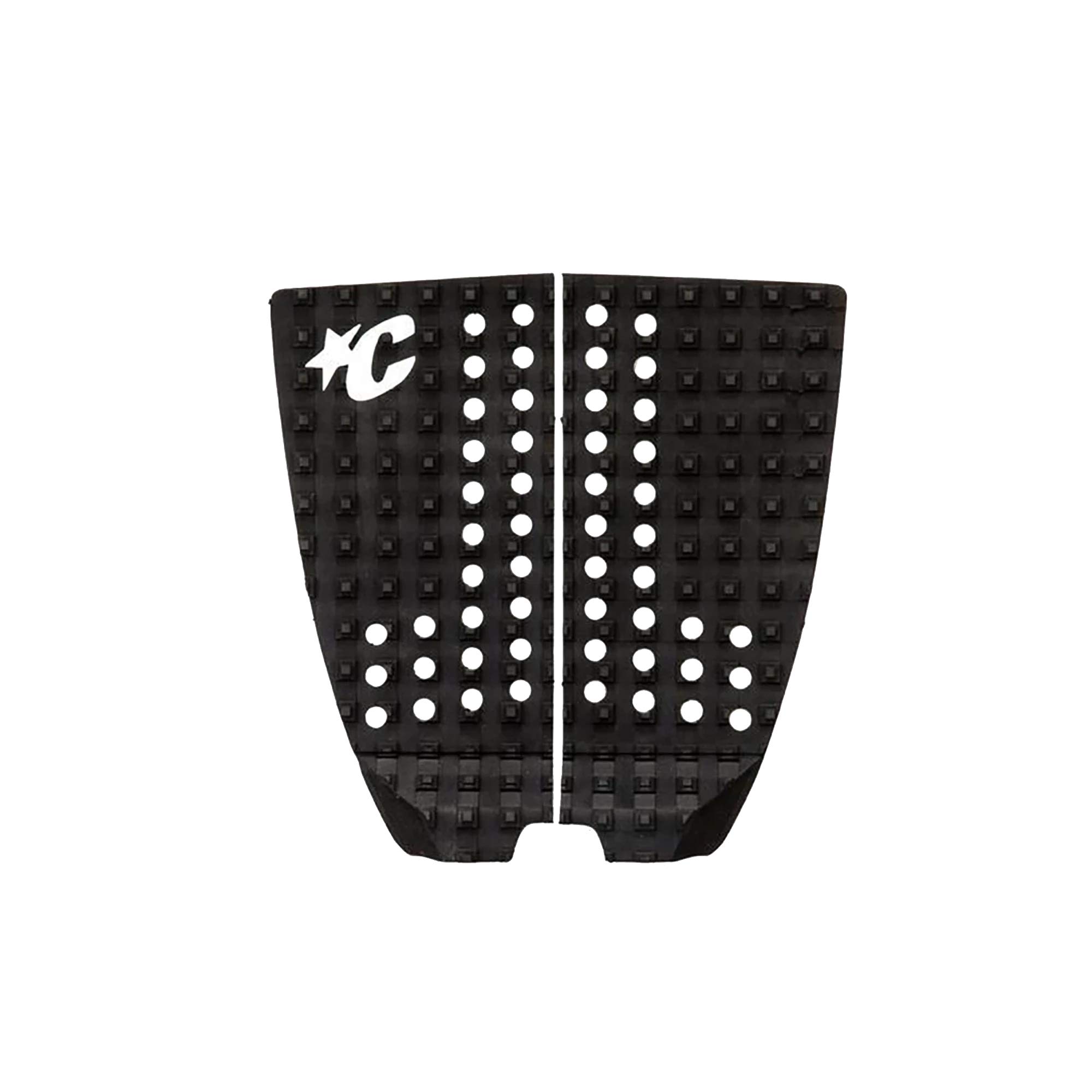
The piece-count problem is real. The Creatures of Leisure Icon traction pad has drawn buyer complaints specifically around a mislabeled product description — at least one 3-star review flags a discrepancy between the listing’s stated piece count (5-piece) and what actually ships (3-piece). That’s not a minor detail. A 5-piece pad gives you more flexibility to contour around fin boxes and concaves. A 3-piece does not. If you’re fitting the pad to a board with complex tail geometry — a round pin, a swallow tail, or a tight diamond — confirm the piece count with the retailer before you buy. Per Boardcave’s traction pad sizing guide, the ability to split and reposition individual sections is especially important on boards under 6’2” where tail real estate is tight.
Placement mistakes are permanent. Once a quality pad is bonded and cured, it does not come off cleanly. Boardcave’s placement guide recommends dry-fitting the pad, marking your position with masking tape, and measuring your back foot’s natural stance before peeling a single backing strip. The arch bar (the curved central piece on most pads) should sit directly under your arch — not under your heel. Get this wrong once and you’ll spend a season surfing with awkward foot position.
Sizing by board length ($$–$$$):
| Board Length | Pad Width Target | Notes |
|---|---|---|
| Under 6’4” | 10–11” | Narrow tails need trimmed edges |
| 6’4”–7’2” | 11–12” | Standard fit for most shortboard pads |
| 7’2”+ / fish / mid | 12”+ or wax only | Wide tails often prefer wax on rear third |
Leashes: Thickness, Length, and the Tesla Fob Detail Worth Knowing
A leash is rated by two numbers: length (in feet, matching your board length) and thickness (in millimeters, indicating strength). Beginners often grab whatever is on the peg nearest the register. Intermediate surfers start caring when a leash snaps or drags like an anchor.
Match length to board, thickness to conditions. Per Surfer Magazine’s leash selection guide and Cleanline Surf’s leash overview, the standard rule is:
- Shortboards (5’6”–7’): 6mm cord, leash length = board length ±6 inches
- Longboards (8’–10’+): 7–8mm cord; longer leash (9–10 ft) to keep the board from doubling back on you
- SUP (10’+): Coiled leash, 8–10mm, with 360-degree swivels to prevent cord tangle around the paddle shaft
The Abahub straight leash gets specific buyer praise that’s worth passing along. One owner using it on a $900 shortboard specifically called out the hidden key pocket fitting a Tesla fob — not just a standard key fob, a Tesla fob, which runs about 2.3 inches wide. That’s a real modern convenience that most leash reviews don’t address. If you drive an EV or any car with a large proximity key, check the pocket dimensions on your leash before buying. Most budget leashes skip the pocket entirely; mid-tier options like the Abahub include it as a standard feature.
Coiled vs. straight — the SUP crossover question. The coiled SUP leash format uses a compressed spring-style cord that retracts toward your ankle rather than dragging flat in the water. Reviewers consistently praise dual 360-degree swivel construction (one at the ankle cuff, one at the board plug) for eliminating the wrap-and-tangle problem that plagues single-swivel designs. The Inertia’s accessories guide notes that a coiled leash with dual swivels works across surfboards and SUPs — useful for Atlantic paddlers who run multiple board types in a single quiver. One tradeoff: coiled leashes generate more recoil snap when a board gets pulled away by a wave. Straight leashes are more forgiving on the ankle in heavy surf.
Price tier quick-frame:
- $ (Under $30): Single-swivel, no key pocket, adequate for small-wave beginners
- $$ ($30–$60): Dual-swivel, key pocket, molded rail saver — the sweet spot for most intermediate surfers
- $$$ ($60+): Competition-grade urethane, ultra-thin cord for reduced drag, often brand-matched to board sponsors
Day Bags: Sizing Quirks, Build Quality, and Roof Rack Reality
A surfboard day bag — also called a board sock or single bag — is a padded or semi-padded sleeve designed for short transport: car trips, beach parking, quick sessions. It is not a travel bag (those are hard-shell or heavy-padded coffin bags for airlines). A day bag protects against sun damage, parking lot dings, and wax transferring to your car interior.
The Curve Supermodel runs long — and that’s actually useful. Multiple owners have confirmed in reviews that the Curve Supermodel day bag fits longer than its labeled length. One reviewer specifically documented fitting a 9’3” Channel Islands log in a bag labeled 9’2”. Another fit a 7’6” JS Big Baron without issue. Per Wavelength Surf Magazine’s board bag sizing guide, most buyers assume labeled = maximum and order up a size — only to end up with a sloppy fit and a board that slides inside the bag. With the Curve Supermodel, the pattern flips: order your actual board length and the bag will likely accommodate an inch or two of overhang. This is genuinely useful information that prevents a wasted return shipment.
The Creatures DT2.0 shortboard day bag has a small but strong review record. At 9 reviews, it’s a limited sample — worth stating plainly. But those 9 reviews are unanimously 5-star, with one buyer calling it “the best board bags in my experience” and specifically citing build quality. The Creatures of Leisure brand has a long track record in the surf bag market (The Inertia has covered their larger travel bags favorably), and the DT2.0 construction language aligns with that reputation. Small sample size + brand pedigree = a cautious endorsement. If you want more data before committing, it’s fair to wait for the review pool to grow. If you’re already a Creatures loyalist, the DT2.0 is consistent with what the brand delivers.
Will a day bag protect your board on a roof rack at highway speeds? This is the most common real-world question about day bags, and the answer is: partially, with conditions. Wavelength’s bag guide is direct on this point — a standard day bag is not engineered for rack exposure. At highway speeds, UV and wind buffeting will degrade the outer fabric faster than the bag’s rated lifespan. More importantly, a day bag does not replace rack pads or tie-down straps. The padding protects against minor dings and wax transfer, not against a board that shifts laterally on the rack. Use rack pads under the board, strap the board to the rack (not to the bag), and treat the day bag as a UV and scuff shield — not as a structural mount.
How to Apply a Traction Pad So It Actually Stays
The single most common traction pad failure — lifting edges, mid-session peel — is almost always an application error, not a product defect. Boardcave’s placement guide and general consensus from aggregated buyer reviews point to the same four-step process:
- Clean the deck with acetone or isopropyl alcohol (at least 91%). New boards have mold release agents on the glass. Old boards have wax residue. Either will prevent adhesion. Let it dry completely — 10 minutes minimum.
- Dry-fit everything first. Lay out all pieces without peeling. Mark positions with painter’s tape. Check your stance. Live with it for a minute.
- Work from the center out. On multi-piece pads, apply the arch bar first, then the side pieces. Peel, press firmly from center to edges, and eliminate air bubbles as you go.
- Cure before surfing. 24 hours at room temperature. 48 hours if you’re in a cold garage or a humid coastal environment. Rushing this step is why pads lift.
Frequently Asked Questions
Will a surfboard day bag actually protect my board on a roof rack at highway speeds? A day bag reduces UV exposure and minor surface dings but is not a structural rack accessory. Use dedicated rack pads and cam straps to secure the board to the rack. The bag handles the rest.
How do I apply a traction pad so it doesn’t peel off in the surf? Clean the deck with 91%+ isopropyl alcohol, dry-fit before peeling, apply from center to edges, and cure for at least 24 hours before paddling out. Temperature and surface prep are the two variables that control adhesion.
What leash thickness do I need for a shortboard vs. a longboard or SUP? Shortboard: 6mm. Longboard: 7–8mm with a leash length matching your board. SUP: 8–10mm coiled leash with dual swivels. Per Cleanline Surf’s leash guide, thicker cord adds drag but also adds break-resistance in heavier surf.
Does the Curve Supermodel day bag really fit longer than the label says? Yes — multiple owners confirm this. A bag labeled 9’2” has held a 9’3” board. Order your actual board length and the fit will likely be snug rather than tight.
Can I use a straight surfboard leash on a SUP, or do I need a coiled one? You can, but you shouldn’t for extended sessions. A straight leash drags in the water and wraps around the paddle shaft during falls. A coiled leash with dual 360-degree swivels eliminates both problems and is the standard recommendation for SUP use, per The Inertia’s accessories guide.
The Decision Rule
If you’re outfitting a shortboard quiver for Atlantic beach break: straight leash at 6mm, traction pad confirmed at correct piece count for your tail shape, day bag ordered at your actual board length (Curve Supermodel runs long — order true).
If you’re running multiple board types including a SUP or longboard: invest in a coiled dual-swivel leash for the longer craft and keep a straight mid-gauge leash for the shortboard. The key pocket on the Abahub is a genuine quality-of-life feature if you drive a modern vehicle with a large proximity fob.
If build quality matters more than price on a day bag: the Creatures DT2.0 has a clean review record, acknowledge the small sample size, and know that Creatures’ reputation in the bag category backs up what buyers are saying.
Small gear doesn’t win you waves. But it stops the wrong gear from taking them away.