You ordered the wetsuit. It arrived in two days. You pulled it on, got it halfway up your legs, and now you’re standing in your living room doing a weird squat-shimmy that’s going nowhere. Or it went on fine — suspiciously fine — and now you’re wondering if the neck seal is actually supposed to feel like a gentle chokehold. Either way, welcome to budget wetsuit sizing hell.
A wetsuit (a form-fitting neoprene suit that insulates you in cold water by trapping a thin layer of water against your skin) is only as good as its fit. Too loose and cold water flushes in constantly. Too tight and you can’t paddle without your shoulders screaming. Budget brands — roughly the $50–$200 tier — have exploded in availability, and the price-to-warmth ratio is genuinely compelling. But the sizing math is a known problem, and if you don’t account for it before you click “order,” you’re likely heading back to the returns queue. This guide breaks down exactly which brands run small, by how much, and how to measure yourself so you get it right the first time.
Why Budget Wetsuits Almost Always Run Small
The short answer is manufacturing standardization. Premium brands like Rip Curl and O’Neill fund pattern development across multiple body archetypes. Budget brands working on thinner margins tend to pattern from a single “athletic average” template — usually a narrower torso, shorter inseam, and slimmer calves than a wide range of real human bodies will have.
Wavelength Surf Magazine’s guide “How to Choose a Wetsuit” notes that neoprene stretch varies significantly by grade, and lower-grade neoprene has meaningfully less four-way stretch than the limestone-based or Yulex rubber used in premium suits. Less stretch means the suit has to fit closer to your actual measurements before it goes on — there’s less forgiveness in the material itself. When a premium suit is cut an inch too narrow, it stretches to accommodate. When a budget suit is cut an inch too narrow, it just doesn’t move.
Across aggregated reviews of Dark Lightning, Hevto, Owntop, and the proliferating generic shorty lines, a clear pattern emerges: the majority of buyers who ordered their standard street-clothes size reported the suit was too tight, and a significant subset needed to go up two sizes. This is not a one-brand quirk. It’s a category-wide issue tied to the manufacturing economics above.
The neck is a specific pressure point. Dark Lightning reviewers at a 5’5” / 130 lb profile consistently report a tight neck seal even in their correct size. Cleanline Surf’s wetsuit fit and care guide explains that a firm neck seal is actually functional — it’s the primary point where cold water is kept out near your head and chest. The distinction worth making: uncomfortable-tight (restricts swallowing, leaves a red ring after an hour) versus snug-tight (you notice it but it loosens slightly once you’re wet and moving). More on that in the FAQ below.
Brand-by-Brand Sizing Reality Check
Here’s what buyer feedback patterns actually look like across the main budget players, so you can calibrate your order before it ships.
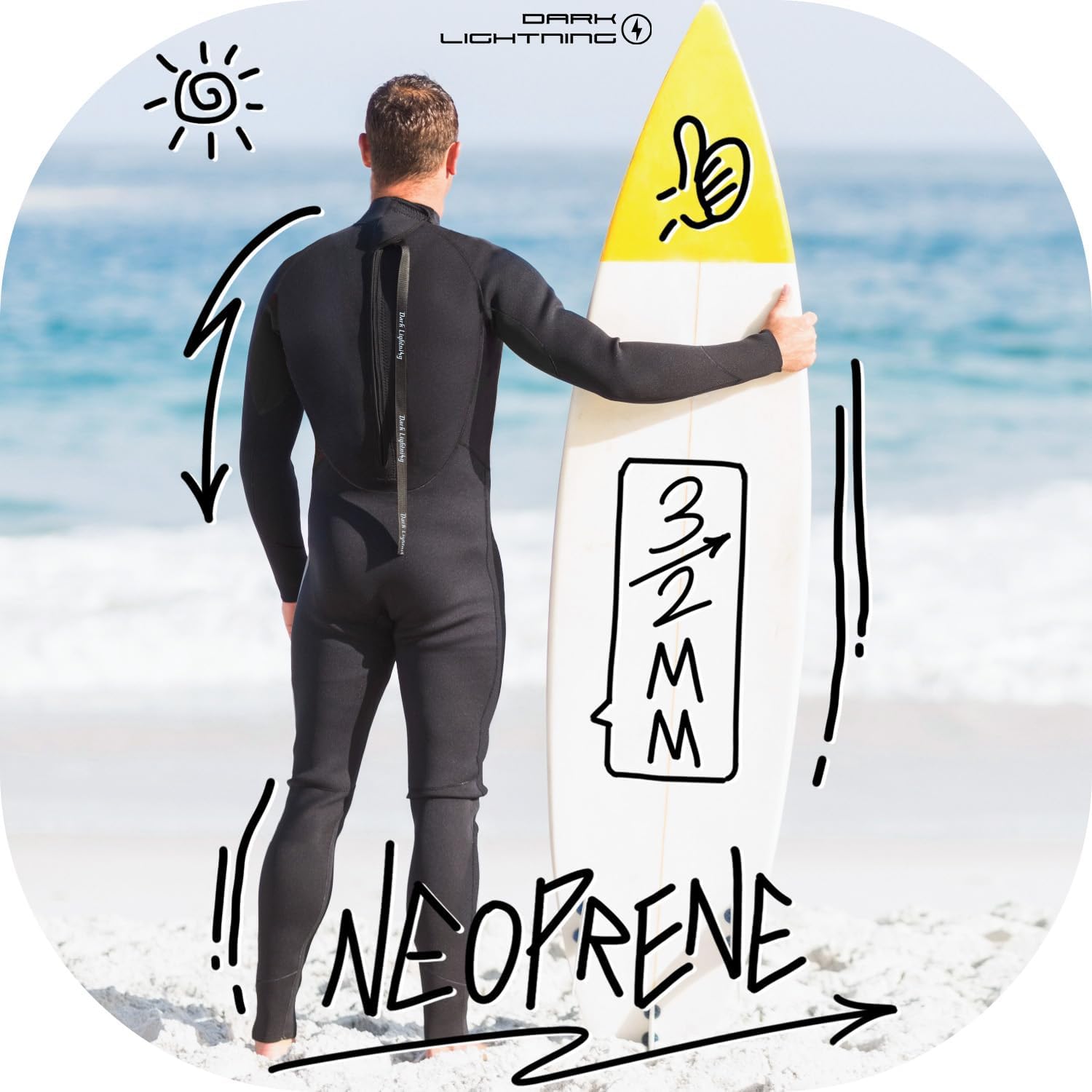
Dark Lightning Runs small in the body, particularly the torso length and shoulder width. Reviewers at a slim athletic build report the neck is tight but functional. Reviewers with broader shoulders or a longer torso report needing to size up one full size. The 3/2mm full suit (a suit that’s 3mm thick in the torso and 2mm in the arms and legs — a common warm-water, flexible configuration) draws consistent praise for warmth relative to price, but fit is the recurring caveat.
Womens
$45.59
In stock on Amazon
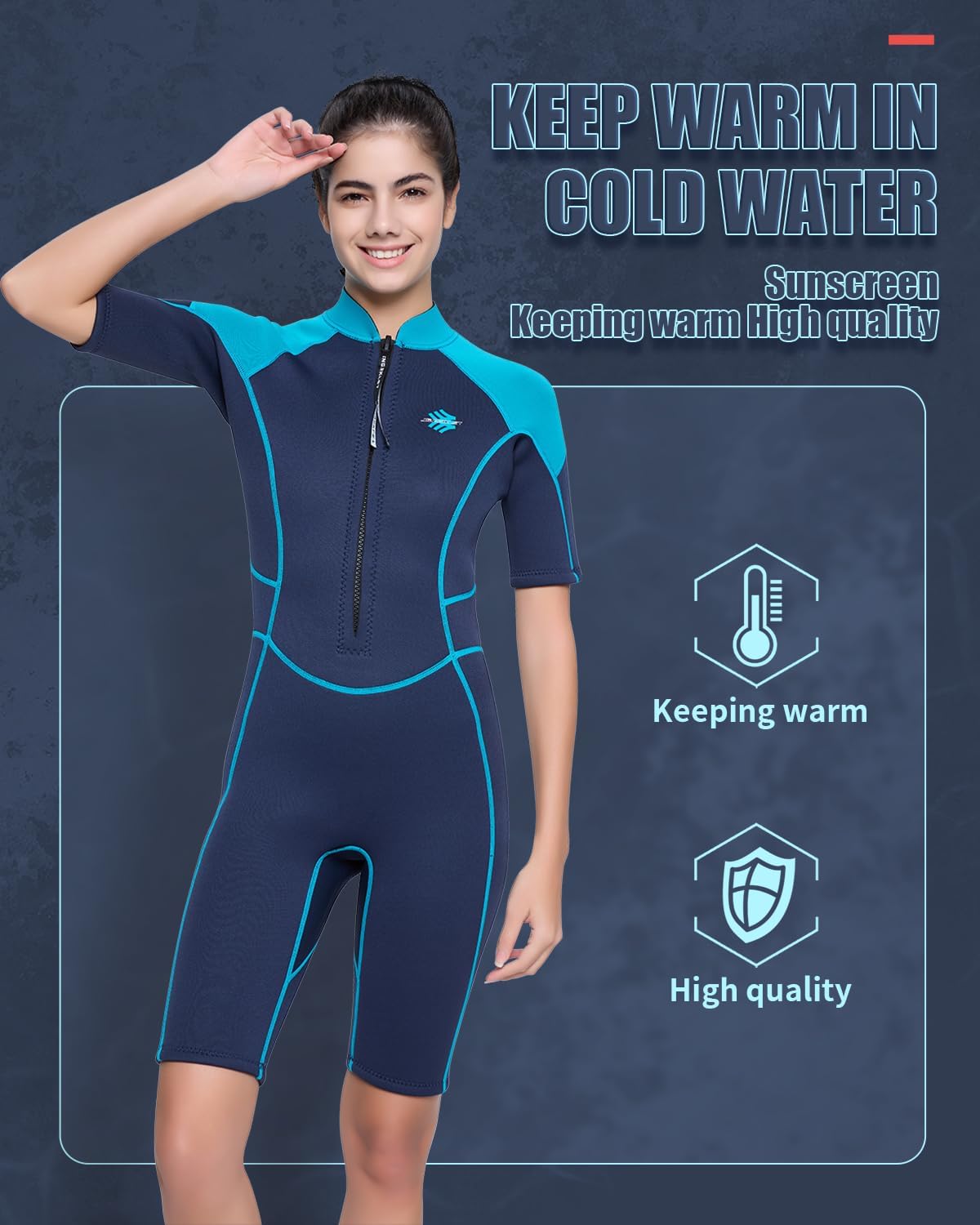
Check price on AmazonHevto The women’s line has a specific pattern worth flagging: it draws praise from long-torso reviewers who’ve struggled with other brands hitting them mid-thigh rather than at the hips. However, reviewers with wider calves report the lower legs are cut too narrow. If you’re proportioned lean-through-hips and longer in the torso, Hevto may fit closer to spec. If you carry more volume in the calves and thighs, size up one.
Womens
$45.59
In stock on Amazon
Check price on AmazonOwntop This is the most aggressive small-runner in the group. Documented buyer feedback at size M describes circulation restriction — not just snugness, but actual discomfort from compression. The same reviewer found a size L “still felt very tight.” For any buyer on the broader or more muscular side of average, Owntop’s sizing should be treated as running at least one to two sizes small, and measuring your chest and hip circumference against their published chart before ordering is non-negotiable.
Womens
$45.59
In stock on Amazon
Check price on AmazonSeaskin The outlier here, in a good way. Seaskin reviewers are the most consistently positive about fit accuracy in this tier. Multiple women specifically note that Seaskin handles hips and thighs better than competitor budget brands — a meaningful callout given how many budget suits fail at exactly that point. Outside Online’s roundup “Best Wetsuits Reviewed” identifies Seaskin’s sizing as relatively trustworthy against their published charts, though going up one size if you’re between sizes is still the safe call.
Womens
$45.59
In stock on Amazon
Check price on AmazonGeneric shorty lines Budget shorty suits sold under unbranded or frequently rotating product listings follow the same small-running pattern as the named brands above. Buyer feedback from curvy-body profiles who’d tried three or more suits in this tier before finding a workable fit consistently notes that even a well-fitting option in this category tends to be tight in the legs and arms. The takeaway: these suits are optimized for a narrow athletic body type. If you diverge from that profile in any dimension, plan to size up — and avoid referencing or searching by ASIN strings, which change without notice and won’t help you locate a stable product listing.
Womens
$45.59
In stock on Amazon
Check price on AmazonHow to Actually Measure Yourself
Most budget brands publish a size chart based on four measurements. Pull these before you order anything:
- Chest circumference — tape measure around the fullest part of your chest, arms relaxed at your sides
- Waist circumference — around your natural waist, not your hips
- Hip circumference — around the fullest part of your hips and seat
- Height — bare feet, standing straight
By the numbers:
- If any single measurement puts you in a larger size bracket than the others, order that larger size.
- If you’re between two sizes, size up.
- If you’re ordering Owntop specifically, add one additional size on top of that.
Boardcave’s wetsuit thickness and temperature guide emphasizes that neoprene has almost no vertical stretch — meaning if the suit is cut short for your torso, it will pull down in the shoulders and feel like a straitjacket when you paddle. Torso length (nape of neck to crotch) is the measurement brands least often publish but matters most. If you’re tall or have a long torso relative to your weight, email the brand and ask before ordering.
Thickness, Zip Type, and What They Mean for Fit
Two other variables affect how a suit feels on your body, beyond raw size.
Thickness (written as X/Y mm, e.g., 3/2 or 5/4) describes how many millimeters of neoprene are in the torso versus the limbs. Thicker neoprene is stiffer. A 5mm suit that fits snugly will feel far more restrictive than a 3/2 that fits snugly, because there’s less flex in the material itself. Owntop reviewers describing circulation restriction were assessing a 5mm suit — that’s a meaningful context factor. Boardcave’s wetsuit thickness and temperature guide provides a useful water-temperature-to-thickness reference: in water above 65°F, a 2mm or 3/2mm suit is typically appropriate; below 55°F, you’re looking at 5/4mm or thicker. Knowing this before you order helps you avoid buying a thicker suit than your water temperature requires, which also means buying a stiffer suit than you need.
Zip type affects how the suit goes on and comes off, which matters for solo surfers with no one to help zip them up.
- Back-zip suits have a long zipper running up the spine. They’re easier to identify your entry point and seal, but harder to zip solo, and the zipper itself can allow more water entry at the back.
- Front-zip (chest-zip) suits have a horizontal zipper across the upper chest. They’re better at blocking water entry and tend to flex better across the shoulders. Getting in solo requires a bit more technique — think pulling the panel down and stepping in feet-first — but it’s very manageable once you’ve done it twice.
- Zip-free suits stretch open at the neck. These have the best shoulder mobility but require the most flexible neoprene to work, which budget brands rarely deliver reliably.
For budget brands, most options are back-zip. If a front-zip option exists within your target brand, it’s worth the small premium for the improved seal and shoulder flex.
Frequently Asked Questions
Should I order one size up in every budget wetsuit brand, or just some?
For Owntop, plan for one to two sizes up from your street clothes size. For Dark Lightning, Hevto, and most generic lines, one size up is the right default. Seaskin is the closest to true-to-size in this tier — if you’re between sizes, go up, but you don’t need to automatically jump a full size. Always cross-reference your actual measurements against the brand’s published size chart rather than relying on the size label alone.
What happens if the wetsuit is too tight around the neck — is that normal?
A snug neck is normal and intentional — it’s the seal that keeps cold water from flushing down your chest. What’s not normal: a neck so tight it restricts swallowing, causes dizziness, or leaves a pressure mark after more than an hour of surfing. Dark Lightning reviewers flag the neck as firm but functional. If yours is causing genuine discomfort rather than just awareness, the suit is too small. Trying to stretch neoprene at the neck through repeated use doesn’t reliably work — it’s the one area where fit needs to be right out of the bag.
How do I measure myself at home to match the size charts these brands provide?
Use a soft fabric tape measure (a tailor’s tape). Measure chest, waist, hips, and height as described above. Measure twice — once relaxed, once after taking a normal breath. Use the larger number. If you don’t have a tape measure, a piece of string and a ruler works fine. Don’t measure over thick clothing.
Will a wetsuit that feels uncomfortably tight when dry loosen up in the water?
Slightly, yes. Neoprene compresses marginally in water and warms slightly to your body, which allows a small amount of additional flex. Cleanline Surf’s wetsuit fit and care guide notes this is real but modest — much less so for lower-grade neoprene than for premium high-stretch rubber. If a suit is genuinely uncomfortable dry, the water won’t fix it. “Tight but wearable dry” can become “functional in water.” “Restricting circulation dry” stays that way.
Are front-zip shorties easier to get on alone than back-zip full suits?
For shorties (short-arm, short-leg suits), the question barely applies — shorties pull on like shorts and a rash guard, regardless of zip type. For full suits, front-zip is generally easier to manage solo once you know the technique. Back-zip full suits require either a long leash attached to the zipper pull or a patient friend. If you’re primarily surfing solo, front-zip full suits are worth seeking out.
The If-X-Then-Y Decision Rule
If you’re ordering a budget full suit and you’ve never sized with that brand before: pull your four measurements, find the largest size bracket any single measurement puts you in, and order that. If Owntop is on your list, add one more size to whatever that math tells you. If you’re a long-torso, wider-hip buyer and Seaskin carries your size, start there — it’s the brand with the most consistent fit feedback from non-standard body types in this price tier. And if a suit arrives and the neck is tight but you can breathe and paddle freely: that’s a seal doing its job. If you can’t, send it back.