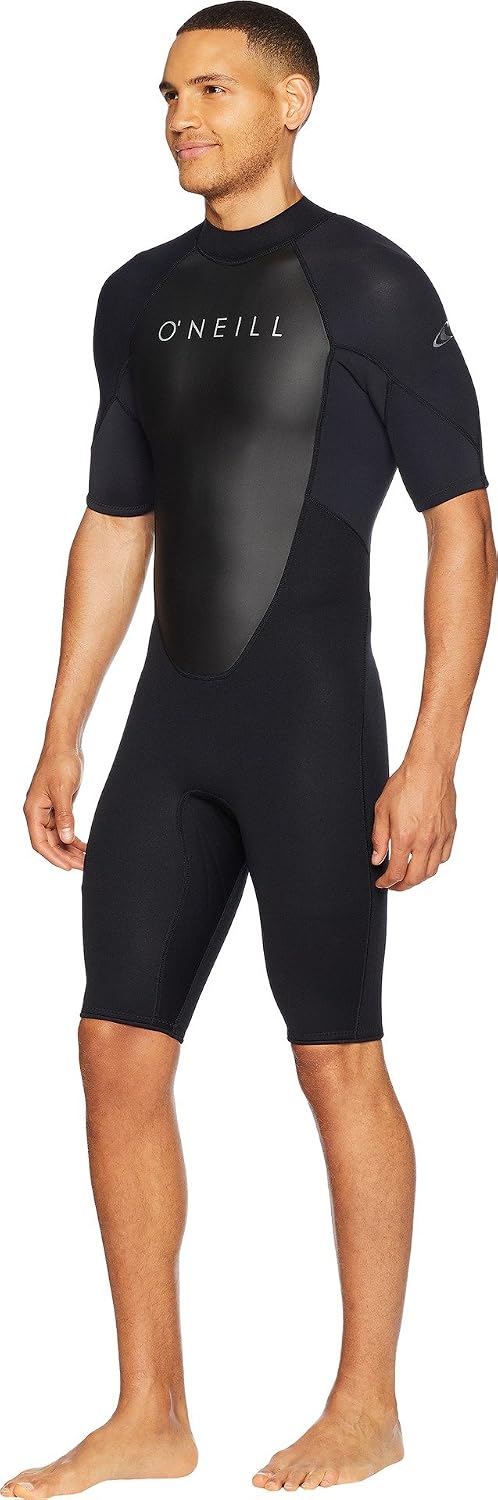
You’ve been surfing in a 4/3 full suit — a wetsuit with 4mm of neoprene (the flexible synthetic rubber that keeps you warm) in the torso and 3mm in the limbs — since November. It’s done its job. But now it’s late May on the Atlantic, the water is warming fast, and you’re sweating on the paddle out. Your arms feel like they’re fighting the suit as much as the current. That’s the signal. It’s time to think about switching to a spring suit or a shorty — lighter, shorter wetsuits designed for warmer water. A spring suit has short arms and full legs (or vice versa). A shorty has short arms and short legs. Both strip away material where you don’t need warmth and give back the arm mobility that makes paddling feel effortless. This guide will tell you exactly when to make that switch, which options are worth the money, and how to match the suit to your Atlantic conditions.
The Temperature Decision: When the Math Says Switch
The core question isn’t “do I feel warm enough on land?” It’s “what is the actual water temperature, and how long am I planning to be in it?”
Surfline’s water temperature guide and Boardcave’s wetsuit thickness chart both point to the same general framework:
By the numbers:
- Below 58°F (14°C): Full suit, 4/3 or 5/4, sealed seams, boots recommended
- 58–65°F (14–18°C): Full suit 3/2 is the standard; some experienced surfers move to spring suits at the top of this range
- 65–72°F (18–22°C): Spring suit or 2mm shorty is the sweet spot for most Atlantic surfers
- 72°F+ (22°C+): Boardshorts or a 1mm top; a full spring suit may overheat you on a long session
On the Atlantic coast, this temperature window matters regionally. Surfline’s data consistently shows that water temperatures along the mid-Atlantic (New Jersey to Virginia Beach) hit the 65–70°F range in late May through early June. The Carolinas get there faster — sometimes by April. New England (Maine to Rhode Island) tends to lag 4–6 weeks behind, staying in the 3/2 range well into June.
If you’re commuting to surf your local beach break two or three times a week, spending two minutes checking Surfline or Magicseaweed’s temperature readout for your exact break is worth it. Don’t assume the date tells you the water temp.
One underrated factor: session length. A 90-minute dawn patrol at 63°F in a spring suit is manageable for most surfers. A three-hour competition heat at the same temp is a different calculation entirely. Junior development coaches and surf school operators sourcing gear for students should plan for the conservative end — students spend more time sitting, less time actively paddling, and they get cold faster.
Spring Suit vs. Shorty: Which Cut Fits Your Surfing
These two terms get used interchangeably, but they’re not the same garment.
A spring suit (also called a “long john” in its sleeveless form, or a “springsuit” with short arms) typically offers full-length legs with either no arms or short arms. The leg coverage is the key. It keeps your core and thighs insulated — the areas where heat loss hits hardest — while freeing your shoulders for paddling. This is the more versatile option for the 65–70°F range.
A shorty has short arms and short legs. Think of it as a neoprene bike short with short sleeves. It’s genuinely warmer-water gear — best suited for 70°F and above, or for surfers who run naturally hot. Owners of shorties frequently note in long-run reviews that they underestimated how quickly they’d cool down in the 65–68°F range. Don’t buy a shorty expecting it to perform at spring suit temps.
Thickness matters here too. Most spring suits come in 2/2 or 3/2 configurations. A 2/2 spring suit — 2mm throughout — is appropriate for water in the high 60s to low 70s. A 3/2 spring suit, which has 3mm in the chest and core with 2mm in the arms and legs, adds meaningful warmth and works from the mid-60s upward. Outside Online’s wetsuit guide notes that the difference in perceived warmth between a 2mm and 3mm chest panel is significant in real sessions, even if it sounds marginal on paper.
Zip type affects both warmth and ease of use:
- Back-zip: Easier to get in and out of, slightly more flushing (water entry) at the collar. Good for surf schools where students are constantly suiting up and removing wetsuits.
- Chest-zip: Better seal, less flushing, preferred by intermediate-to-advanced surfers for performance. The trade-off is a slightly awkward entry process until you’re used to it.
- Zip-free: Maximum stretch and zero flushing risk, but the highest price and the trickiest entry. Matuse and Patagonia Yulex suits often use this system.
The Gear: What to Actually Buy at Each Budget Tier
Here’s where the trade-offs become concrete. These recommendations are grounded in published specs and aggregated owner and reviewer feedback — not personal testing.
$ Budget Tier: $80–$160
Rip Curl Dawn Patrol Spring Suit (2/2, back-zip) Rip Curl’s Dawn Patrol line is the entry point for a reason. Owners consistently report solid durability for the price, and the back-zip entry makes it a practical choice for surf school quivers where wetsuits take daily abuse. Cleanline Surf’s product descriptions highlight the E5 neoprene used across the Dawn Patrol line as offering better stretch than you’d expect at this price. For beginners transitioning out of a rental suit, or for coaches stocking a first quiver of spring suits, this is the rational starting point.
O’Neill Reactor-2 (2mm shorty, back-zip) O’Neill’s Reactor-2 is a reliable warm-water shorty. Reviewers across aggregated platforms consistently note the fit runs true to size and the flatlock stitching holds up well through a full summer season. Flatlock stitching (where panels are sewn flat rather than glued) is less waterproof than glued-and-blind-stitched seams, which is fine in 70°F+ water and a genuine trade-off to understand at 65°F.
$$ Mid Tier: $160–$320
Rip Curl E-Bomb Spring Suit (2/2, zip-free) This is where Rip Curl’s engineering shows. The E-Bomb moves up to a zip-free design and uses Flash-Lining interior, which owners and Wavelength Surf Magazine’s buyer guide both identify as a standout warmth-to-flex ratio at this price. If you’re surfing the mid-Atlantic in May and June and you want a spring suit that won’t restrict your paddle — this is the shortlist pick. Published specs rate it for 62–72°F water.
Patagonia R1 Lite Yulex Spring Suit (2mm, chest-zip) Patagonia’s Yulex is natural-rubber neoprene — lower environmental impact, similar performance to petroleum-based neoprene. The R1 Lite is their lightweight spring suit option. Owners consistently describe it as running slightly warmer than its 2mm rating suggests, likely due to the thermal lining. The chest-zip adds a better seal without going full zip-free. If eco-materials matter to you — and for a lot of Atlantic surfers they do — the Yulex line is the honest recommendation here. It costs more than equivalent petroleum neoprene suits, and it’s worth it for buyers who care about the supply chain.
$$$ Performance Tier: $320–$500+
Matuse Hoplite (2/2, zip-free) Matuse uses Geoprene, a limestone-based neoprene alternative. Published specs and long-run reviewer notes both point to exceptional stretch and a warmth-to-weight ratio that beats petroleum neoprene at equivalent thickness. The Hoplite spring suit targets serious surfers who want zero restriction on late drops and critical rail turns. It’s not the right buy if you’re surfing mellow beach break two mornings a week. It is the right buy if performance in the water is the primary decision variable. Owners in extended reviews frequently note the durability outperforms the price — the cost-per-use math favors it for surfers logging 100+ days a year.
Vissla 7 Seas Spring Suit (2/2, chest-zip) Vissla’s spring suits use recycled-material construction and pull dual duty as surf-lifestyle gear — meaning the brand also sits in the apparel conversation, not just the performance wetsuit conversation. Reviewers describe a clean fit and the chest-zip as one of the easier entry systems at this tier. Worth noting for surfers who care about how they look between sessions as much as in them.
Matching the Suit to Your Atlantic Break
Gear choice doesn’t stop at temperature. Wave type shapes the decision too.
Beach break: You’re popping up and falling a lot. Prioritize range of motion over maximum warmth. A zip-free 2/2 spring suit in the $160–$320 range makes sense here.
Point break or reef: You’re spending more time waiting in a lineup, paddling less frantically. You may feel cooler. A 3/2 spring suit, or a 2/2 with a rashguard underneath, gives you the buffer on a long sit.
Competitive or coaching context: Durability and fit consistency across a quiver of different body types matter more than personal performance features. Back-zip suits in the Dawn Patrol tier are the rational fleet choice. Size consistency in back-zip suits is also more predictable than zip-free designs, which tend to be cut for tighter body-to-suit ratios.
The Decision Rule
If you’re still unsure, here’s the if/then framework:
- If your local water temp is consistently below 65°F, stay in your 3/2 full suit. A spring suit will leave you cold and cut your sessions short.
- If water is 65–70°F and you’re surfing 60–90-minute sessions, a 2/2 or 3/2 spring suit is your move. Chest-zip for performance, back-zip for convenience.
- If water is 70°F+, a shorty or a 2mm top over boardshorts is all you need.
- If you’re running a surf school or junior program, buy one tier warmer than you think you need. Students run cold, and a shivering student stops learning.
- If eco-materials are a purchase criterion, Patagonia Yulex and Matuse Geoprene are the two honest options with verified supply chain transparency per their published sustainability reports.
Check your water temp the night before your session. It takes 30 seconds on Surfline or Magicseaweed. That one habit will tell you more about which suit to grab than any buying guide — including this one.