You’re standing at the water’s edge on a May morning in North Carolina. Air temp is 72°F and feels perfect, but the Atlantic is sitting at 65°F — cold enough to clench up your paddling muscles after twenty minutes. You’ve got a 3/2mm full suit (a wetsuit measured in millimeters of neoprene thickness, with thicker panels on the torso and thinner arms), but it feels like overkill for a chest-high point break in sunshine. What you actually want lives somewhere between a boardshort session and full rubber commitment. That’s exactly the gap this guide fills.
The layering zone — rashguards, 1.5mm wetsuit tops (neoprene pullovers), and spring suits (short-arm/short-leg wetsuits, also called shorties) — is the most under-discussed gear category in Atlantic surfing. Get it right and you extend your season, paddle longer, and stay comfortable in the full 60°F–78°F window the Atlantic serves up from April through October. Get it wrong and you’re either sweating through a mid-summer boardshort rash or shivering out of the water thirty minutes early in fall.
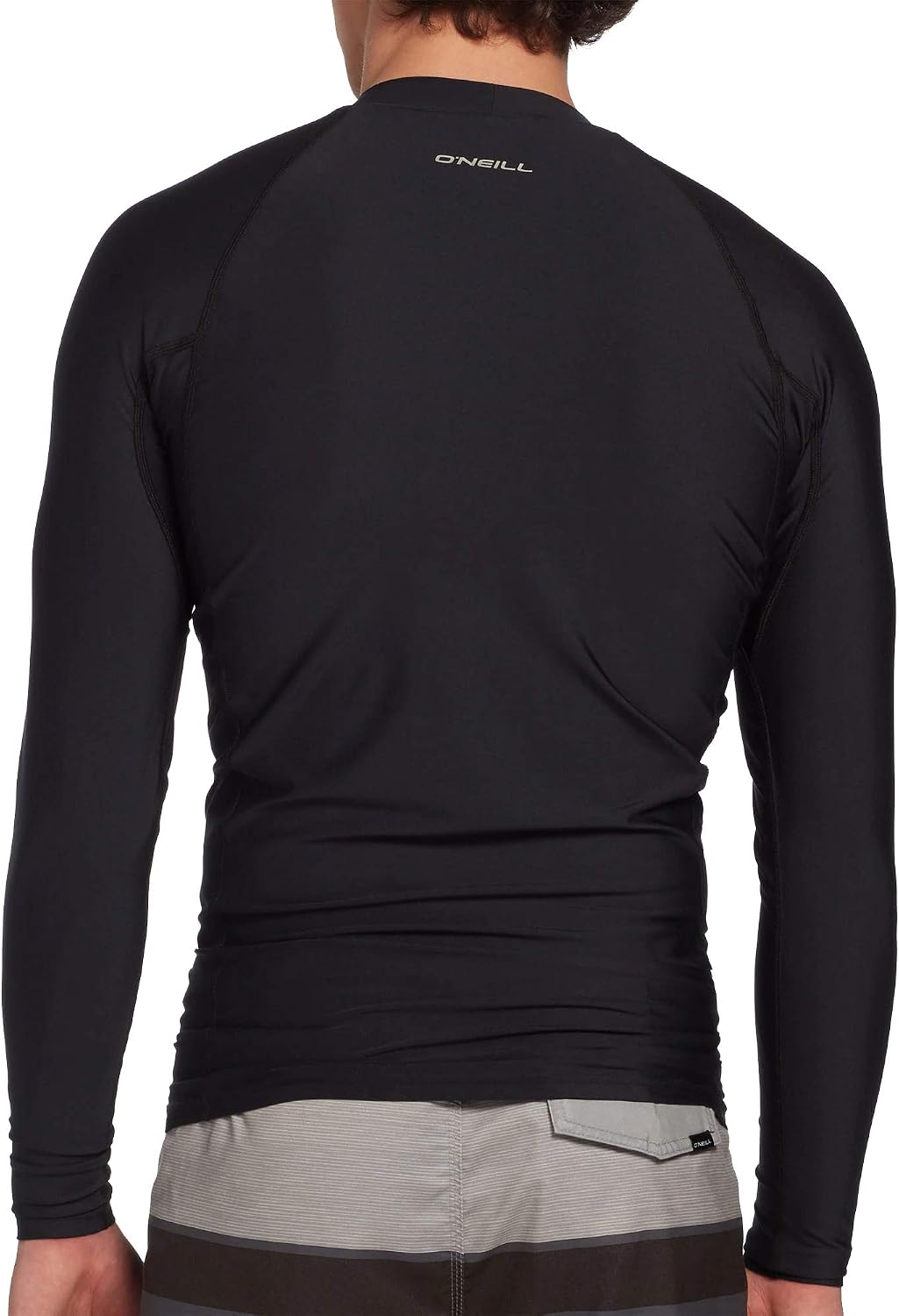
| EDITOR'S PICKO'Neill Men's Reactor-2 2mm Bac… | Mid-tierO'Neill Men's Reactor-2 2mm Bac… | Budget pickO'Neill Men’s Basic Skins Long… | |
|---|---|---|---|
| Zip type | Back zip | Back zip | — |
| Sleeve length | Short sleeve | Short sleeve | Long sleeve |
| Thickness | 2mm | 2mm | — |
| UPF rating | — | — | UPF 50+ |
| Intended use | Spring suit | Spring suit | Rashguard |
| Price | $99.99 | $88.95 | $29.96 |
| See on Amazon → | See on Amazon → | See on Amazon → |
The Atlantic Temperature Window: Why Layering Actually Matters Here
Surfline’s Atlantic Coast water temperature data for the 2025–2026 season shows a wide swing: 45°F in January in New Jersey, up to 82°F off Florida’s Space Coast in August, with the sweet spot for layering decisions landing between 60°F and 72°F. That band covers at least six months of surfable conditions up and down the coast.
Wavelength Surf Magazine’s guide on wetsuit layering makes the point clearly: the biggest mistake surfers make is treating wetsuits as binary — either full suit or nothing. The 1.5mm neoprene top and the rashguard exist precisely to let you tune your thermal coverage to the actual conditions rather than the closest full-thickness option.
By the numbers: Atlantic water temps and what they call for
| Month (mid-Atlantic, e.g. OBX / NJ) | Avg. Water Temp | Base Layer Call |
|---|---|---|
| April | 55–62°F | 3/2mm full suit minimum; 1.5mm top adds nothing alone |
| May | 62–67°F | 2mm spring suit or 3/2mm — 1.5mm over rashguard viable for tolerance athletes |
| June–July | 70–78°F | Rashguard + boardshorts or 1.5mm top for UV and chafe |
| September | 72–76°F | Rashguard or 1.5mm top; spring suit for dawn patrol |
| October | 64–68°F | 2mm spring suit or 3/2mm; 1.5mm alone is marginal |
The Inertia’s wetsuit selection guide reinforces this: water temperature determines your core warmth requirement, but wave type and activity level both shift the equation. Paddling hard at a beach break generates body heat; sitting on a longboard waiting at a slow point break loses it. Factor both.
Rashguards: UV and Chafe, Not Warmth
A rashguard is a form-fitting athletic top — usually made of polyester/spandex or nylon — worn against bare skin or under a wetsuit. The name comes from the original job: preventing boardshort rash on surfers’ torsos and inner arms. The modern use case is wider: sun protection (rated in UPF, with UPF 50 blocking roughly 98% of UV-B), wetsuit friction reduction, and a light wind buffer above the water.
Be clear about what a rashguard does not do. It is not a thermal layer. At 68°F and below, a rashguard worn alone will not keep you warm. Its value in the Atlantic layering system is:
- Sun protection from April through October — Surfer Magazine’s spring suit guide notes that repeated UV exposure during long sessions remains the skin-damage risk most surfers underestimate.
- Comfort layer under neoprene — wearing a rashguard under a spring suit or 3/2mm reduces friction and helps the wetsuit slide on and off without degrading the internal lining.
- Standalone coverage in water temps above 74°F when a wetsuit creates overheating risk.
O’Neill Basic Skins rashguard: what reviewers consistently flag
Across aggregated reviews, two patterns stand out for the O’Neill Basic Skins. First: the fit is intentionally athletic and compressive. Reviewers consistently report that buyers who skip the sizing guide and order their usual shirt size end up with a fit that feels uncomfortably tight. The O’Neill sizing notes exist for a reason — read them before ordering, and if you’re between sizes, size up. Second: there is a documented product image error on at least one major retail listing where the wrong ASIN (Amazon’s internal product ID) is shown in the product photo. Reviewers who flagged this report receiving the correct item, but the image mismatch is worth knowing about if you’re ordering based on color or style shown.
If X, then Y: If you surf primarily in water above 72°F and your main concern is UV exposure and boardshort rash, a rashguard is your best tool. If water temp drops below 68°F, a rashguard needs a neoprene layer over it to do any thermal work.
1.5mm Wetsuit Tops: The Shoulder-Season Workhorse
A 1.5mm wetsuit top is a neoprene pullover — no zipper in most designs, chest and back panel construction, short sleeve or long sleeve — that sits over a rashguard or bare skin. At 1.5 millimeters of neoprene, it adds real warmth: enough to extend a boardshort session from 68–72°F water into the 63–67°F range for surfers with normal cold tolerance.
Cleanline Surf’s wetsuit thickness guide puts 1.5mm neoprene in the “light thermal” category — meaningful core insulation for cool-but-not-cold water. The practical difference from a rashguard is roughly 5–8°F of perceived warmth tolerance for a typical paddling session.
What reviewers actually say about 1.5mm performance
Most of the detailed review data for 1.5mm tops comes from water skiers and warm-water divers, not surfers — but the warmth and fit observations transfer directly. Reviewers who use them in 65–68°F water report that the top does exactly what it promises: extends comfort in conditions where boardshorts alone feel miserable but a full 3/2mm suit feels excessive.
The most consistent complaint across reviews: drying time. A 1.5mm neoprene pullover takes significantly longer to dry than a rashguard or a thin wetsuit top with drainage panels. One reviewer’s recommendation appears repeatedly in aggregated feedback: buy two units if you surf more than once every 48 hours. This is genuinely practical advice. A damp neoprene top put back on for a morning session after an afternoon session is colder and less comfortable than a dry one — and it degrades faster with constant wet-dry-wet cycling.
Does the O’Neill 1.5mm top fit over a rashguard?
Yes, with a caveat. Reviewers who layer a rashguard underneath report it works best with a properly fitted rashguard — not a baggy swim shirt. The combination adds a small amount of additional warmth (the trapped air layer between the two materials helps) and makes the neoprene easier to pull on and off. If you’re riding with a paddling buddy who runs cold, this rashguard-plus-1.5mm-top combo is worth trying in the 63–67°F window before committing to a spring suit.
If X, then Y: If you’re surfing October shoulder season in water between 62–67°F and want mobility without a full suit, a 1.5mm top over a rashguard is your starting point. If you’re surfing consecutive days, budget for two.
Spring Suits: When Layering Becomes a Full System
A spring suit — 2mm or 2/2mm neoprene, short sleeves, short legs — is the natural next step when a 1.5mm top stops being enough. At the 60–65°F range, particularly at dawn patrol or in onshore wind, a spring suit adds full torso, shoulder, and upper thigh coverage without the heat buildup of a full 3/2mm on a warm day.
The Reactor-2 2mm spring suit: what reviewers highlight
Surfer Magazine’s spring suit guide covers the O’Neill Reactor-2 as a benchmark in the entry-to-intermediate spring suit category. Reviewers specifically praise two design features that directly affect surfing utility:
- The armpit stretch panel — reviewers consistently call this out as the feature that makes paddling feel natural rather than restricted. High-stretch zones under the arm matter more in a short-sleeved suit than in a full suit because the arm is exposed and any restriction is immediately felt on the paddle stroke.
- The windproof chest and back panel — this cross-function feature gets mentioned by kite surfers and open-water swimmers as much as surfers, which points to how transferable the design is.
One reviewer use case worth highlighting: a parent wearing the Reactor-2 at an indoor pool on 90°F days, layered under board shorts and a swim shirt, specifically to avoid feeling hypothermic after extended time in a temperature-controlled pool. It’s a niche use case, but it illustrates how broadly useful the spring suit format is when the environment is cooler than the ambient air suggests.
Can you wear a rashguard under a spring suit for extra warmth?
Yes — and this is a legitimate layering move for Atlantic surfers pushing their cold-tolerance ceiling. A thin rashguard under a 2mm spring suit adds noticeable warmth in the 58–63°F range. The key is fit: a compressive rashguard won’t bunch or restrict. The Inertia’s wetsuit selection guide recommends this combination as a budget-friendly way to extend a spring suit’s usable range before buying a heavier full suit.
If X, then Y: If May or October water temps drop below 65°F and a 1.5mm top leaves you cold after thirty minutes, step up to a spring suit. Add a rashguard underneath to push the floor another 3–5°F.
Frequently Asked Questions
Can I wear a rashguard under a spring suit for extra warmth in the Atlantic? Yes. A compressive rashguard under a 2mm spring suit is a recognized layering approach for the 58–65°F range. It adds modest thermal benefit and reduces wetsuit friction — a useful move for Atlantic shoulder season.
Does the O’Neill 1.5mm wetsuit top fit over a rashguard? Yes. Reviewers who layer a close-fitting rashguard underneath report no significant fit issues. A baggy swim shirt will bunch under neoprene — stick to a proper compressive rashguard for the combination to work cleanly.
How long does the O’Neill 1.5mm pullover take to dry between sessions? Reviewers consistently report longer drying times than a rashguard or thin rash top — expect 24+ hours under normal conditions. The standing advice from buyers who use them for regular surf: own two, rotate them, and rinse each one thoroughly with fresh water after every session.
Should I size up in the O’Neill Basic Skins rashguard? The O’Neill Basic Skins runs intentionally compressive. If you’re between sizes, size up. Reviewers who ordered their standard shirt size frequently report the fit is tighter than expected. Read the O’Neill sizing guide before ordering.
Is a wetsuit top enough for Atlantic water in May or October? It depends on your cold tolerance and session length. In mid-Atlantic water averaging 62–67°F in May or October, a 1.5mm top alone is borderline. Most surfers will be comfortable for 45–60 minutes; after that, core temp drops. A spring suit is the more reliable choice for those months.
Does a rashguard protect against jellyfish stings? Partially. A rashguard creates a physical barrier between skin and tentacles and can reduce sting severity on covered areas — but it doesn’t eliminate risk. Thicker neoprene (a wetsuit top or spring suit) provides better protection than a rashguard alone, per general guidance from marine safety resources. If jellyfish are present in your break, more coverage is always better.
The Decision Rule, Simplified
- Water above 72°F, UV concern: Rashguard alone. Size to the brand guide.
- Water 65–72°F, moderate sessions: 1.5mm wetsuit top over rashguard. Budget for two.
- Water 60–67°F, shoulder season: Spring suit (2mm). Add rashguard underneath to push the range further.
- Water below 60°F: A spring suit is now a supplement, not a primary layer. You need a 3/2mm full suit as your base.
The Atlantic’s range punishes gear that only works in one condition. Build a layering system rather than chasing a single wetsuit that does everything, and you’ll surf more months, more comfortably, with less gear in rotation than you think.