You’re standing in a parking lot at 7 a.m., suit halfway on, arms twisted behind your back, fumbling for a zipper cord you can’t see. Sound familiar? A shorty wetsuit — a neoprene suit with short arms and short legs, designed for warmer water — should simplify your morning, not add a circus act. The zipper type, front-zip or back-zip, changes everything about how the suit goes on, how it seals against water, and how it fits across a woman’s body. This article breaks down both designs using named-source citations and real buyer patterns, tells you which thickness makes sense for Atlantic water temperatures, and ends with a plain decision rule so you can stop second-guessing and start paddling.
| EDITOR'S PICKO'Neill Women's Reactor Back Zi… | Mid-tierSeaskin Mens 3mm Shorty Wetsuit… | Budget pickWomens Wetsuit Shorty | |
|---|---|---|---|
| Zip type | Back zip | Front zip | Front zip |
| Thickness | — | 3mm | 3mm |
| Sleeve length | Short sleeve | — | — |
| Leg length | — | Full body | — |
| Color | Black | — | Blue |
| Size | 12 | Medium | Small |
| Price | $75.50 | $47.19 | $45.59 |
| See on Amazon → | See on Amazon → | See on Amazon → |
What Front-Zip and Back-Zip Actually Mean — and Why It Matters for Surfing
A back-zip shorty opens with a long zipper running from mid-back up to the neck — the classic design most people picture when they think “wetsuit.” You step in from the top, pull the zipper up via a cord, and the suit closes across your back. The seal sits at the nape of your neck.
A front-zip shorty opens at the chest, with the zipper running vertically from sternum to stomach — or, in some designs, from chest all the way down the torso. You zip up like a jacket. No cord-pulling, no contortion.
Here’s why zipper type is a real surfing decision, not just a dressing-room preference:
- Water flushing. Every zipper is a potential entry point for cold water. “Flushing” is what happens when a wave forces water through a gap and displaces the warm layer your body has already heated. Back-zip suits traditionally had more flushing issues at the neck; modern front-zip designs shift that vulnerability to the chest panel seal.
- Paddling mobility. Zipper position affects how the neoprene pulls across your shoulders during paddling. Back-zip suits can create tension across the upper back if the zipper hardware is stiff. Front-zip suits, with no hardware at the spine, tend to allow a cleaner shoulder rotation.
- Solo entry and exit. This matters at dawn patrol more than most reviews acknowledge.
The Fit-for-Curves Problem — and Which Suit Solves It
Before zipper mechanics, there’s a more foundational issue for many women buying shorties: fit.
Aggregate reviews across women’s wetsuit purchases tell a consistent story. Women with fuller hips frequently report that a suit fits the waist but locks up at the hips, or fits the hips but creates a gap at the lower back that funnels cold water in on every duck-dive. The result is a lot of returned suits.
Clean Line Surf’s women’s wetsuit fit review roundup (2024) identifies this as a category-wide problem: most women’s shorties are graded up from men’s patterns with minimal hip-to-waist ratio adjustment. A small number of suits are genuine exceptions, and understanding that lineage matters before you dismiss back-zip as a purely stylistic choice.
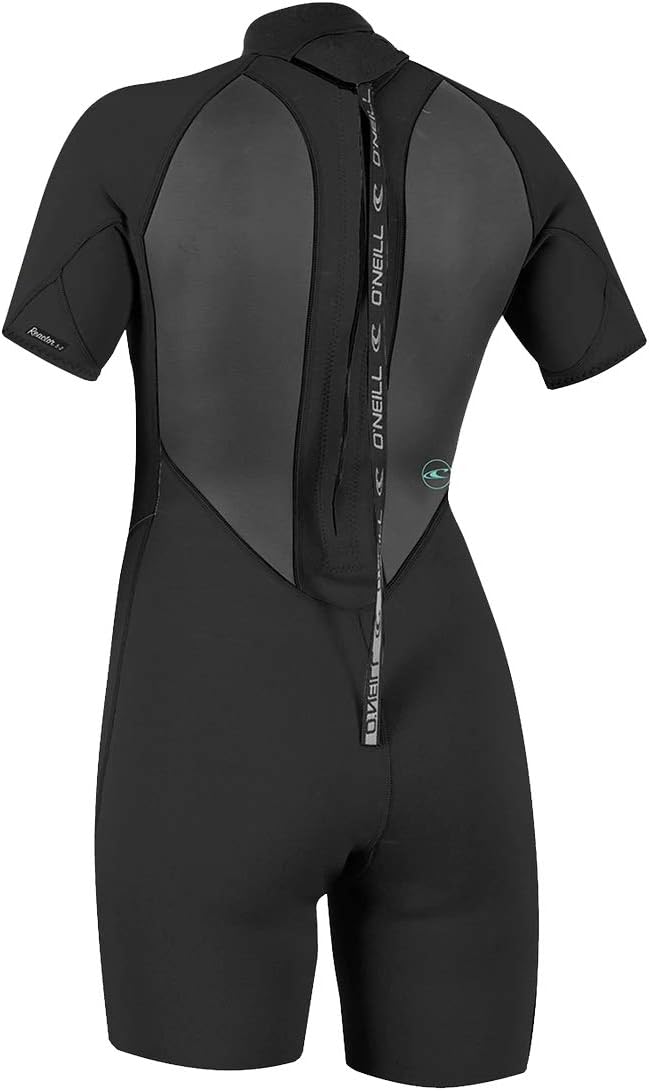
Back-Zip Pick: O’Neill Reactor-2 Women’s Shorty
The O’Neill Reactor-2 Women’s back-zip shorty shows up repeatedly in buyer accounts — but in an unusual way. Multiple buyers specifically note it was their third or fourth wetsuit attempt after other suits failed to accommodate their shape. Rather than a criticism of the suit, this is a signal: the Reactor-2 runs with enough hip room that it resolves the problem that sent those buyers back to the drawing board twice before.
What to order: O’Neill’s own size chart skews small through the hips relative to competitive sizing. If you’re between sizes, buyers with curvy lower bodies consistently land one size up from what the chest measurement suggests. Check the hip measurement column specifically — not just the chest — and order the larger of the two size outputs.
Seaskin
$47.19
In stock on Amazon
Check price on AmazonFront-Zip Pick: Seaskin Women’s Front-Zip Shorty
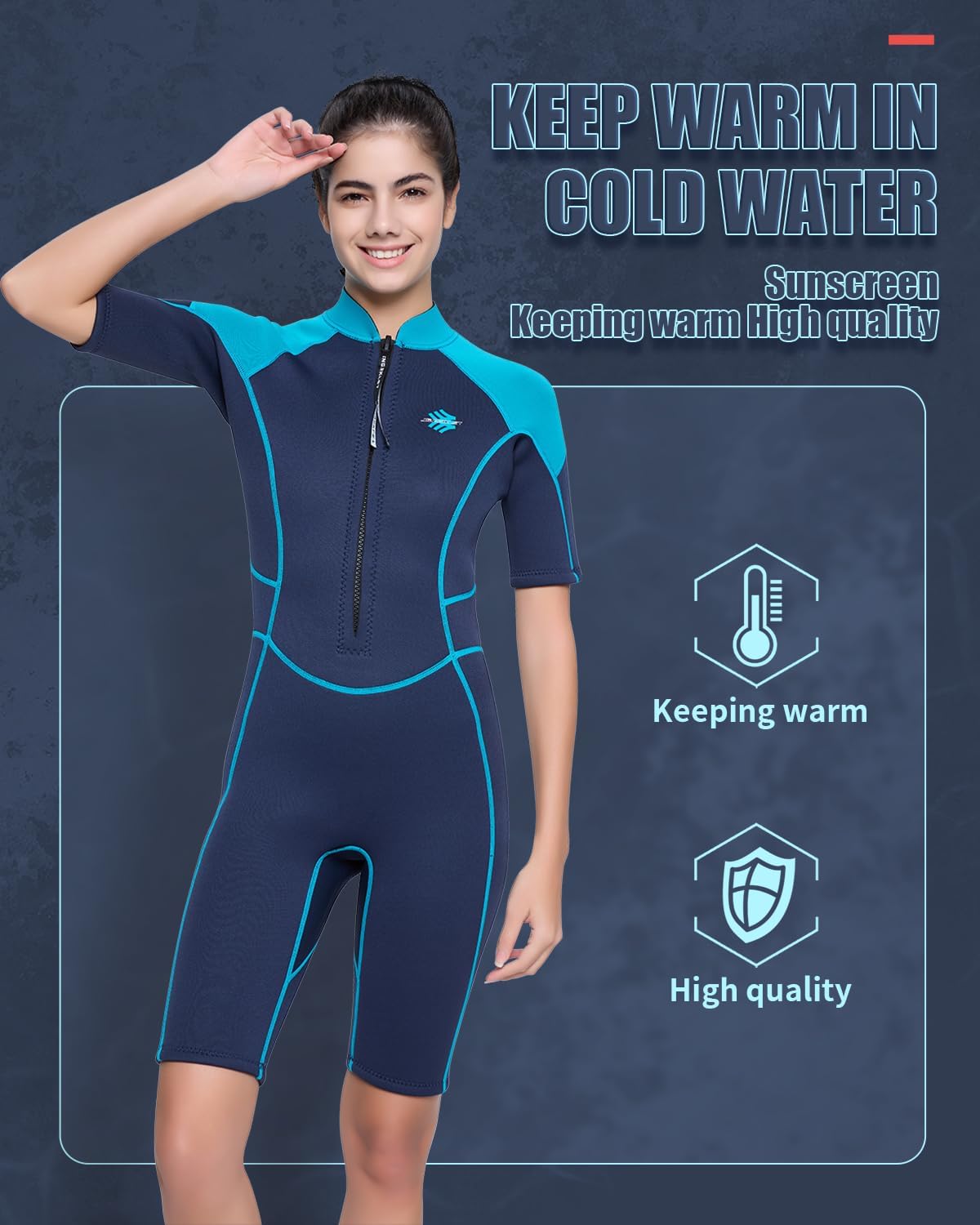
The Seaskin front-zip shorty earns its praise almost entirely from one feature: a full-length side zipper that runs from the top of the suit to the bottom hem. Reviewers describe solo entry as straightforward compared to any back-zip alternative — you open the suit like a door, step in, and zip up the side without any overhead arm movement. For anyone with shoulder mobility issues, or who surfs alone and can’t reach a back-zip cord, this design is a genuine quality-of-life improvement.
But there’s a real trade-off buried in the reviews that most buyers don’t notice until it’s too late.
A professional scuba instructor — exactly the kind of experienced user you’d expect to adapt quickly — flagged that the Seaskin 3mm front-zip was difficult to remove after sessions. Not impossible, but enough friction that doing two or three sessions in a day became a logistical frustration. For a recreational surfer doing one long session, this is a minor note. For anyone logging multiple sessions — surf coaches, competitive juniors, people surfing dawn patrol and an afternoon swell — this is important operational data.
Wavelength Surf Magazine’s spring 2025 wetsuit buying guide makes a related point: front-zip seals rely on chest panel compression to prevent flushing, which means a suit that fits well on entry can feel more resistant to removal once the neoprene is wet and the material has expanded slightly. Factor that into your exit plan.
Seaskin 2mm sizing note: Buyers show a “too big, returning for smaller” pattern at higher frequency than the 3mm version. If you’re ordering Seaskin’s 2mm in a women’s cut, size down one before you assume your standard wetsuit size is correct.
Womens
$45.59
In stock on Amazon
Check price on AmazonPremium Option: Surf-Specific 3mm Women’s Shorty with GBS Seams
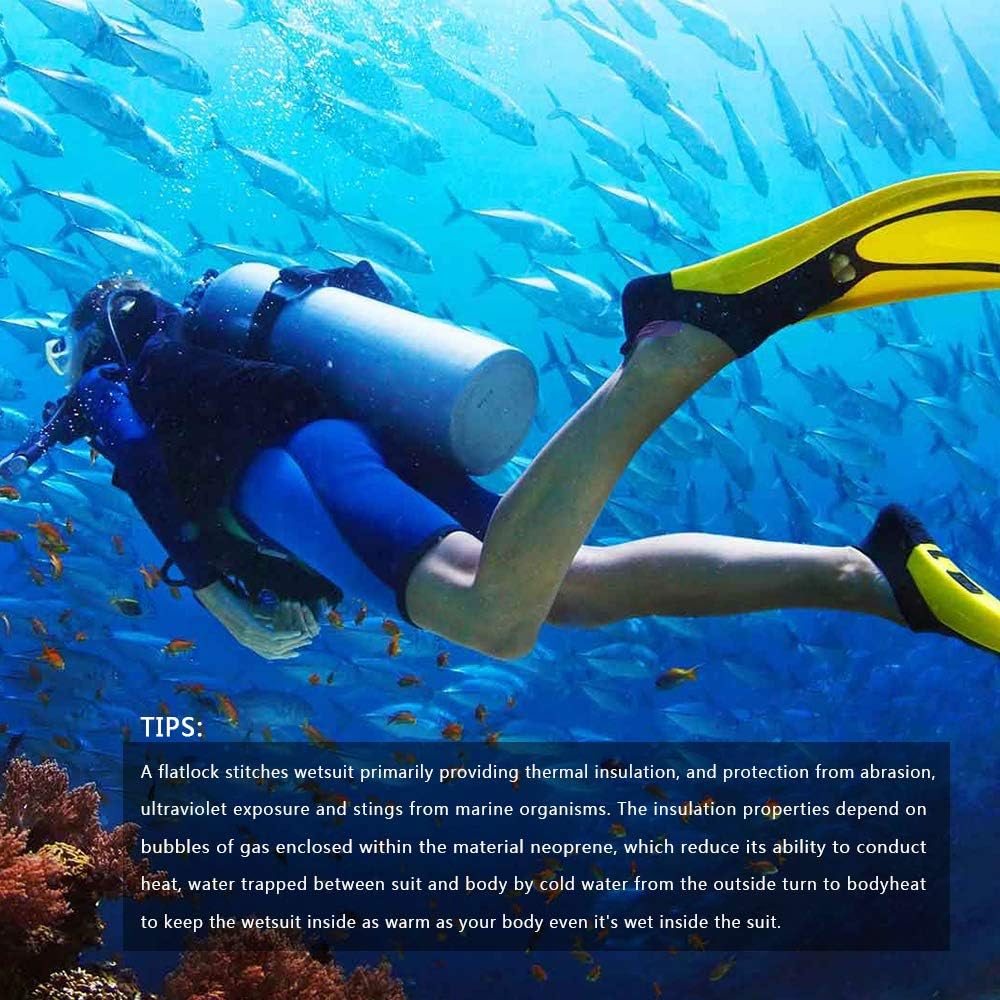
If you’re surfing the Atlantic regularly through shoulder-season temperatures and want to step up from entry-level construction, look for a surf-specific 3mm women’s shorty built with glued and blind-stitched (GBS) seams. GBS construction — where seams are glued, then stitched from only one side so the thread doesn’t penetrate the neoprene face — significantly reduces water ingress at seam lines compared to flatlock stitching. Outside Online’s 2024 piece on eco-wetsuit materials notes that seam quality and lining material affect warmth as meaningfully as raw neoprene thickness. A well-sealed 3mm GBS suit outperforms a poorly sealed 3mm flatlock suit in 67°F Atlantic water, often by a noticeable margin during a 90-minute session.
Brands offering GBS construction in women’s 3mm shorties in the mid-to-premium tier include Rip Curl, Patagonia (Yulex natural-rubber), and Billabong’s Synergy line. Surfline’s Atlantic Coast Water Temperature Atlas (2025 edition) places the Mid-Atlantic coast in the 62–68°F range through May and October — exactly the temperature band where seam quality stops being a secondary concern and becomes the deciding factor in whether you stay warm through a full session.
O'Neill
$75.50
In stock on Amazon
Check price on AmazonThickness Decision: 2mm vs. 3mm for Atlantic Water
This is where the decision tree gets concrete.
| Atlantic Water Temp | Recommended Thickness | Notes |
|---|---|---|
| 72°F and above | 2mm | Either zipper style works |
| 67–71°F | 2mm–3mm borderline | 3mm preferred for active surfing |
| Below 67°F | Shorty inadequate | Step up to a full suit |
Surfline’s Atlantic Coast Water Temperature Atlas (2025 edition) puts the Mid-Atlantic coast — New Jersey to North Carolina — in the 62–68°F range through May and October. That’s the exact temperature band where a 2mm shorty starts feeling optimistic.
Here’s the honest signal from buyer data: the generic 2mm front-zip buyer profile skews heavily toward recreational travel use — Caribbean snorkeling, dolphin swims, resort-based water activities. That’s not a criticism of the product. It’s a mismatch signal. If you’re paddling out at a beach break in 67°F water and putting in 90 minutes of duck-diving and shoulder work, a 2mm front-zip designed for tropical recreation may leave you cold and fatigued faster than your skill level warrants.
Outside Online’s 2024 eco-wetsuit piece reinforces this: neoprene thickness and thermal performance are not perfectly linear, but all else equal, 3mm wins at 67°F Atlantic water for active surfing. Check Surfline’s current water temperature listings for your specific break before deciding — the Mid-Atlantic swings 10 degrees across May and October.
Can You Use a Dive-Focused Shorty for Surfing?
Short answer: technically yes. Practical answer: only if you accept meaningful limitations.
Dive shorties — including many front-zip designs marketed primarily to scuba and snorkeling users — are engineered around buoyancy management and stationary thermal protection. They are not built for the shoulder rotation and repeated overhead arm movement that paddling requires. The neoprene panels are often stiffer through the back and underarm to reduce compression at depth, which is the opposite of what you want for paddle efficiency.
Surf Science: An Introduction to Waves for Surfing by Tony Butt covers paddling biomechanics and how resistance in the shoulder girdle compounds over a session — even a few degrees of restricted movement costs real energy over 90 minutes. A dive-focused suit’s panel construction can create exactly this kind of cumulative drag.
The practical test: if a suit’s product copy mentions “scuba,” “diving,” or “snorkeling” as primary use cases before it mentions surfing, treat that as a signal about panel construction priorities. It doesn’t mean you can’t paddle in it. It means the suit wasn’t optimized for paddling, and you’ll feel it by the end of a longer session.
Frequently Asked Questions
Is a front-zip shorty harder to seal against flushing than a back-zip in active surfing?
The sealing mechanism is different, not necessarily worse. Back-zip suits seal at the neck; front-zip suits seal at the chest panel. In rough beach break with repeated wipeouts, front-zip suits can allow more flushing through the chest zipper if the suit doesn’t fit snugly through the torso. A well-fitted front-zip in the right size performs comparably to a back-zip in most Atlantic conditions. Fit is the determining variable.
What size should a curvy woman order in O’Neill’s Reactor-2 women’s shorty?
Use O’Neill’s size chart but prioritize the hip measurement column. If your hip measurement puts you in a different size than your chest measurement, order the larger of the two. Buyers with fuller lower bodies consistently report the suit runs small through the hips in their usual size. Sizing up resolves the fit issue without creating excess material through the torso.
Will a 2mm shorty be enough for 67°F Atlantic water or do I need 3mm?
At exactly 67°F with active paddling, a 3mm provides meaningful margin. A 2mm works for shorter sessions or if your thermal tolerance runs warm, but expect to feel it after 60-plus minutes. At 70°F and above, 2mm is comfortable for most surfers.
How difficult is it to get a front-zip shorty off alone after a session?
For most surfers doing a single session, it’s manageable — slightly more friction than a back-zip when the neoprene is wet, but not a real problem. For multiple sessions in a day, the Seaskin 3mm’s exit difficulty is worth weighing. If you’re logging two or three water entries in a day, a back-zip with an easy-pull cord may save real time and frustration.
Can I use a dive-focused shorty wetsuit for surfing?
You can, but you’ll likely notice restricted shoulder rotation by mid-session. Dive-focused suits prioritize stationary thermal protection and buoyancy, not paddle mobility. For occasional light surfing it’s a workable compromise; for regular sessions with sustained paddling, use a surf-specific suit.
The Decision Rule
If your primary pain point is fit through the hips and you’ve struck out on previous suits: start with the O’Neill Reactor-2 Women’s back-zip, size up from your hip measurement, and treat other options as a step two.
If your primary pain point is solo entry and exit and you surf alone or have shoulder mobility constraints: front-zip is the right architecture, and Seaskin’s full-length side zipper is the most consistently praised entry mechanic in this category. Go 3mm if your Atlantic water is below 70°F, and size down from your usual wetsuit size on the 2mm version.
If you’re surfing 67°F or colder Atlantic water more than twice a week: budget for a GBS-seamed 3mm regardless of zipper style, and consider the premium-tier suits from Rip Curl, Patagonia, or Billabong’s Synergy line. A 2mm shorty marketed toward tropical recreation will cost you warmth and performance at those temperatures. The extra millimeter — and the seam quality — are not optional.