You’ve found a wetsuit that looks right on paper. The brand makes women’s-specific cuts. The size chart says your measurements fall in a size 8. You order it, it arrives, and you can barely get it past your hips — or worse, it fits your hips but gaps so badly across your lower back that cold water flushes through every time you paddle. Sound familiar?
A wetsuit is essentially a second skin designed to trap a thin layer of water against your body, which your body then warms — sealing out the cold ocean. When a wetsuit doesn’t fit correctly, that seal breaks. You don’t just get uncomfortable; you get cold fast, and your session ends early. For curvy surfers (proportionally wider hips and thighs relative to waist) and petite surfers (under 5’3”, often under 130 lbs), the mainstream size grid is a recurring problem. This guide is built on aggregated buyer reports, published manufacturer sizing data, and editorial analysis from sources including Wavelength Surf Magazine and Cleanline Surf — so you can walk in with a plan instead of a hope.
Why Women’s Wetsuit Sizing Fails Curvy and Petite Bodies
Standard wetsuit sizing charts are built around proportional averages. Most brands model their women’s cuts on a relatively narrow hip-to-waist differential and a single torso-length assumption per size band.
That’s the gap. Real women’s bodies don’t scale that neatly.
The curvy surfer problem: If your hips run a size or two larger than your chest or waist, pulling the suit up to accommodate your lower half leaves excess neoprene at the torso. That excess creates a “back-waist gap” — a fold or pucker of material at your lower back that opens like a valve every time you arch into a paddle. Cold water rushes in. The suit loses its thermal seal entirely in that zone. According to Wavelength Surf Magazine’s wetsuit fit guide, back-waist gapping is one of the most-cited fit complaints in women’s wetsuit reviews — and it’s almost always a symptom of sizing up globally when only lower-body sizing is needed.
The petite surfer problem: Torso length and sleeve length are the killers here. A suit spec’d for a 5’6” frame will pile up at the wrists and ankles, leave the chest panel sagging, and bunch behind the knees — restricting pop-ups and duck dives. Cleanline Surf’s fit advice notes that petite surfers often need to prioritize torso length over volume, sometimes sizing down from what the weight column suggests.
These aren’t edge cases. They’re the majority of women’s wetsuit fit complaints in aggregated buyer data across mid-tier and premium brands.
What Owners Actually Report: Brand-by-Brand Patterns
Here’s where the rubber meets the road. Size charts are a starting point. Owner experience is the real data.
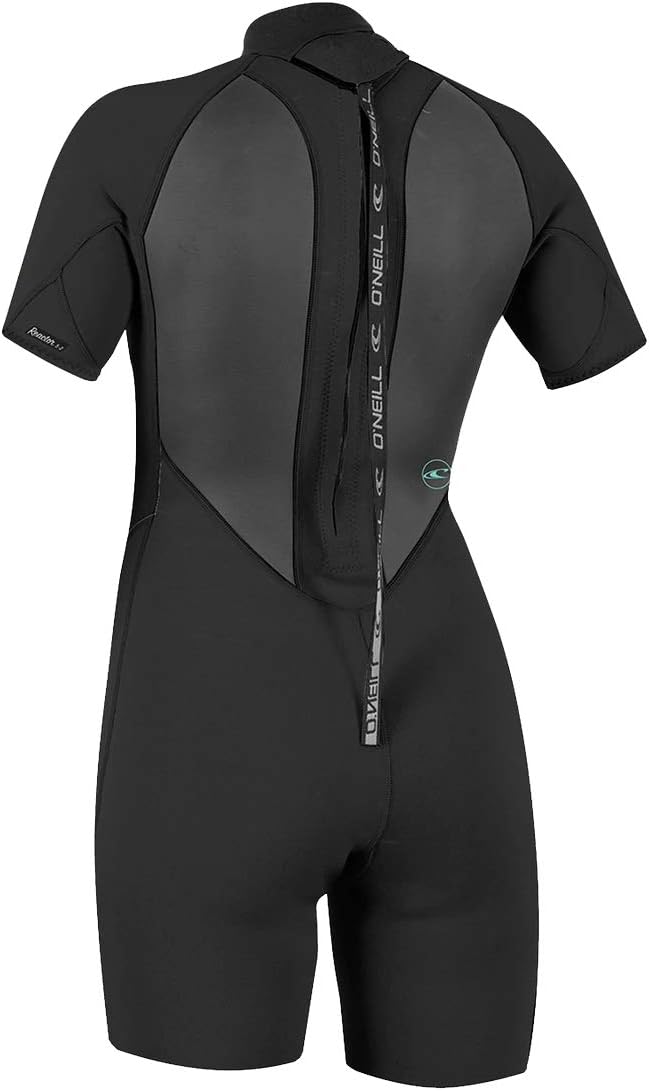
O’Neill Reactor-2 Women’s Owners consistently praise this suit for accommodating a curvy lower half in larger sizes. One frequently cited review comes from a size-14 buyer who describes herself as a solid size 12 in most clothing — she reports the Reactor-2 fits her hips and legs where two other suits had failed. The key word in her account is fits, not barely fits. She had room to move, which matters when you’re paddling and popping up. This lines up with Surfline’s women’s wetsuit editorial, which notes O’Neill’s Reactor-2 uses a pre-bent knee panel that gives extra room through the thigh without sacrificing torso fit. Back-zip entry means you’ll need a partner or a door hook to get it on solo, but getting it off alone is generally manageable.
Hevto Women’s 3/2mm Full Suit Reviewers consistently flag one specific fit pattern: calf areas run wide, but torso length is correct. For a petite curvy surfer, this is actually a decent trade-off — your legs have room, and you’re not fighting excess neoprene at the midsection. One buyer account that surfaces repeatedly involves a 5’4”, 160 lb surfer who wore the suit in 33-degree air under a wind advisory, layered a rash guard underneath, and stayed warm through the session. That’s a meaningful thermal data point for a mid-price suit. Boardcave’s thickness guide puts 3/2mm suits (3mm neoprene on the body, 2mm on the arms and legs) in the 58–65°F water temperature range as a baseline — so that reviewer was pushing the suit past its rated water temp by relying on air temp and layering. It held. That’s worth knowing.
No-Name Front-Zip Shorties (ASIN variants in the B0CZ range) Front-zip shorties — short-arm, short-leg suits typically used in warmer water — from unbranded sellers get two competing narratives. Petite buyers at 5’1”, 118 lbs report a genuinely snug small fit, which is rare. Most no-name brands size their “small” for a 5’4”+ body. If you’re at the lower end of the height and weight range, this is noteworthy. The flip side: multiple buyers flag that these suits are difficult to remove solo after a session. For a front-zip entry, that’s a real design flaw — front zips are supposed to make solo entry and exit easier than back-zip suits. If you’re surfing alone and fatigued after a long session, a suit that requires a two-person extraction is a safety concern, not just an inconvenience.
Seaskin 2mm Shorty The Seaskin 2mm surfaces in reviews for fitting a woman’s body well, specifically noting accommodation of large hips without the lower-body compression complaints common in competitor suits. But a separate buyer returned the same model after finding it ran significantly large. This is the inconsistency flag — two buyers, opposite fit experiences, same suit. That pattern suggests either loose quality control in the neoprene cutting process or a recent size-run change that hasn’t been reflected in updated charts. The practical takeaway: if you order the Seaskin, buy from a retailer with a clear return policy and plan for a possible exchange.
The Sizing-Up Math: By the Numbers
Sizing guidance across these suits is consistent in direction, inconsistent in degree.
| Body Type | Typical Recommendation | Degree of Variance |
|---|---|---|
| Curvy lower half (hips 2+ sizes larger than chest) | Size up 1–2 in most brands | High — O’Neill is more forgiving at true size |
| Petite under 5’3” | Size down from weight column; prioritize torso length | Medium — torso length is the key variable |
| Curvy AND petite | Order mid-size; check torso length first | Very high — may need brand-specific fit call |
| Average proportions | Follow size chart | Low variance |
The recurring pattern: sizing up is almost universally recommended for curvy surfers, but how much varies wildly by brand. O’Neill’s Reactor-2 is more generous at true size than Hevto or Seaskin, meaning you may not need to size up as aggressively there.
Zip Type, Solo Sessions, and Cold Reality
Wetsuit entry systems matter more than most buyers realize before they’re standing alone in a parking lot at 6 AM.
Back-zip suits have a long zipper running up the center back, opened by pulling a cord over your shoulder. Getting into one solo requires some practice — most surfers learn the lean-and-pull-cord technique in about two sessions. Getting out solo is easier because you can reach the cord while seated or standing. O’Neill’s Reactor-2 is a back-zip.
Front-zip (chest-zip) suits have no zipper at the back; you pull a bungee cord across the chest to seal the suit. Entry is tighter but the thermal seal is significantly better — no zipper at the spine means less cold water flushing along your back. However, if the suit runs small through the shoulders (common in no-name brands), getting in and out solo becomes a wrestling match.
For surfers heading out alone, front-zip suits from established brands with accurate sizing are the warmest option. No-name front-zip suits with documented removal difficulty are a specific risk category for solo sessions. Factor that in before you buy.
Frequently Asked Questions
How much should I size up in women’s wetsuits if I have a curvy lower half? Most brands: size up one full size. If your hip measurement exceeds the top of the size chart for your waist, size up two. Then check whether the torso length in that larger size will leave you with back-waist gapping — if the brand offers tall or long sizes, those sometimes solve the problem without the excess torso volume of a full size jump.
Will a back-zip wetsuit be hard to get on alone at the beach? Getting in takes practice — plan on two or three sessions before it feels natural. Getting out is generally easier solo because the cord is reachable. Front-zip suits go on easier but can be harder to remove if the suit runs snug through the shoulders, particularly in unbranded options.
Does the O’Neill Reactor-2 women’s fit a size 14 body? Based on aggregated owner reviews, yes — it’s one of the more consistent performers for curvy larger sizes. A buyer self-described as a solid size 12 fitting into the size 14 Reactor-2 reported full hip and leg accommodation. That’s a better outcome than she got from two other brands. It’s not a guarantee, but it’s a meaningful pattern.
What does “gapping at the back waist” mean for wetsuit performance? It means the neoprene pulls away from your lower back, creating a pocket or fold that opens when you paddle. Cold water enters through that gap and runs along your spine, eliminating the thermal seal the suit is supposed to create. It’s not cosmetic. It makes you colder, faster. It typically happens when you size up globally for hip fit but the torso panel is now too long for your frame.
Are no-name women’s shorty size charts accurate? Inconsistently. The B0CZ-range shorties reviewed here get specific praise from a 5’1”, 118 lb buyer for a genuinely snug small — which suggests the small at least runs true for very petite frames. But buyer variance across unbranded suits is high enough that you should treat their charts as a starting guess, not a commitment. Return policy is non-negotiable before ordering.
Which women’s wetsuit works best for a petite surfer under 5’3”? Prioritize torso length above everything else. The Hevto 3/2mm gets consistent marks for correct torso length even when calf panels run wide. No-name front-zip shorties in a small have worked for buyers at 5’1”. O’Neill Reactor-2 in smaller sizes has less owner data for sub-5’3” frames, but O’Neill’s published fit guide (available directly from O’Neill’s site) includes specific petite guidance worth cross-referencing before ordering.
The Decision Rule
If X is your situation, here’s your Y.
If you’re curvy (hips 2+ sizes above waist) and buying a full suit: Start with the O’Neill Reactor-2 in your hip size, not your waist size. Check that the torso length note for that size matches your actual torso length before ordering.
If you’re petite (under 5’3”) and buying a full suit: Hevto 3/2mm is your first look — torso length is its strongest suit. Size by your weight column, then verify chest measurement.
If you’re petite AND curvy: This is the hardest fit. Order mid-range ($, $$ tier suits), pick a brand with clear returns, and plan for one exchange. The Seaskin 2mm may work, but given its documented sizing inconsistency, buy it only with return flexibility.
If you’re surfing solo in cold water: Avoid no-name front-zip suits until removal difficulty is resolved in newer production runs. A suit you can’t get off alone is a real problem at the end of a session.
The best wetsuit is the one that seals, flexes, and comes off without a fight. Now you have enough to make that call.